
A photovoltaic cell contains a p–n junction that that converts solar light to electricity. An optimum semiconductor would have its band-gap energy matched to the wavelength of maximum solar intensity at the Earth's surface. (a) What is the color and approximate wavelength of maximum solar intensity at the Earth's surface? Refer to the figure for Problem 12.102.
Ch.12 - Solids and Solid-State Materials
Chapter 12, Problem 101
Considering only electronegativity, rank the LED semiconductors made of solid solutions in order of increasing bandgap energy. Al0.40Ga0.60As, Al0.25Ga0.75As, Al0.05Ga0.95As
Verified step by step guidance1
Understand that the bandgap energy of a semiconductor is influenced by the electronegativity of the elements involved. Higher electronegativity differences typically lead to larger bandgap energies.
Identify the elements involved in the given solid solutions: Aluminum (Al), Gallium (Ga), and Arsenic (As).
Recognize that Aluminum (Al) has a higher electronegativity than Gallium (Ga), which means that increasing the proportion of Al in the solid solution will generally increase the bandgap energy.
Compare the given solid solutions based on their Al content: Al_{0.05}Ga_{0.95}As, Al_{0.25}Ga_{0.75}As, and Al_{0.40}Ga_{0.60}As.
Rank the solid solutions in order of increasing bandgap energy based on their Al content: Al_{0.05}Ga_{0.95}As < Al_{0.25}Ga_{0.75}As < Al_{0.40}Ga_{0.60}As.
Key Concepts
Here are the essential concepts you must grasp in order to answer the question correctly.
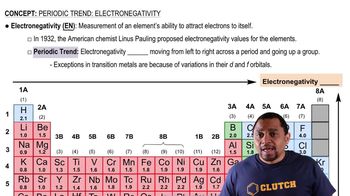
Electronegativity
Electronegativity is a measure of an atom's ability to attract and hold onto electrons in a chemical bond. In semiconductor materials, differences in electronegativity between constituent elements can influence the electronic properties, including the bandgap energy. Higher electronegativity typically correlates with stronger bonding and can lead to variations in the energy levels of the material.
Recommended video:
Guided course
Electronegativity Trends
Bandgap Energy
Bandgap energy is the energy difference between the valence band and the conduction band in a semiconductor. It determines the electrical conductivity and optical properties of the material. In general, a larger bandgap energy means that the material can absorb higher energy photons, which is crucial for applications in optoelectronics, such as LEDs.
Recommended video:
Guided course
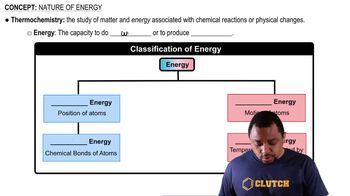
Nature of Energy
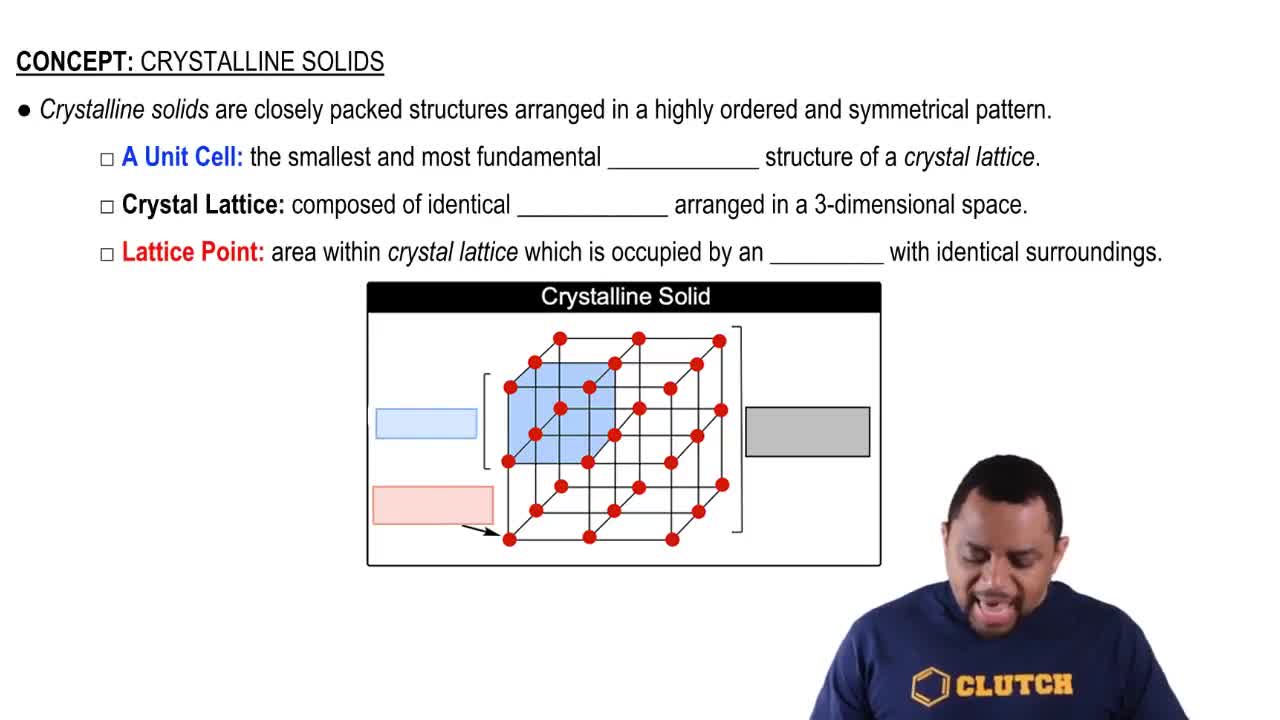
Solid Solutions in Semiconductors
Solid solutions in semiconductors refer to mixtures of different semiconductor materials that form a single-phase crystal structure. The composition of these solid solutions affects their electronic properties, including the bandgap energy. For example, varying the ratio of aluminum to gallium in AlxGa1-xAs alters the bandgap, allowing for tuning of the material's optical and electronic characteristics.
Recommended video:
Guided course
Crystalline Solids Structure
Related Practice
Textbook Question
323
views
Textbook Question
Arrange the following materials in order of increasing electrical conductivity. (a) Cu (b) Al2O3 (c) Fe (d) Pure Ge (e) Ge doped with In
344
views
Textbook Question
Classify the following semiconductors as n-type or p-type. (a) Si doped with In (b) Ge doped with Sb (c) Gray Sn doped with As
633
views
Textbook Question
Tell what is meant by each of the following terms.(c) Band gap
275
views
Textbook Question
A photovoltaic cell contains a p–n junction that that converts solar light to electricity. An optimum semiconductor would have its band-gap energy matched to the wavelength of maximum solar intensity at the Earth's surface. (b) Which of the following semiconductors absorb at a wavelength matched with maximum solar intensity? CdTe with a band-gap energy of 145 kJ/mol or ZnSe with a band-gap energy of 248 kJ/mol.
325
views
Textbook Question
A photovoltaic cell contains a p–n junction that converts solar light to electricity. (a) Silicon semiconductors with a band-gap energy of 107 kJ/mol are commonly used to make photovoltaic cells. Calculate the wavelength that corresponds to the band-gap energy in silicon.
364
views
