Ch. 2 - Graphs and Functions
Lial - College Algebra 13th Edition
Lial13th EditionCollege AlgebraISBN: 9780136881063Not the one you use?Change textbook
Chapter 3, Problem 68

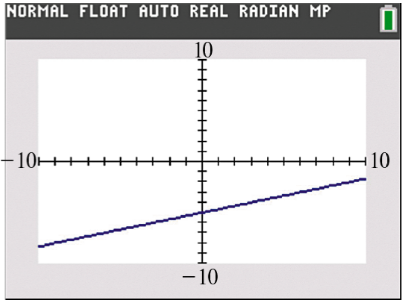
Solve each problem. A graph of y=ƒ(x) is shown in the standard viewing window. Which is the only value of x that could possibly be the solution of the equation ƒ(x) =0? A. -15 B. 0 C. 5 D. 15
Graph of a line in a standard window with x and y axes from -10 to 10, showing a positive slope.

Verified step by step guidance
1
Step 1: Understand that the equation ƒ(x) = 0 means we are looking for the x-value(s) where the graph of the function crosses the x-axis (where y = 0).
Step 2: Observe the graph of y = g(x) and identify where the red line intersects the x-axis. This is the point where the function value is zero.
Step 3: Note the x-coordinate of the point where the line crosses the x-axis. This x-value is the solution to the equation ƒ(x) = 0.
Step 4: Compare the x-coordinate of the intersection point with the given options: -15, 0, 5, and 15.
Step 5: Select the option that matches the x-coordinate of the intersection point on the graph, as this is the only possible solution to ƒ(x) = 0.

Verified video answer for a similar problem:

This video solution was recommended by our tutors as helpful for the problem above.
Video duration:
4m
Was this helpful?

Key Concepts

Here are the essential concepts you must grasp in order to answer the question correctly.

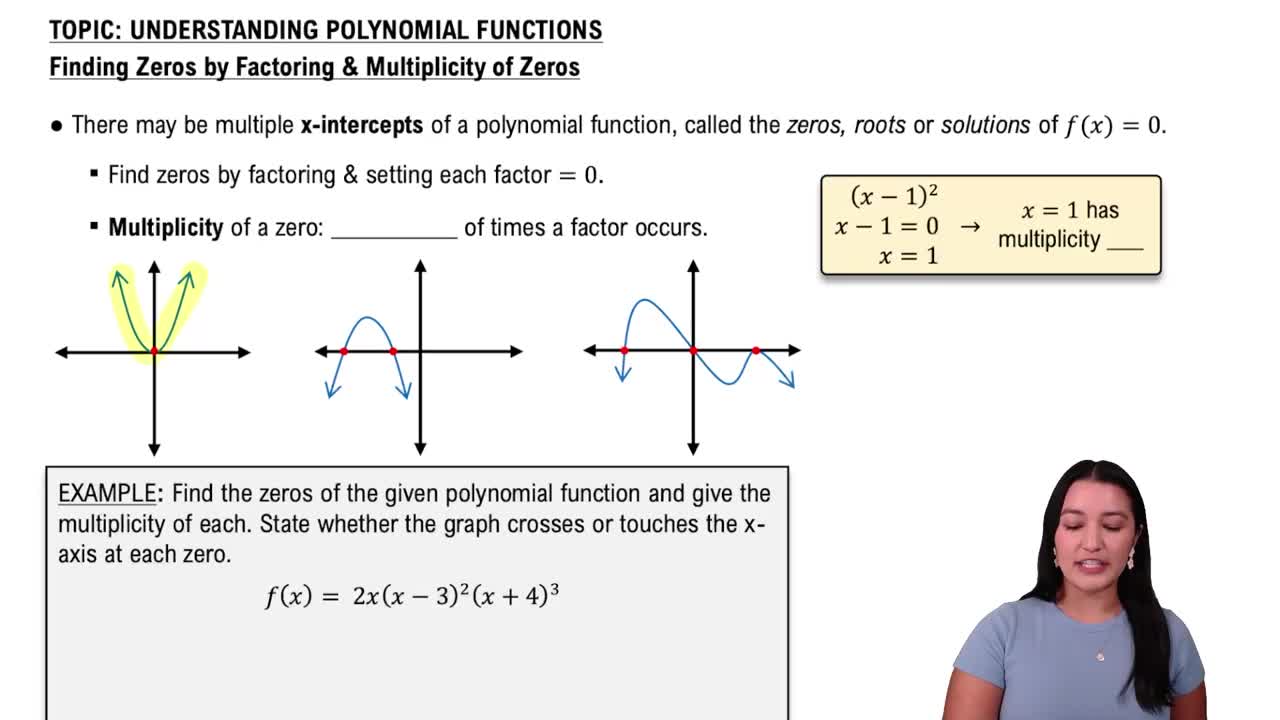
Zero of a Function

A zero of a function is a value of x for which the function's output y equals zero. Graphically, this corresponds to the point(s) where the graph intersects the x-axis. Identifying zeros helps solve equations of the form f(x) = 0.
Recommended video:
03:42
Finding Zeros & Their Multiplicity

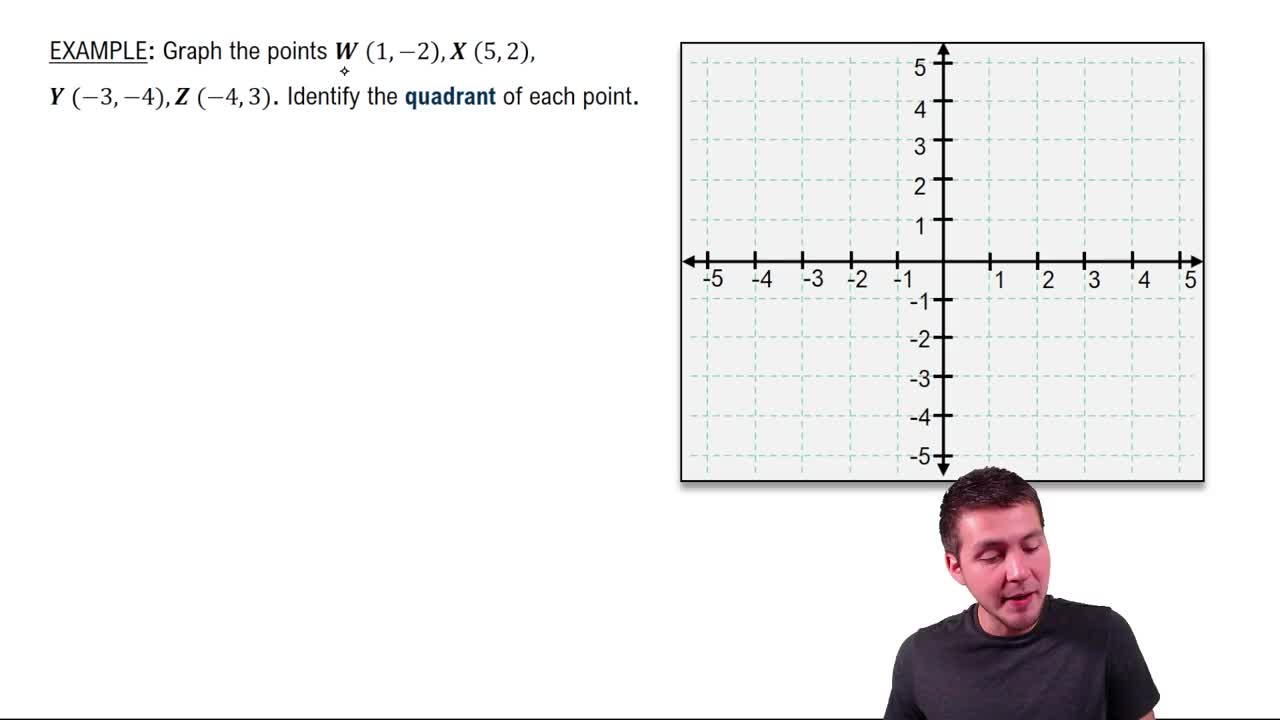
Interpreting Graphs

Interpreting graphs involves understanding the relationship between x and y values visually. For a function graph, the x-values where the curve crosses the x-axis indicate solutions to f(x) = 0. Careful observation of the graph's scale and intercepts is essential.
Recommended video:
Guided course
02:16
Graphs and Coordinates - Example

Linear Functions and Their Graphs

A linear function has the form y = mx + b, producing a straight line graph. The slope m indicates the line's steepness and direction. The x-intercept, where y=0, can be found by solving mx + b = 0, representing the function's zero.
Recommended video:
5:26
Graphs of Logarithmic Functions