Ch. 2 - Graphs and Functions
Lial - College Algebra 13th Edition
Lial13th EditionCollege AlgebraISBN: 9780136881063Not the one you use?Change textbook
Chapter 3, Problem 99

For each function graphed, give the minimum and maximum values of ƒ(x) and the x-values at which they occur.
Graph of a function showing a curve with minimum value near -3 at x=0 and maximum values near 3 at x=±4.

Verified step by step guidance
1
Step 1: Identify the maximum value of the function by looking for the highest point on the graph. This is where the function reaches its greatest y-value.
Step 2: Note the x-coordinate corresponding to this maximum y-value. This gives the location where the maximum occurs.
Step 3: Identify the minimum value of the function by finding the lowest point on the graph. This is where the function reaches its smallest y-value.
Step 4: Note the x-coordinate corresponding to this minimum y-value. This gives the location where the minimum occurs.
Step 5: Summarize the results by stating the maximum value and its x-coordinate, and the minimum value and its x-coordinate.

Verified video answer for a similar problem:

This video solution was recommended by our tutors as helpful for the problem above.
Video duration:
3m
Was this helpful?

Key Concepts

Here are the essential concepts you must grasp in order to answer the question correctly.

Maximum and Minimum Values of a Function

Maximum and minimum values of a function are the highest and lowest points on its graph, respectively. The maximum value is the largest y-value the function attains, while the minimum is the smallest y-value. These points can occur at specific x-values and are important for understanding the function's range.
Recommended video:
02:44
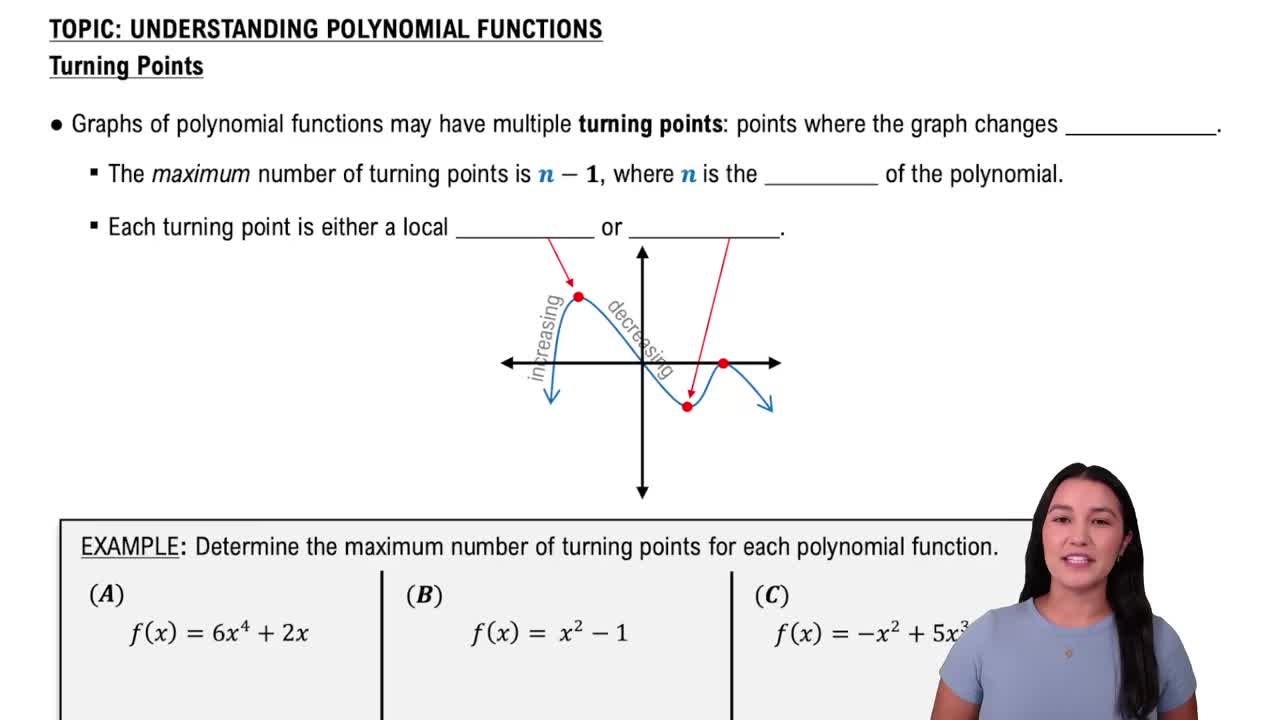
Maximum Turning Points of a Polynomial Function

Reading Coordinates from a Graph

To find maximum and minimum values, you must accurately read the coordinates of key points on the graph. The x-coordinate indicates where the extremum occurs, and the y-coordinate gives the function's value at that point. This skill is essential for interpreting graphical data.
Recommended video:
Guided course
02:16
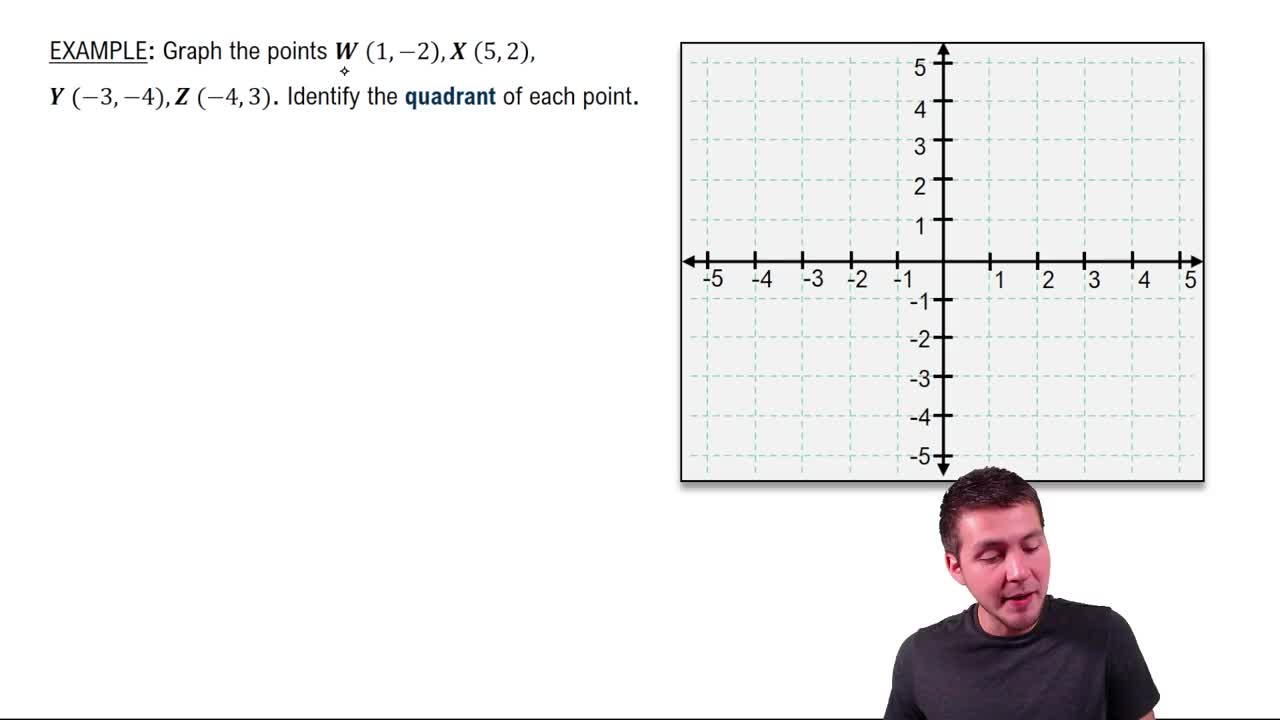
Graphs and Coordinates - Example

Piecewise Linear Functions

The graph shown is a piecewise linear function, composed of straight line segments. Understanding how to analyze such functions involves identifying points where the slope changes, which often correspond to local maxima or minima. This helps in determining the function's behavior over different intervals.
Recommended video:
06:07
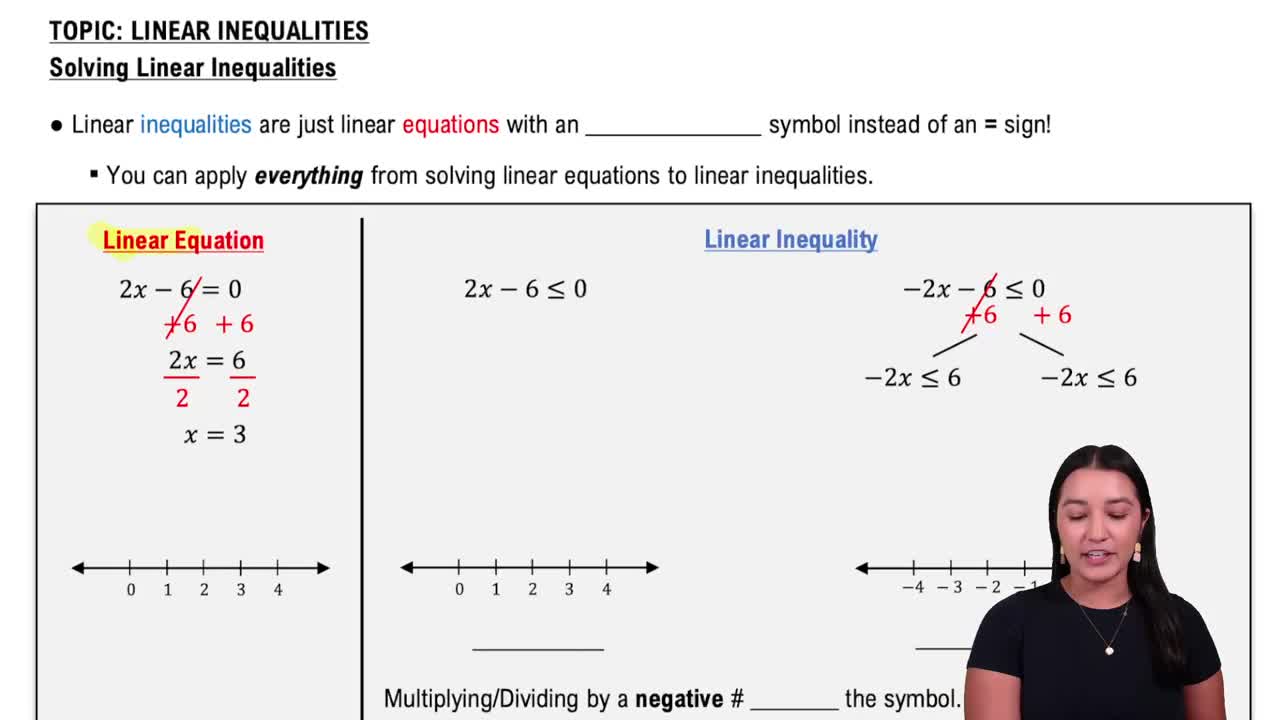
Linear Inequalities