Each of the following graphs is obtained from the graph of ƒ(x)=|x| or g(x)=√x by applying several of the transformations discussed in this section. Describe the transformations and give an equation for the graph.
Ch. 2 - Graphs and Functions

Chapter 3, Problem 97
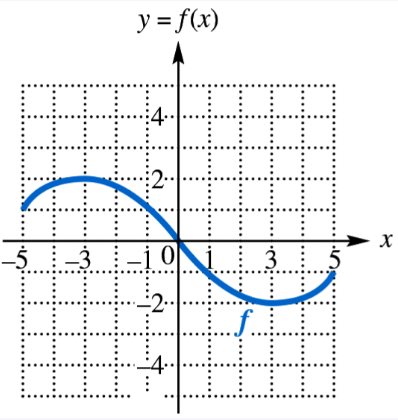
For each function graphed, give the minimum and maximum values of ƒ(x) and the x-values at which they occur.

Verified step by step guidance1
Step 1: Identify the maximum value of the function by locating the highest point on the graph. This is where the function reaches its peak.
Step 2: Note the y-coordinate of this highest point, which represents the maximum value of ƒ(x), and the corresponding x-coordinate where this maximum occurs.
Step 3: Identify the minimum value of the function by locating the lowest point on the graph. This is where the function reaches its lowest value.
Step 4: Note the y-coordinate of this lowest point, which represents the minimum value of ƒ(x), and the corresponding x-coordinate where this minimum occurs.
Step 5: Summarize the results by stating the minimum and maximum values of ƒ(x) along with their respective x-values.

Verified video answer for a similar problem:
This video solution was recommended by our tutors as helpful for the problem above.
Video duration:
3mWas this helpful?
Key Concepts
Here are the essential concepts you must grasp in order to answer the question correctly.
Maximum and Minimum Values of a Function
Maximum and minimum values of a function are the highest and lowest points on its graph, respectively. A maximum value is where the function reaches a peak, and a minimum value is where it reaches a trough. These values can be local (relative) or absolute (global) within a given domain.
Recommended video:
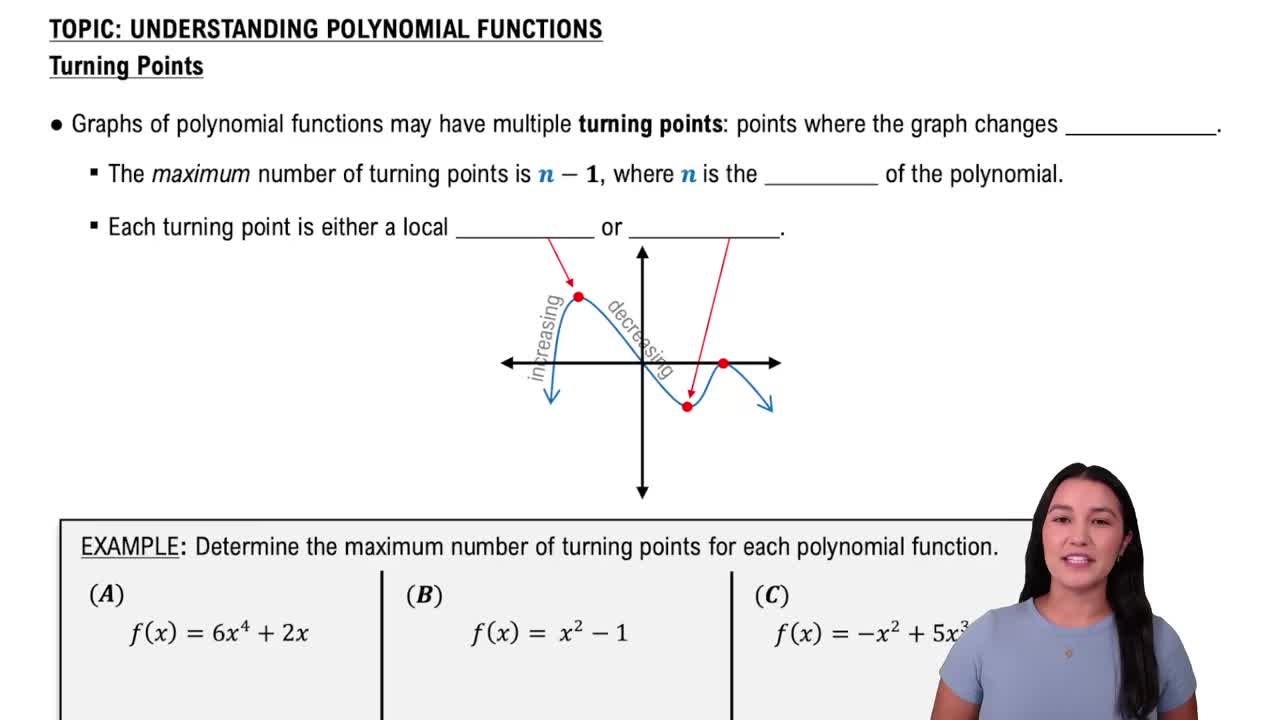
Maximum Turning Points of a Polynomial Function
Reading and Interpreting Graphs
Understanding how to read graphs involves identifying key points such as peaks, valleys, and intercepts. The x-values at these points correspond to where the function attains its maximum or minimum values. Accurate interpretation helps in extracting meaningful information about the function's behavior.
Recommended video:
Guided course
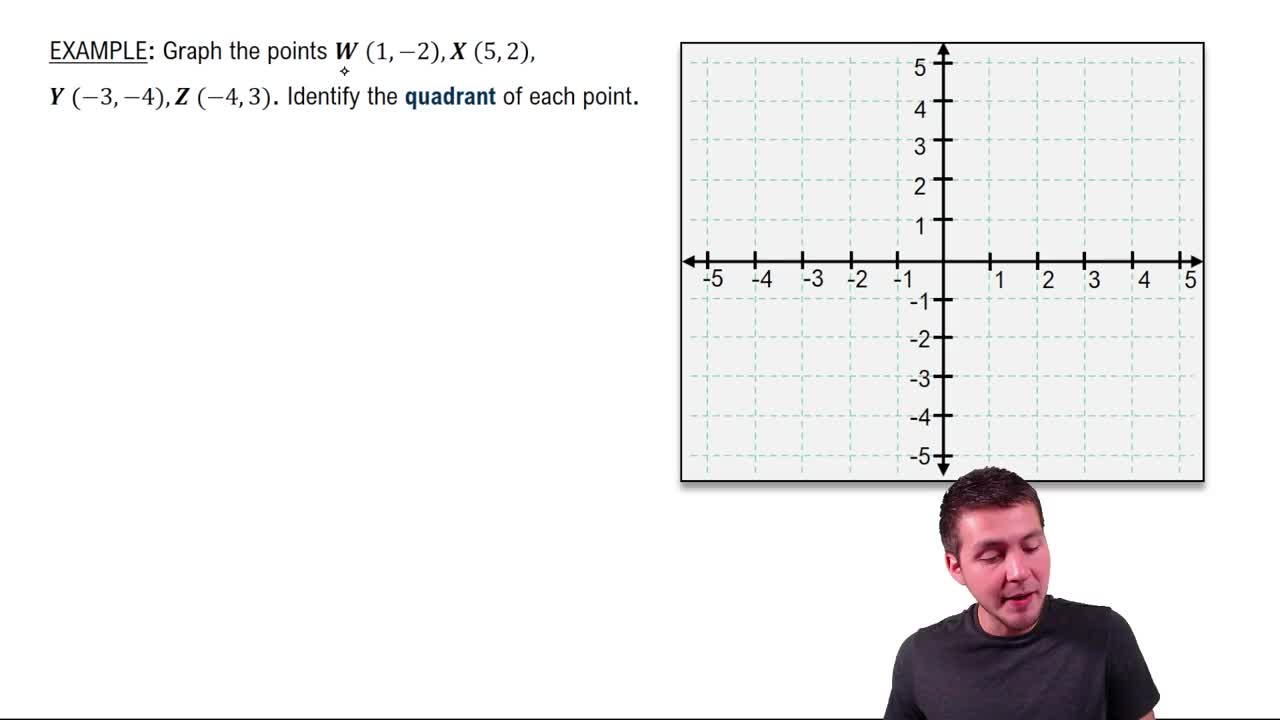
Graphs and Coordinates - Example
Function Notation and Evaluation
Function notation, written as ƒ(x), represents the output of a function for a given input x. Evaluating the function at specific x-values helps determine the corresponding y-values, which are essential for identifying minimum and maximum points on the graph.
Recommended video:
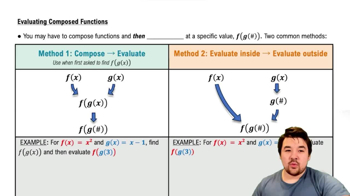
Evaluating Composed Functions
Related Practice
Textbook Question
1228
views
Textbook Question
Each of the following graphs is obtained from the graph of ƒ(x)=|x| or g(x)=√x by applying several of the transformations discussed in this section. Describe the transformations and give an equation for the graph.
789
views
Textbook Question
Describe how the graph of each function can be obtained from the graph of ƒ(x) = |x|. g(x) = -|x|
1437
views
Textbook Question
Let ƒ(x) = 3x -4. Find an equation for each reflection of the graph of ƒ(x). across the y-axis
696
views
Textbook Question
Let ƒ(x) = 3x -4. Find an equation for each reflection of the graph of ƒ(x). across the x-axis
893
views
Textbook Question
Each of the following graphs is obtained from the graph of ƒ(x)=|x| or g(x)=√x by applying several of the transformations discussed in this section. Describe the transformations and give an equation for the graph.
790
views