Determine whether each equation is an identity, a conditional equation, or a contradiction. Give the solution set. (1/2)(6x+20) = x+4 +2(x+3)
Verified step by step guidance
1
Start by rewriting the given equation clearly: \(\frac{1}{2}(6x + 20) = x + 4 + 2(x + 3)\).
Distribute the \(\frac{1}{2}\) on the left side: \(\frac{1}{2} \times 6x + \frac{1}{2} \times 20 = 3x + 10\).
Distribute the 2 on the right side inside the parentheses: \(x + 4 + 2x + 6\).
Combine like terms on both sides: Left side is \$3x + 10\(, right side is \)(x + 2x) + (4 + 6) = 3x + 10$.
Compare both sides: since both simplify to \$3x + 10\(, the equation holds true for all values of \)x$, indicating it is an identity with the solution set being all real numbers.
Verified video answer for a similar problem:
This video solution was recommended by our tutors as helpful for the problem above
Video duration:
3m
Play a video:
0 Comments
Key Concepts
Here are the essential concepts you must grasp in order to answer the question correctly.
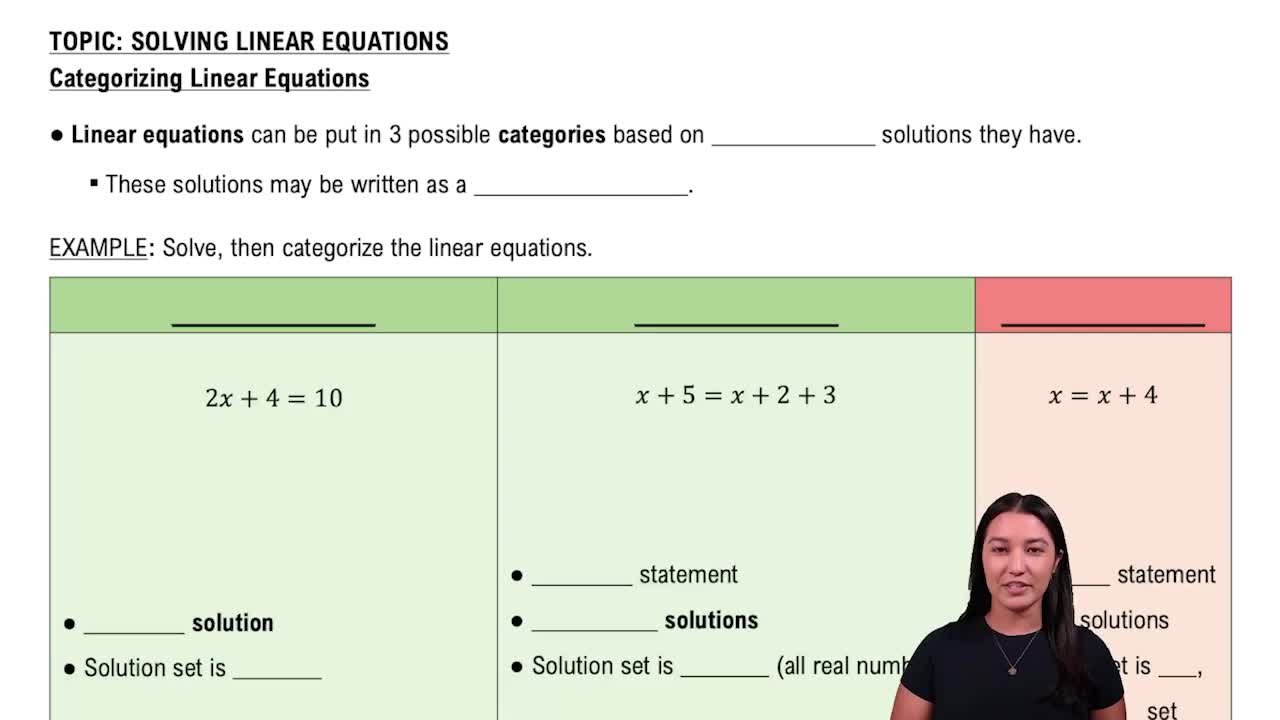
Types of Equations: Identity, Conditional, and Contradiction
An identity is an equation true for all values of the variable, a conditional equation is true for specific values, and a contradiction has no solution. Recognizing these types helps determine the nature of the solution set.
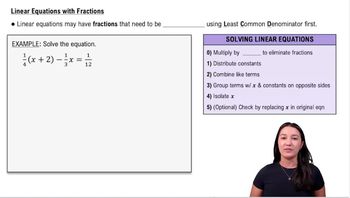
Solving linear equations involves simplifying both sides, combining like terms, and isolating the variable. This process helps find the values that satisfy the equation or determine if no or all values work.
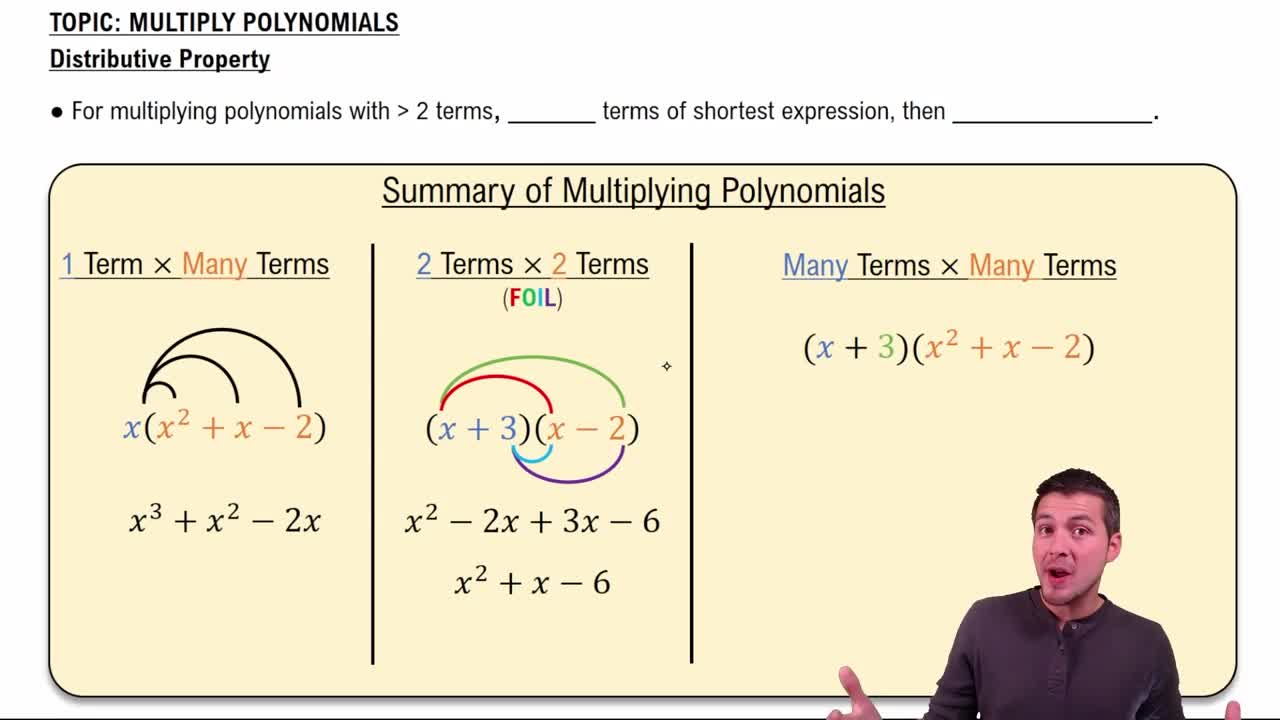
The distributive property allows multiplication over addition or subtraction, such as a(b + c) = ab + ac. Applying this property correctly is essential to simplify expressions and solve equations accurately.