Ch. 5 - An Introduction to Carbohydrates
Freeman - Biological Science 8th Edition
Freeman8th EditionBiological ScienceISBN: 9780138276263Not the one you use?Change textbook
Chapter 5, Problem 9

Galactosemia is a potentially fatal disease that occurs in humans who lack the enzyme that converts galactose to glucose. If you were a physician treating a person with this disease, which of the following would you have them exclude from their diet?
a. Maltose
b. Starch
c. Mannose
d. Lactose

Verified step by step guidance
1
Understand the condition: Galactosemia is a genetic disorder where the body cannot convert galactose into glucose due to the absence of the enzyme galactose-1-phosphate uridylyltransferase.
Identify the source of galactose: Galactose is a monosaccharide that is commonly found in lactose, which is a disaccharide composed of glucose and galactose.
Analyze the dietary options: Evaluate each option to determine if it contains galactose. Maltose is composed of two glucose molecules, starch is a polysaccharide made of glucose units, mannose is a different monosaccharide, and lactose contains galactose.
Determine the exclusion: Since lactose contains galactose, it should be excluded from the diet of a person with galactosemia to prevent the accumulation of galactose in the body.
Provide dietary advice: Recommend alternative sources of carbohydrates that do not contain galactose, such as those derived from maltose or starch, to ensure the patient receives adequate nutrition without risking their health.

Verified video answer for a similar problem:

This video solution was recommended by our tutors as helpful for the problem above.
Video duration:
2m
Was this helpful?

Key Concepts

Here are the essential concepts you must grasp in order to answer the question correctly.

Galactosemia

Galactosemia is a genetic disorder where the body is unable to convert galactose into glucose due to the absence or malfunction of the enzyme galactose-1-phosphate uridylyltransferase. This leads to the accumulation of galactose in the blood, which can cause serious health issues such as liver damage, intellectual disability, and even death if not managed properly.

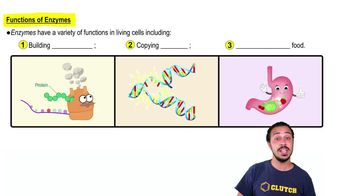
Enzyme Function

Enzymes are biological catalysts that speed up chemical reactions in the body. In the context of galactosemia, the enzyme galactose-1-phosphate uridylyltransferase is crucial for converting galactose into glucose. Without this enzyme, galactose accumulates, leading to toxic effects. Understanding enzyme function is essential for diagnosing and treating metabolic disorders like galactosemia.
Recommended video:
Guided course
02:32
Functions of Enzymes

Dietary Sources of Galactose

Galactose is a sugar found in lactose, which is present in milk and dairy products. For individuals with galactosemia, it is critical to avoid foods containing lactose to prevent the accumulation of galactose. Physicians must advise patients to exclude lactose from their diet, as it directly contributes to the galactose levels in the body, exacerbating the condition.
Recommended video:
02:16
Sources of Genetic Variation