
Ch. 49 - Nervous Systems
Campbell - Campbell Biology 11th Edition
Urry11th EditionCampbell BiologyISBN: 9789357423311Not the one you use?Change textbook
Chapter 49, Problem 1

Activation of the parasympathetic branch of the autonomic nervous system
a. Increases heart rate
b. Enhances digestion
c. Triggers release of epinephrine
d. Causes conversion of glycogen to glucose

Verified step by step guidance
1
Understand the role of the parasympathetic nervous system: It is part of the autonomic nervous system responsible for 'rest and digest' functions, which generally promote relaxation and conservation of energy.
Consider the effects of the parasympathetic nervous system on the heart: It typically decreases heart rate, as opposed to increasing it.
Evaluate the impact on digestion: The parasympathetic nervous system enhances digestion by stimulating digestive secretions and peristalsis.
Analyze the release of epinephrine: This is usually associated with the sympathetic nervous system, which prepares the body for 'fight or flight' responses, not the parasympathetic system.
Examine the conversion of glycogen to glucose: This process is also linked to the sympathetic nervous system, which mobilizes energy reserves, rather than the parasympathetic system.

Verified video answer for a similar problem:

This video solution was recommended by our tutors as helpful for the problem above.
Video duration:
2m
Was this helpful?

Key Concepts

Here are the essential concepts you must grasp in order to answer the question correctly.

Autonomic Nervous System

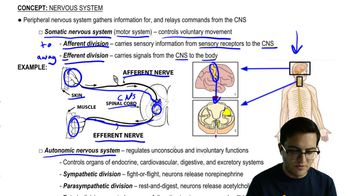
The autonomic nervous system (ANS) is a part of the peripheral nervous system that controls involuntary bodily functions. It consists of two main branches: the sympathetic and parasympathetic systems. The sympathetic system prepares the body for 'fight or flight' responses, while the parasympathetic system promotes 'rest and digest' activities, helping to conserve energy and maintain homeostasis.
Recommended video:
Guided course
06:26
Peripheral Nervous System

Parasympathetic Nervous System

The parasympathetic nervous system is one of the two branches of the autonomic nervous system. It is responsible for stimulating activities that occur when the body is at rest, such as digestion, urination, and lowering heart rate. Activation of this system enhances digestion and conserves energy by slowing down the heart rate and promoting the storage of energy.
Recommended video:
Guided course
06:26
Peripheral Nervous System

Sympathetic Nervous System

The sympathetic nervous system is the counterpart to the parasympathetic system within the autonomic nervous system. It is activated during stress or danger, leading to increased heart rate, release of epinephrine (adrenaline), and conversion of glycogen to glucose for quick energy. This system prepares the body for rapid action, often referred to as the 'fight or flight' response.
Recommended video:
Guided course
06:26
Peripheral Nervous System