Ch. 45 - Hormones and the Endocrine System
Campbell - Campbell Biology 11th Edition
Urry11th EditionCampbell BiologyISBN: 9789357423311Not the one you use?Change textbook
Chapter 45, Problem 2

The hypothalamus
a. Synthesizes all of the hormones produced by the pituitary gland.
b. Influences the function of only one lobe of the pituitary gland.
c. Produces only inhibitory hormones.
d. Regulates both reproduction and body temperature.

Verified step by step guidance
1
Understand the role of the hypothalamus: The hypothalamus is a small region of the brain that plays a crucial role in hormone production and regulation of various bodily functions.
Identify the functions of the hypothalamus: It is involved in regulating body temperature, hunger, thirst, sleep, and circadian rhythms, as well as controlling the autonomic nervous system.
Examine the relationship between the hypothalamus and the pituitary gland: The hypothalamus produces releasing and inhibiting hormones that control the release of hormones from the anterior pituitary gland. It also produces hormones like oxytocin and vasopressin that are stored and released by the posterior pituitary gland.
Consider the regulatory functions of the hypothalamus: It regulates reproductive functions through the release of gonadotropin-releasing hormone (GnRH) and controls body temperature through thermoregulatory centers.
Evaluate the options based on the hypothalamus functions: Analyze each option to determine which accurately describes the functions of the hypothalamus, focusing on its regulatory roles in reproduction and body temperature.

Verified video answer for a similar problem:

This video solution was recommended by our tutors as helpful for the problem above.
Video duration:
2m
Was this helpful?

Key Concepts

Here are the essential concepts you must grasp in order to answer the question correctly.

Hypothalamus Function

The hypothalamus is a crucial brain region that regulates various bodily functions, including temperature control, hunger, thirst, and circadian rhythms. It plays a significant role in the endocrine system by producing hormones that influence the pituitary gland, thus affecting growth, metabolism, and reproduction.
Recommended video:
Guided course
06:04
Functional Groups

Pituitary Gland Interaction

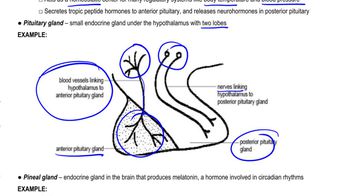
The hypothalamus interacts with the pituitary gland, which is divided into the anterior and posterior lobes. It releases hormones that either stimulate or inhibit hormone production in the anterior pituitary, while directly releasing hormones into the posterior pituitary for storage and later release into the bloodstream.
Recommended video:
Guided course
03:34
Hypothalamus and Pituitary

Hormonal Regulation

Hormonal regulation by the hypothalamus involves both releasing and inhibitory hormones. These hormones control the secretion of various pituitary hormones, which in turn regulate processes such as stress response, growth, and reproductive functions, highlighting the hypothalamus's role in maintaining homeostasis.
Recommended video:
Guided course
08:18
Plant Hormones and Senescence