Ch. 41 - Animal Nutrition
Campbell - Campbell Biology 11th Edition
Urry11th EditionCampbell BiologyISBN: 9789357423311Not the one you use?Change textbook
Chapter 41, Problem 7

If you were to jog 1 km a few hours after lunch, which stored fuel would you probably tap?
a. Muscle proteins
b. Muscle and liver glycogen
c. Fat in the liver
d. Fat in adipose tissue

Verified step by step guidance
1
Understand that the body uses different energy sources depending on the intensity and duration of the exercise, as well as the time since the last meal.
Recognize that glycogen stored in muscles and the liver is a primary source of energy for short-term, moderate-intensity activities like jogging.
Consider that after a meal, the body will have replenished its glycogen stores, making glycogen a readily available energy source.
Note that fat stores, such as those in adipose tissue, are typically used for longer-duration, lower-intensity activities or when glycogen stores are depleted.
Conclude that for a short jog a few hours after eating, the body is most likely to use muscle and liver glycogen as the primary fuel source.

Verified video answer for a similar problem:

This video solution was recommended by our tutors as helpful for the problem above.
Video duration:
2m
Was this helpful?

Key Concepts

Here are the essential concepts you must grasp in order to answer the question correctly.

Glycogen Storage and Utilization

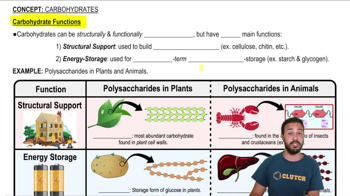
Glycogen is a stored form of glucose found primarily in the liver and muscles. After a meal, excess glucose is converted into glycogen for storage. During physical activities like jogging, the body first utilizes glycogen reserves for quick energy, especially from muscle glycogen, as it is readily accessible and can be rapidly mobilized to meet energy demands.
Recommended video:
Guided course
05:08
Carbohydrate Functions

Energy Metabolism

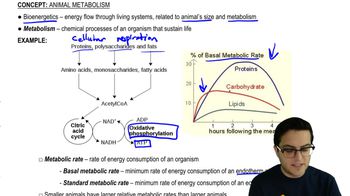
Energy metabolism refers to the biochemical processes that convert food into energy. The body prioritizes different energy sources based on availability and intensity of activity. For moderate activities like jogging, carbohydrates stored as glycogen are the primary energy source, as they provide a quick and efficient release of energy compared to fats or proteins.
Recommended video:
Guided course
07:08
Metabolic Rate

Role of Adipose Tissue in Energy Storage

Adipose tissue stores energy in the form of fat, which is a long-term energy reserve. While fats provide a high energy yield, they are not the body's immediate choice for energy during short, moderate activities. Instead, fats are typically mobilized during prolonged, low-intensity exercise or when glycogen stores are depleted, making them less likely to be used for a short jog after a meal.
Recommended video:
Guided course
06:20
Connective and Nervous Tissues