
Here are the essential concepts you must grasp in order to answer the question correctly.
Biomes and Latitude
Biomes are large ecological areas on the Earth's surface, with flora and fauna adapting to their environment. Latitude affects climate, which in turn influences the type of biome present. As latitude changes, so do temperature and precipitation patterns, leading to transitions between biomes such as tundra, forest, and desert.
Recommended video:
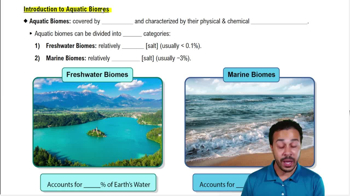
Introduction to Aquatic Biomes
Ocean Depths and Biological Communities
The ocean is stratified into different zones based on depth, each hosting distinct biological communities. Light availability, pressure, and temperature vary with depth, influencing the types of organisms that can survive. For example, the photic zone supports photosynthetic life, while the abyssal zone hosts organisms adapted to darkness and high pressure.
Recommended video:
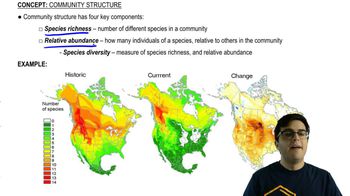
Seasonal Changes in Communities
Biological communities undergo seasonal changes due to variations in temperature, light, and precipitation. These changes affect species behavior, reproduction, and survival strategies. For instance, deciduous forests experience leaf shedding in autumn, while many animals hibernate or migrate to adapt to winter conditions.
Recommended video: