Ch. 32 - An Overview of Animal Diversity
Campbell - Campbell Biology 12th Edition
Urry12th EditionCampbell BiologyISBN: 9785794169850Not the one you use?Change textbook
Chapter 32, Problem 2

The distinction between sponges and other animal phyla is based mainly on the absence versus the presence of
a. A body cavity
b. A complete digestive tract
c. Mesoderm
d. Tissues

Verified step by step guidance
1
Understand the basic characteristics of sponges: Sponges are simple animals that lack true tissues and organs. They belong to the phylum Porifera.
Recognize the defining features of other animal phyla: Most other animal phyla have organized tissues and organs, which are derived from embryonic layers such as ectoderm, mesoderm, and endoderm.
Identify the key difference: Sponges do not have true tissues, whereas other animal phyla do. This is a fundamental distinction between sponges and other animals.
Consider the options provided: Evaluate each option (a body cavity, a complete digestive tract, mesoderm, tissues) to determine which one is absent in sponges but present in other animal phyla.
Conclude based on the analysis: The absence of true tissues in sponges is the main distinction from other animal phyla, which possess organized tissues.

Verified video answer for a similar problem:

This video solution was recommended by our tutors as helpful for the problem above.
Video duration:
5m
Was this helpful?

Key Concepts

Here are the essential concepts you must grasp in order to answer the question correctly.

Body Cavity

A body cavity is a fluid-filled space within the body that houses organs and provides structural support. In animals, the presence or absence of a body cavity, such as a coelom, is a key characteristic used to differentiate between phyla. Sponges lack a true body cavity, which distinguishes them from many other animal groups.
Recommended video:

Complete Digestive Tract

A complete digestive tract refers to a digestive system with two openings: a mouth and an anus, allowing for a one-way flow of food. This feature is present in more complex animals, enabling efficient digestion and nutrient absorption. Sponges do not have a complete digestive tract; they rely on intracellular digestion within their porous bodies.
Recommended video:
Guided course
05:11
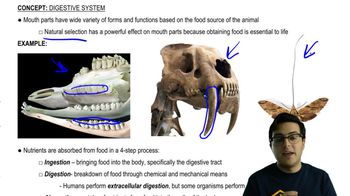
Digestion and Digestive Tracts

Tissues

Tissues are groups of cells with a common structure and function, forming the building blocks of organs and systems in multicellular organisms. The presence of organized tissues is a defining characteristic of most animal phyla. Sponges are unique as they lack true tissues, having a simple organization with specialized cells but no distinct tissue layers.
Recommended video:
Guided course
06:58
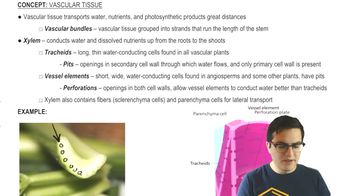
Vascular Tissue