32. Vertebrates
Chordates
32. Vertebrates
Chordates
 05:34
05:34

Showing 6 of 6 videos
Additional 16 creators.
Learn with other creators













Showing 19 of 19 videos
Practice this topic
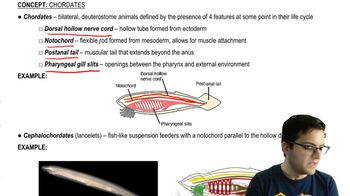
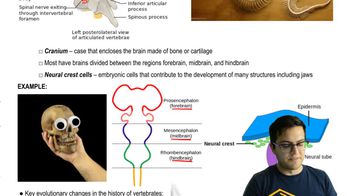
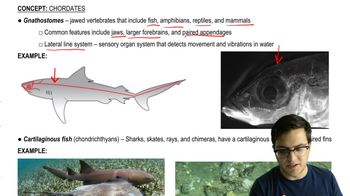
- Multiple ChoiceIf an animal has segments, bilateral symmetry, pharyngeal clefts, a post-anal tail, and deuterostomic development, it must be a member of the __________.1284views
- Multiple ChoiceA __________ is a chordate but not a vertebrate.1542views
- Multiple ChoiceWhich of the following chordate characteristics contributes most to the formation of your ears?1400views
- Multiple ChoiceWhich of the following chordate characteristics contributes most to suspension-feeding devices in many invertebrate chordates?1339views