What four cellular components are shared by prokaryotic and eukaryotic cells?
Verified step by step guidance
1
Identify the basic structure of a cell and understand that both prokaryotic and eukaryotic cells share some common components.
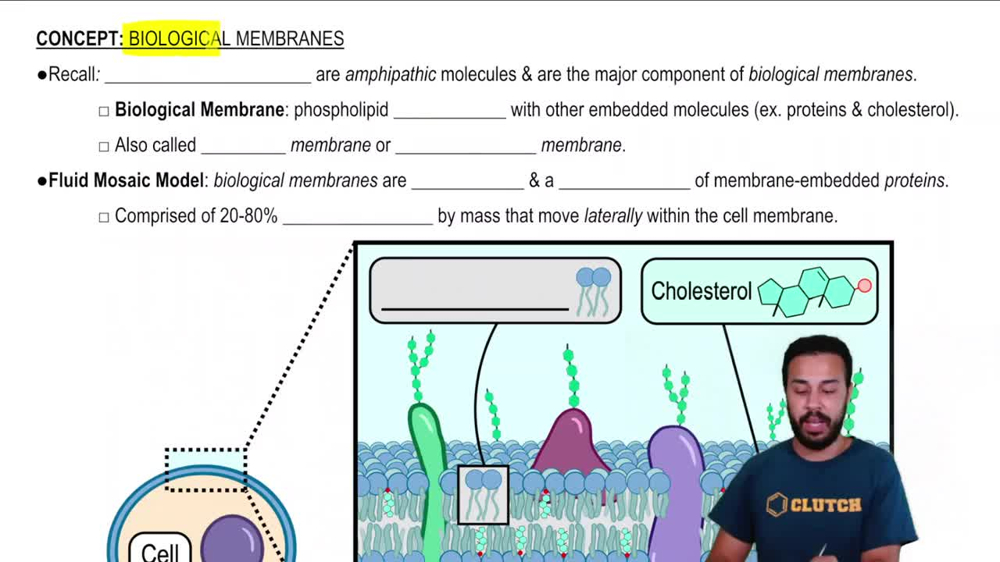
Recognize that both cell types have a plasma membrane, which acts as a barrier to control the movement of substances in and out of the cell.
Acknowledge that both prokaryotic and eukaryotic cells contain cytoplasm, the jelly-like substance that fills the cell and holds the organelles.
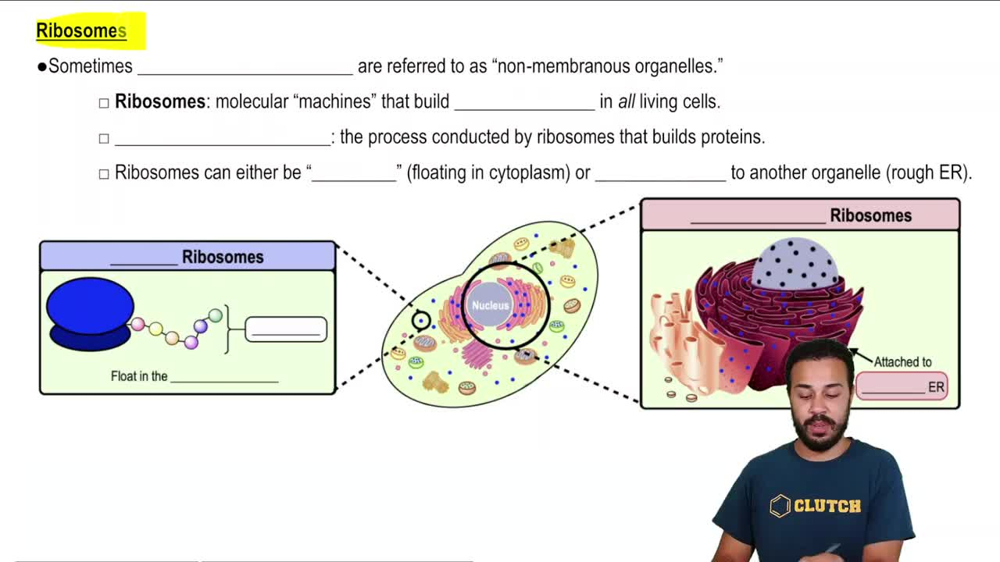
Understand that ribosomes are present in both cell types, serving as the site of protein synthesis.
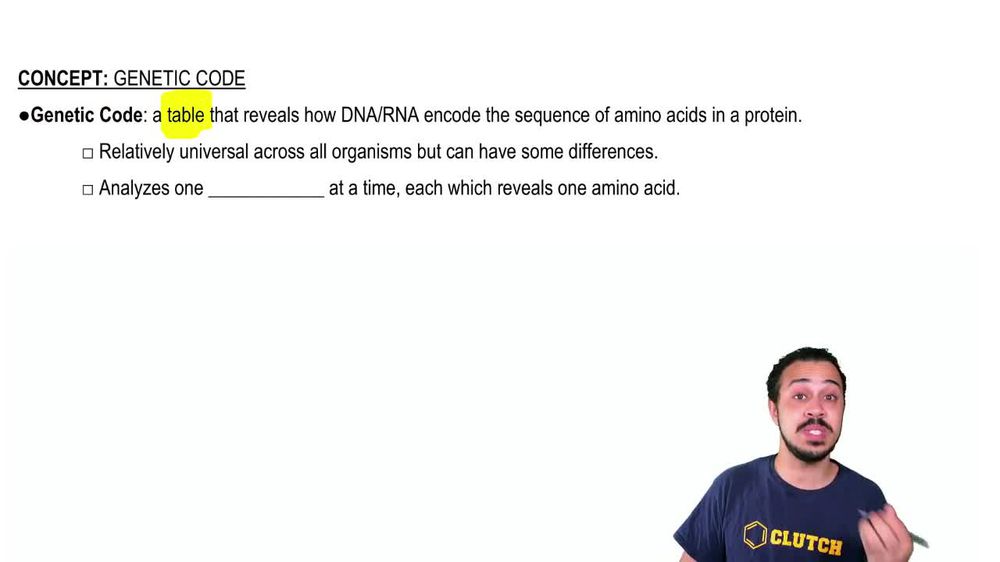
Note that both prokaryotic and eukaryotic cells contain genetic material (DNA), although it is organized differently in each type.
Verified video answer for a similar problem:
This video solution was recommended by our tutors as helpful for the problem above
Video duration:
1m
Play a video:
0 Comments
Key Concepts
Here are the essential concepts you must grasp in order to answer the question correctly.
Cell Membrane
The cell membrane is a vital structure that surrounds both prokaryotic and eukaryotic cells, providing a barrier that regulates the movement of substances in and out of the cell. It is composed of a phospholipid bilayer with embedded proteins, which facilitate communication and transport. This selective permeability is crucial for maintaining homeostasis within the cell.
Ribosomes are the cellular machinery responsible for protein synthesis in both prokaryotic and eukaryotic cells. They translate messenger RNA (mRNA) into polypeptide chains, which then fold into functional proteins. While prokaryotic ribosomes are smaller (70S) compared to eukaryotic ribosomes (80S), their fundamental role in protein production is conserved across both cell types.
Both prokaryotic and eukaryotic cells contain genetic material in the form of DNA, which carries the instructions for cellular functions and heredity. In prokaryotes, DNA is typically circular and located in the nucleoid region, while eukaryotes have linear DNA organized into chromosomes within a membrane-bound nucleus. This genetic material is essential for replication, transcription, and the overall functioning of the cell.

 1:23 minutes
 Verified step by step guidance
 06:49
06:49