More than one choice may apply. Developmentally, embryonic lymphatic vessels are most closely associated with the a. Veins b. Arteries c. Nerves d. Thymus gland
Verified step by step guidance
1
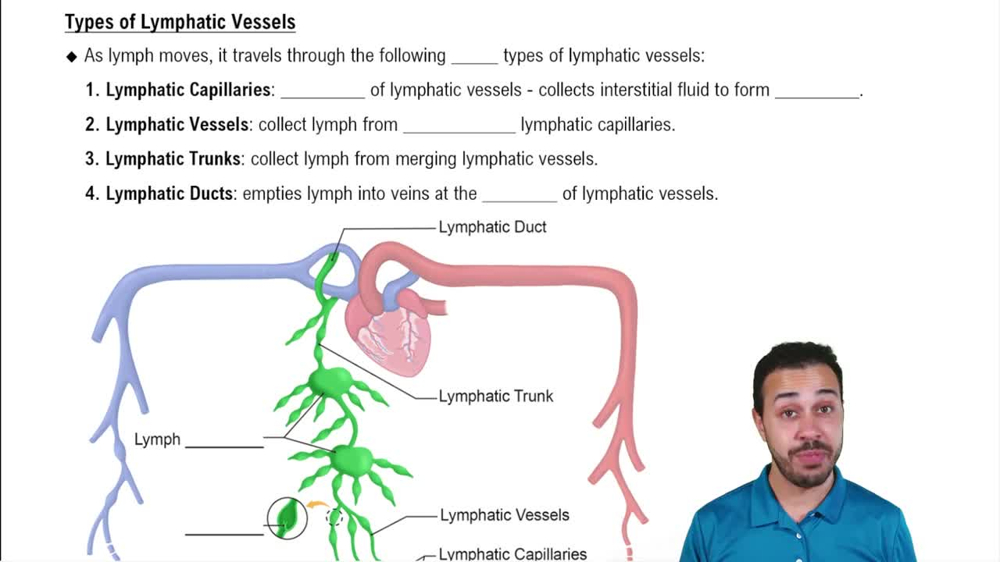
Understand the embryological development of the lymphatic system: Lymphatic vessels originate from the venous system during embryogenesis. This means they are closely associated with veins in their development.
Recall the anatomical relationship between veins and lymphatic vessels: Lymphatic vessels often run parallel to veins, sharing similar pathways and structures during development.
Consider the role of arteries: While arteries are crucial for blood circulation, they are not directly involved in the embryological development of lymphatic vessels.
Evaluate the role of nerves: Nerves are responsible for transmitting signals but are not structurally or developmentally associated with lymphatic vessels.
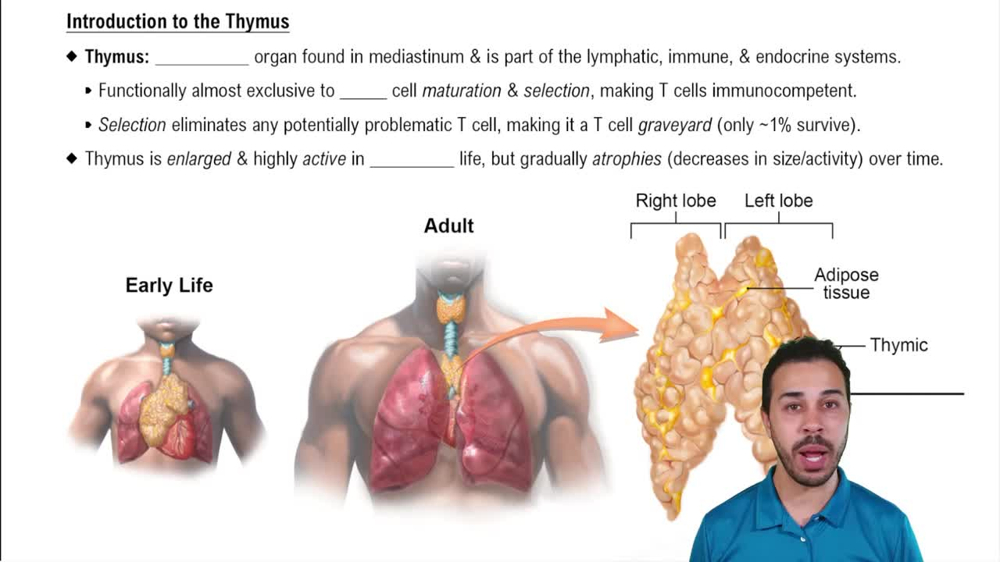
Assess the thymus gland: The thymus gland is involved in immune system development but does not play a direct role in the embryological formation of lymphatic vessels.
Verified video answer for a similar problem:

This video solution was recommended by our tutors as helpful for the problem above
Video duration:
1m
Play a video:
0 Comments
Key Concepts
Here are the essential concepts you must grasp in order to answer the question correctly.
Lymphatic System Development
The lymphatic system develops from embryonic structures known as lymph sacs, which arise from the venous system. These vessels play a crucial role in fluid balance, immune response, and the transport of lymph. Understanding the embryonic origins of lymphatic vessels is essential for grasping their relationship with other vascular structures.
Lymphatic vessels are closely associated with veins, as they often develop from the same embryonic tissues. They are responsible for draining excess interstitial fluid and returning it to the bloodstream, highlighting their functional and developmental connection to the venous system. This relationship is critical for understanding how lymphatic and circulatory systems interact.
The thymus gland is a primary lymphoid organ involved in the maturation of T-cells, which are essential for the adaptive immune response. While it plays a significant role in the immune system, it is not directly associated with the development of lymphatic vessels. Understanding the thymus's function helps clarify its distinction from the vascular structures involved in lymphatic development.