What is the primary difference between active transport processes and passive transport processes?
Verified step by step guidance
1
Understand that transport processes in cells are mechanisms by which substances move across the cell membrane. These processes are broadly categorized into active and passive transport.
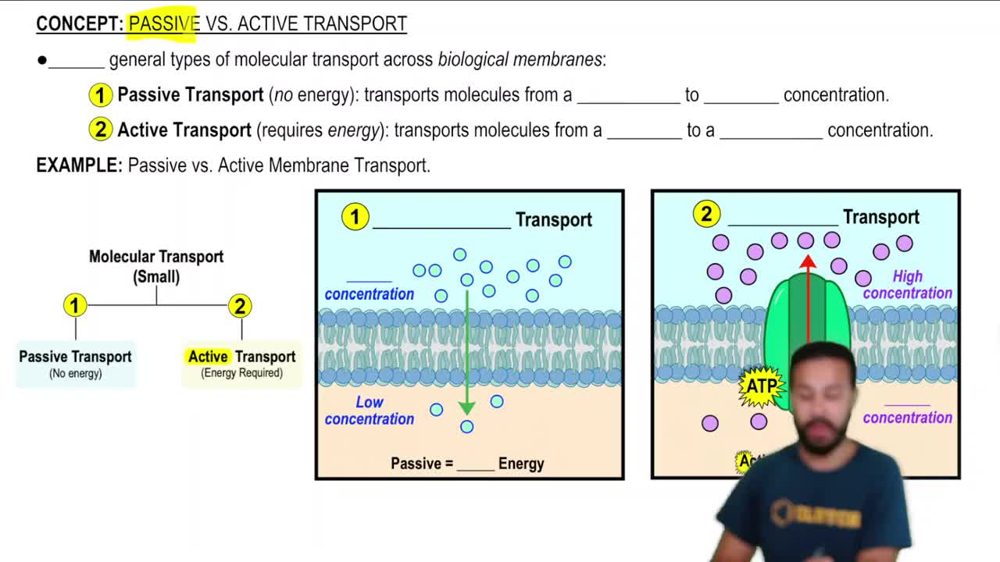
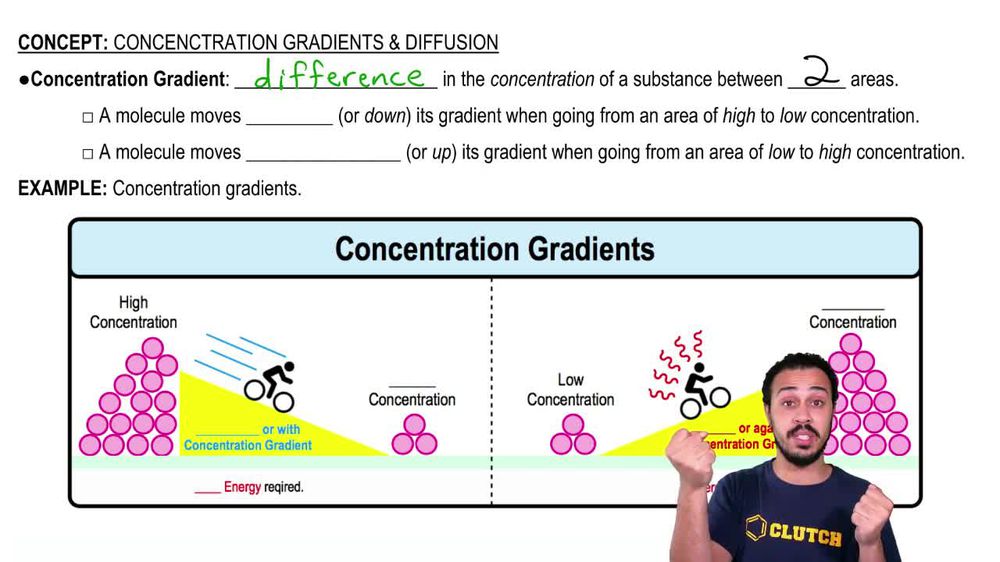
Recognize that passive transport does not require energy (ATP) from the cell. Instead, it relies on the natural movement of molecules down their concentration gradient, from an area of high concentration to an area of low concentration. Examples include diffusion, osmosis, and facilitated diffusion.
Understand that active transport requires energy in the form of ATP because it moves substances against their concentration gradient, from an area of low concentration to an area of high concentration. Examples include the sodium-potassium pump and endocytosis.
Note that the key difference lies in energy usage: passive transport is energy-independent, while active transport is energy-dependent.
Consider the physiological significance: passive transport is efficient for processes like gas exchange, while active transport is crucial for maintaining concentration gradients essential for cellular functions, such as nerve impulse transmission.
Verified video answer for a similar problem:
This video solution was recommended by our tutors as helpful for the problem above
Play a video:
0 Comments
Key Concepts
Here are the essential concepts you must grasp in order to answer the question correctly.
Active Transport
Active transport is a cellular process that requires energy, usually in the form of ATP, to move molecules against their concentration gradient. This means substances are transported from areas of lower concentration to areas of higher concentration, which is essential for maintaining cellular homeostasis and nutrient uptake.
Passive transport is the movement of molecules across a cell membrane without the use of energy. This process relies on the natural kinetic energy of molecules and occurs along the concentration gradient, meaning substances move from areas of higher concentration to areas of lower concentration, such as in diffusion and osmosis.
A concentration gradient refers to the difference in the concentration of a substance between two areas. It is a driving force for both active and passive transport processes, as substances tend to move from regions of higher concentration to lower concentration in passive transport, while active transport moves substances against this gradient.

 Verified step by step guidance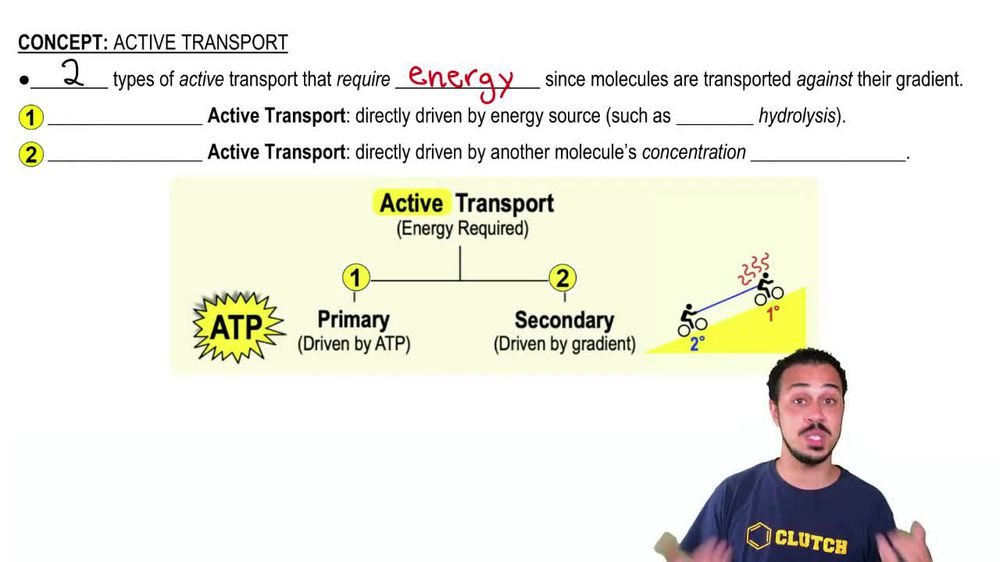
 02:37
02:37