Understand that macrophages are a type of white blood cell involved in the immune system.
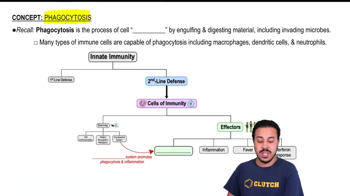
Recognize that their primary function is to identify, engulf, and digest cellular debris, foreign substances, microbes, and cancer cells through a process called phagocytosis.
Know that macrophages also play a role in alerting other immune cells by presenting antigens from pathogens to lymphocytes, which helps initiate a specific immune response.
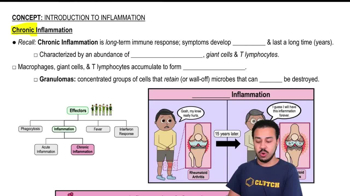
Realize that macrophages contribute to tissue repair and the regulation of inflammation by releasing signaling molecules called cytokines.
Summarize that macrophages act as both defenders against infection and facilitators of immune system communication and tissue healing.
Verified video answer for a similar problem:
This video solution was recommended by our tutors as helpful for the problem above
Video duration:
2m
Play a video:
0 Comments
Key Concepts
Here are the essential concepts you must grasp in order to answer the question correctly.
Macrophage Definition and Origin
Macrophages are a type of white blood cell derived from monocytes that play a key role in the immune system. They reside in tissues and are involved in detecting, engulfing, and destroying pathogens and cellular debris.
Phagocytosis is the process by which macrophages engulf and digest foreign particles, bacteria, and dead cells. This function helps clear infections and maintain tissue health by removing harmful substances.
Macrophages contribute to the immune response by presenting antigens to T cells and releasing signaling molecules called cytokines. These actions help coordinate inflammation and activate other immune cells to fight infections.