
Textbook Question
Compare the amount of movement possible in synarthrotic, amphiarthrotic, and diarthrotic joints. Relate these terms to the structural classification of joints—that is, to fibrous, cartilaginous, and synovial joints.
36
views

 Verified step by step guidance
 4:14
4:14
 6:23
6:23 5:30
5:30Compare the amount of movement possible in synarthrotic, amphiarthrotic, and diarthrotic joints. Relate these terms to the structural classification of joints—that is, to fibrous, cartilaginous, and synovial joints.
What bones make up each hip bone (coxal bone)? Which of these is the largest?
Which has tuberosities that we sit on?
Which is the most anterior?
What facial bone forms the chin? The cheekbone? The upper jaw? The bony eyebrow ridges?
Name two ways in which the fetal skull differs from the adult skull. A certain short-day plant flowers only when days are less than 12 hours long. Which of the following would cause it to flower?
a. A 9-hour night and 15-hour day with 1 minute of darkness after 7 hours
b. An 8-hour day and 16-hour night with a flash of white light after 8 hours
c. A 13-hour night and 11-hour day with 1 minute of darkness after 6 hours
d. A 12-hour day and 12-hour night with a flash of red light after 6 hours
Deborah, a 75-year-old woman, stumbled slightly while walking, then felt a terrible pain in her left hip. At the hospital, X-ray images revealed that the hip was broken. Also, the compact bone and spongy bone throughout her spine were very thin. What was her probable condition?
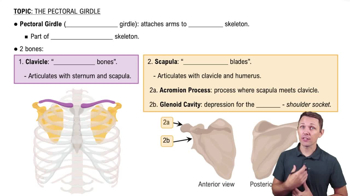
Name the bones of the shoulder girdle.