Understand that antibodies are specialized proteins produced by B cells of the immune system in response to the presence of antigens, which are foreign substances like pathogens.
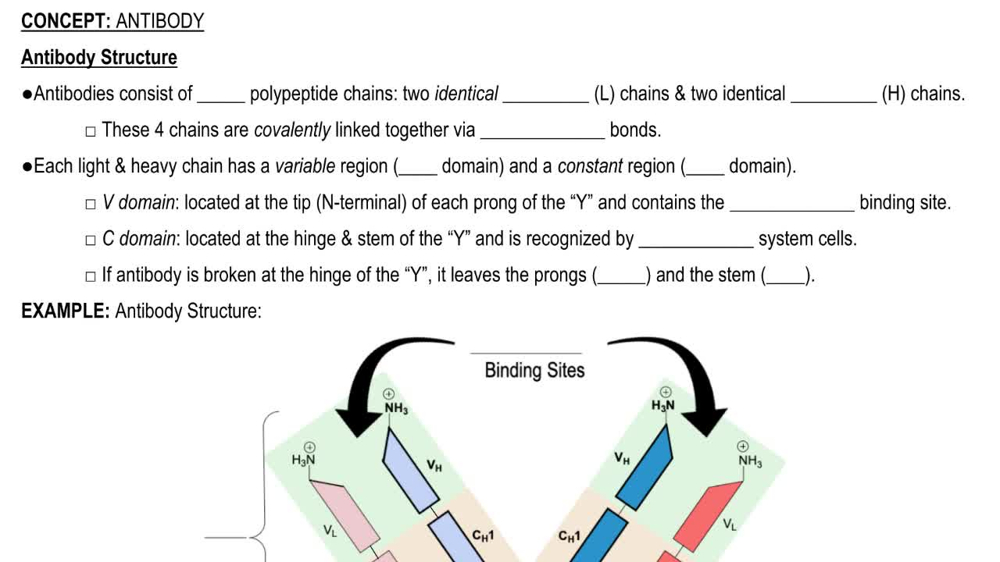
Recognize that antibodies have specific regions that bind to unique parts of an antigen called epitopes, allowing them to target specific invaders.
Learn that once bound to an antigen, antibodies can neutralize pathogens by blocking their ability to infect cells or by marking them for destruction.
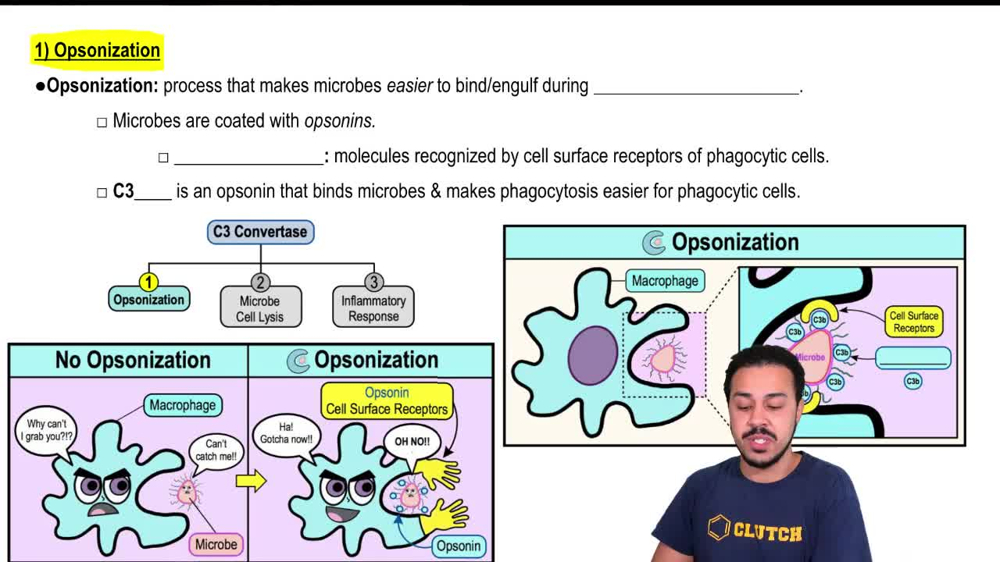
Know that antibodies also facilitate processes such as opsonization, where they coat pathogens to enhance phagocytosis by immune cells like macrophages and neutrophils.
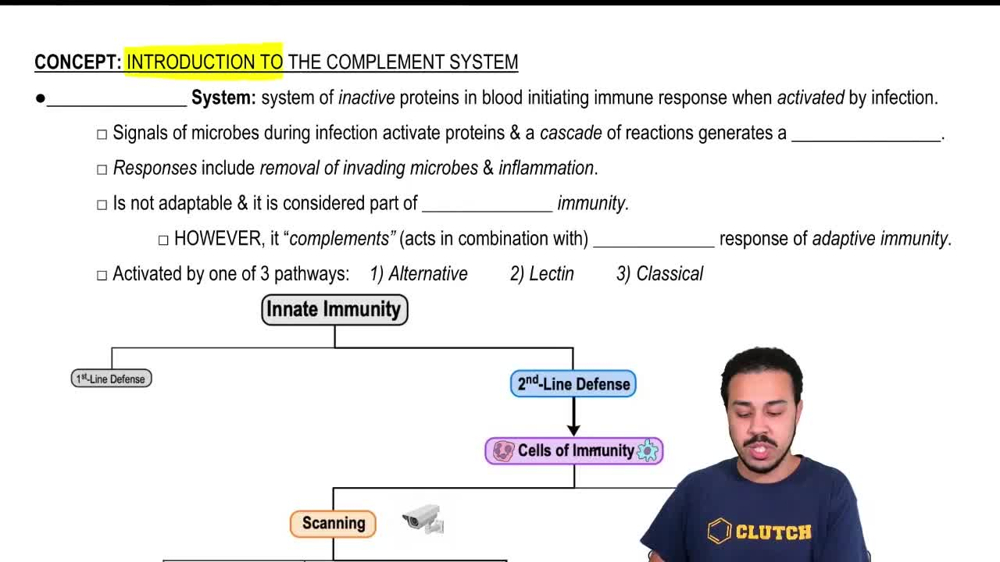
Understand that antibodies can activate the complement system, a group of proteins that helps lyse pathogens and promote inflammation, further aiding in the immune defense.
Verified video answer for a similar problem:
This video solution was recommended by our tutors as helpful for the problem above
Video duration:
2m
Play a video:
0 Comments
Key Concepts
Here are the essential concepts you must grasp in order to answer the question correctly.
Antibody Structure and Function
Antibodies are Y-shaped proteins produced by B cells that specifically recognize and bind to antigens, such as pathogens. Their structure allows them to target and neutralize foreign invaders effectively, marking them for destruction.
Antibodies defend the body by neutralizing pathogens, preventing them from infecting cells, and by opsonization, which tags pathogens for easier recognition and ingestion by immune cells like macrophages.
Antibodies can activate the complement system, a group of proteins that enhance immune responses by promoting inflammation, lysing pathogens, and facilitating their removal, thereby strengthening the body's defense mechanisms.