Define immunocompetence and self-tolerance. How is self-tolerance achieved?
Verified step by step guidance
1
Define immunocompetence as the ability of immune cells, particularly lymphocytes, to recognize and respond specifically to antigens. It means these cells can identify foreign substances and mount an immune response.
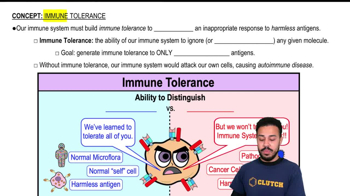
Define self-tolerance as the immune system's ability to recognize the body's own cells and molecules as 'self' and not attack them, preventing autoimmune reactions.
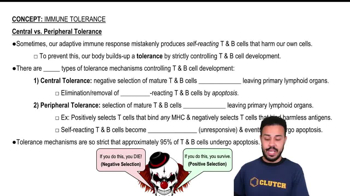
Explain that self-tolerance is primarily achieved through processes during lymphocyte development, where cells that strongly react to self-antigens are eliminated or inactivated.
Describe central tolerance, which occurs in primary lymphoid organs (thymus for T cells, bone marrow for B cells), where self-reactive lymphocytes undergo apoptosis or receptor editing.
Mention peripheral tolerance mechanisms that control any self-reactive lymphocytes that escape central tolerance, including anergy (functional inactivation), suppression by regulatory T cells, and deletion.
Verified video answer for a similar problem:
This video solution was recommended by our tutors as helpful for the problem above
Video duration:
2m
Play a video:
0 Comments
Key Concepts
Here are the essential concepts you must grasp in order to answer the question correctly.
Immunocompetence
Immunocompetence refers to the ability of the immune system, particularly lymphocytes, to recognize and respond effectively to specific antigens. It ensures that immune cells can identify pathogens and mount an appropriate defense, which is essential for protecting the body against infections.
Self-tolerance is the immune system's capacity to avoid attacking the body's own cells and tissues. It prevents autoimmune reactions by ensuring that immune cells do not recognize self-antigens as threats, maintaining immune homeostasis and preventing damage to healthy tissues.
Self-tolerance is achieved through central and peripheral mechanisms. Central tolerance occurs during lymphocyte development in the thymus and bone marrow, where self-reactive cells are eliminated or inactivated. Peripheral tolerance involves regulatory T cells and anergy to control any self-reactive cells that escape central tolerance.

 2:50 minutes
 Verified step by step guidance
 1:20
1:20