Besides the ability to move by amoeboid motion, what other physiological attributes contribute to the function of white blood cells in the body?
Verified step by step guidance
1
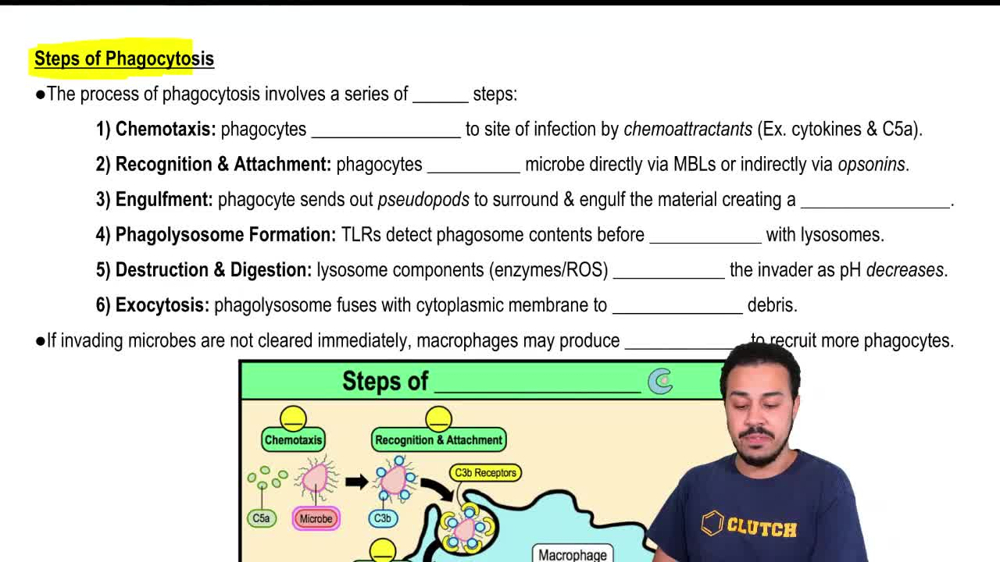
Step 1: Understand the context of white blood cells (WBCs) and their role in the immune system, which involves defending the body against pathogens and foreign substances.
Step 2: Recognize that besides amoeboid motion, WBCs have other physiological attributes that enhance their function, such as chemotaxis, which is the ability to move toward chemical signals released at sites of infection or injury.
Step 3: Consider phagocytosis, a key function where WBCs engulf and digest pathogens or debris, helping to clear infections and clean damaged tissue.
Step 4: Identify the ability of some WBCs to produce and release signaling molecules like cytokines and antibodies, which coordinate immune responses and target specific pathogens.
Step 5: Note the capacity of certain WBCs to undergo diapedesis, which is the process of squeezing through blood vessel walls to reach affected tissues, enabling them to respond effectively to infection or injury.
Verified video answer for a similar problem:
This video solution was recommended by our tutors as helpful for the problem above
Video duration:
9m
Play a video:
0 Comments
Key Concepts
Here are the essential concepts you must grasp in order to answer the question correctly.
Phagocytosis
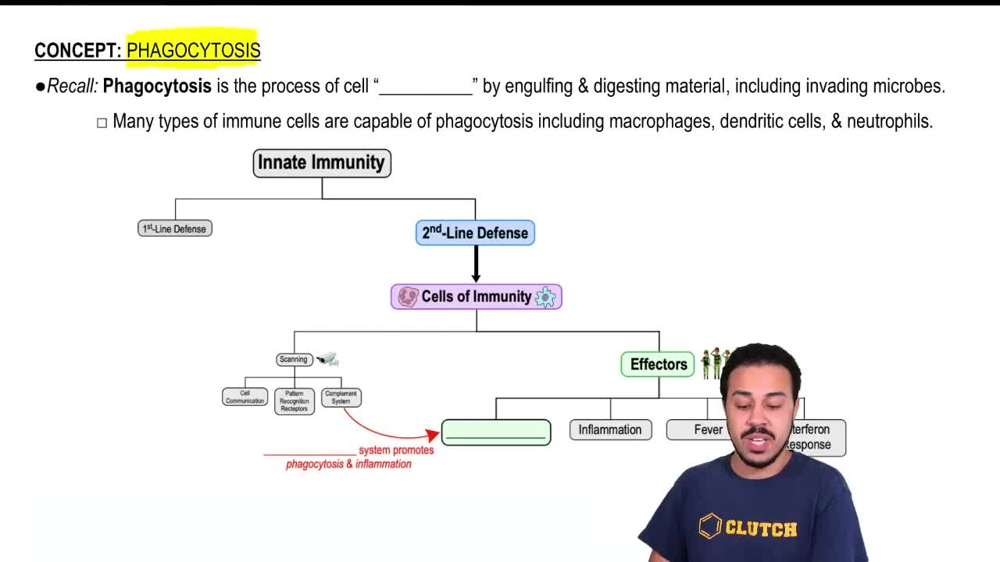
Phagocytosis is the process by which white blood cells engulf and digest foreign particles, bacteria, and dead cells. This ability allows them to remove pathogens and debris, playing a crucial role in the immune response and maintaining tissue health.
Chemotaxis refers to the movement of white blood cells toward chemical signals released at sites of infection or injury. This directed movement enables them to quickly reach and respond to areas where their immune functions are needed.
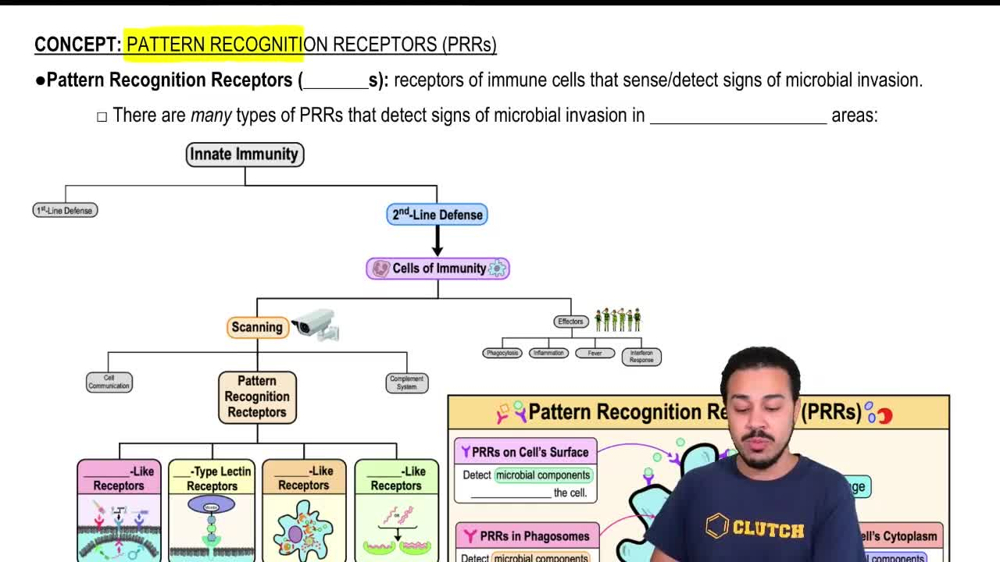
White blood cells can recognize specific antigens on pathogens through surface receptors, triggering immune responses. This recognition is essential for activating other immune cells and coordinating the body's defense mechanisms against infections.