Effective classroom management routines for very young learners

Jeanne Perrett
Jeanne Perrett
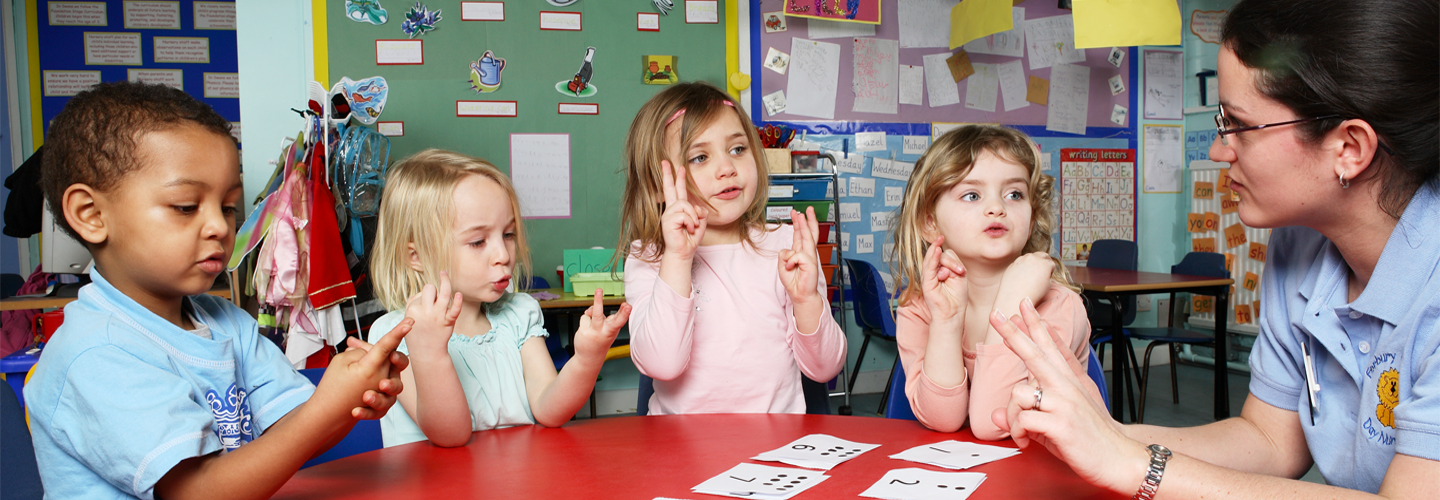
A teacher with young students sitting at a table looking at flashcards
Reading time: 4 minutes

For very young learners, children aged 3-6, being in a classroom might be a completely new experience. Most of them won’t know any English words at all and might have very little idea of what English is or why they are learning it. Some of them may not yet be completely fluent in their mother tongue. 

At the beginning of the school year, some of them may find it distressing to be separated from their parents and they also have to learn to get along with their new classmates. 

If we want to keep them comfortable and safe and provide a friendly and welcoming environment, we need to establish routines. 

7 ways you can build routines into your classes

Here are some areas where you can easily incorporate classroom management routines into your English language class.

1. Think about your target language

Our target language for each lesson may be one or two short phrases or a few new words. We should always keep the presentation and practice of this simple and clear. 

However, we can use English for all our greetings, praise, instructions and explanations. After a few days, the children will begin to expect it and they will gradually understand what you are saying. 

2. Coming into the class

Take time to greet each child by name when they enter the classroom and encourage them to learn and use each other’s names too. This will change how they perceive themselves and each other and encourage friendly communication. 

Notice the small things about each child. They might have a new T-shirt on or have done their hair specially. They may not tell you that they have made an effort to look nice for their lesson, but they will be pleased when you notice and will feel encouraged to continue. 

3. Circle time

Make circle time the start of every lesson. It gets the children sitting down together and this helps them to get to know each other and feel part of a comfortable group. 

It’s the time where you present the target language for the day. Use a puppet to help you do this. Make the puppet part of the routine by keeping it in a certain place and bringing it out from there every day. The children can call its name. 

The puppet can greet the children by name and the children can answer back. First, use picture cards or objects to present the language to the puppet. Then, the puppet can show that it understands or ask for repetition. 

Let the children call out responses as a group. As they build their confidence in English they will want to speak by themselves. 

Always accept approximations of words and phrases. Rather than correcting the children, continue to model the words and gradually the students will self-correct. Pass this tip on to parents too. 

4. Book time

Give students time to discover pages and images they like in the books they are using. Always leave time to help each child find the correct page and then help them to focus their attention on that page. 

In Circle time you have introduced the language and presented it with flashcards or objects. In Book time, children can look at these images – the content will be familiar and they will start to feel ownership of what they are learning. 

5. Songs, games and miming

Singing, playing games and miming are the main ways in which the students will start to freely use and show they understand the target language. 

In My Disney Stars and Friends each stage of every game is detailed, along with the language you and the students can use. Students might become so involved in the action of the game that they forget to speak in English! That’s okay – continue using the language and eventually they will start to use it too. 

When a game or a song involves physical activity, have drinks of water ready and let them rest and relax afterwards. Always have a ‘sitting down’ activity ready for them to move on to so that they do not become overexcited or tired.

6. Craft and stickers

For any craft work there are four stages: preparation, production, playing with the completed craft work and tidying up. If you're using My Disney Stars and Friends, there is a special Tidy Up song and all the craft projects are press-outs so there is no need for scissors. 

Children of 3 or 4 years old will need to learn how to unpeel and then re-stick a sticker. Allow time for this and encourage them to learn from each other once some of them have mastered this fine motor skill. 

7. Leaving the class

Time your lessons so that the students don’t have to leave in a rush. It takes them a while to collect up their things and find their bags and coats. 

If you want the parents to know something, make sure that the children know where they have put the note. One notebook for such messages is a simple way of doing this, and you can tell parents to check it after every lesson. 

Just as you greeted each child by name when they came in, say goodbye to them individually as they leave. 

Incorporating effective classroom management routines makes young learners feel more comfortable as they know what to expect from their language classes. Familiarity is welcome for children, so exploit these times for more language learning opportunities. 

Find more ideas on effective classroom management routines in Jeanne Perrett’s webinar, where she focuses on practical ideas and teaching tips for how we can organise and manage a class of young learners.

Routines and classroom management for very young learners I Pearson English Disney Day
Play
Privacy and cookies

By watching, you agree Pearson can share your viewership data for marketing and analytics for one year, revocable by deleting your cookies.

Want to learn more about teaching young learners? Read our post 'Young learners of English deserve more'.

More blogs from Pearson

  • A group of teenage students having a classroom discussion
    5 Strategies for teaching mixed-ability secondary students
    By Anna Roslaniec
    Reading time: 5 minutes

    No two teenagers are exactly alike. In every secondary classroom, you'll find a wide range of English proficiency levels, learning styles, motivation and personalities. This diversity brings both challenges and opportunities, especially when teaching mixed-ability classes. By adapting your teaching strategies, you can ensure that all students experience success and remain engaged in their language learning journey.

    Here are five practical strategies for teaching mixed-ability secondary students.

  • An older couple, one giving the other a bouquet of roses.
    Valentine's-themed English words and their origins
    By Charlotte Guest
    Reading time: 3 minutes

    Valentine’s Day is a time to share kind words, sweet messages and warm feelings. If you are learning English, this is also a great time to learn new love-related words. Many of these words have interesting histories. Some come from Old English, others arrived from Latin or French. When you know where a word comes from, it can be easier to remember and use it.

    This post gives you a simple list of common Valentine words and their origins, plus a few with unusual stories. Read the short explanations, say the words out loud and try a few example sentences.

    Core Valentine and love words

    Valentine

    From Latin "Valentinus", based on "valens", meaning “strong” or “healthy.” The day is named after Saint Valentine. A “valentine” can be the card you send or the person you love.

    Love

    One of the oldest English words. In Old English, it was "lufu". It is related to German "Liebe" and Dutch "liefde". It has always meant strong feeling and care.

    Heart

    From Old English "heorte". The heart is a symbol of emotion. The heart shape in art comes from medieval ideas about feeling, not the real organ’s shape.

    Romance

    From Old French "romans". It first meant stories in Romance languages (from Latin). Later, it became linked with love stories and strong feelings.

    Cupid

    From Latin Cupido, meaning “desire.” In Roman myth, Cupid is the god who makes people fall in love with his arrows. Today, he is a friendly symbol on cards.

    Terms of affection and relationships

    Sweetheart

    Made from two old words: "sweet" + "heart". It appeared in Middle English from Old English roots. English often creates new ideas by joining simple words.

    Darling

    From Old English "deorling", meaning “dear little one” or “beloved.” Today, it is a soft, caring way to speak to someone you love.

    Beau

    From French "beau", meaning “handsome.” In English, a beau is a boyfriend or a male admirer, often in an older or formal style. It is pronounced “boh”. Plural: beaux or beaus.

    Fiancé/fiancée

    From French. Traditionally, "fiancé" is male and "fiancée" is female, but many people now use fiancé for anyone engaged to marry. The accent marks show the French origin.

    Paramour

    From Old French "par amour", “through love.” In English, a paramour is a lover, often secret. It shows how words can carry both romance and mystery.

    Dating and romantic behavior

    Date

    In the 19th century, American English started using "date" for a social meeting. The idea comes from marking a day on a calendar. To date means to spend romantic time together.

    Adore

    From Latin "adorare", through French. To adore means to love deeply and to respect. You can adore a person or a song.

    Smitten

    From the verb "smite", Old English smitan, “to strike.” If you are smitten, love has “struck” you. This is a strong, playful way to say you fell in love.

    Flirt

    Probably from a word meaning “to flick” or “to move quickly.” Over time, it came to mean playful romantic behavior. The exact origin is not certain, which makes it an interesting mystery word.

    Tryst

    A Scots word for a fixed meeting or appointment. Today, a tryst is a secret or private romantic meeting. It keeps the feeling of “an agreed time to meet.”

    Serenade

    From Italian "serenata", “an evening song,” from a word meaning “calm, clear.” To serenade is to sing or play music to someone you love, often at night.

    Gifts, beauty and attraction

    Bouquet

    Another French word, meaning “a bunch of flowers.” A bouquet of roses is a classic Valentine’s gift. You can also use a bouquet for birthdays and celebrations.

    Glamour

    From a Scottish form of "grammar". Long ago, grammar also meant learning and sometimes “magic.” Glamour became the word for a special, almost magical beauty or charm.

    Chivalry

    From Old French "chevalerie", related to cheval, “horse.” It first meant the way of knights on horseback. Later, it became the idea of polite, noble behavior, especially toward others in romance.

    Marriage and commitment

    Wedding, bride, and (bride)groom

    Wedding comes from Old English "weddian", “to pledge.” Bride is from Old English bryd. Groom, in bridegroom, was once "guma", an old word for “man.” Over time, it changed to the familiar groom.

    Troth and betrothed

    Troth comes from Old English "treowth", meaning “truth,” “faith,” or “loyal promise.” To “plight one’s troth” means “to promise to marry.” Betrothed means “engaged to marry,” from be- + troth.

    Honeymoon

    "Sweet" + "moon". "Honey" suggests the sweet time after the wedding, and "moon" suggests a month. Long ago, some couples drank honey wine (mead) in the first month of marriage. Today, a honeymoon is the trip after the wedding.

    Now you know some new Valentine’s words and where they come from. Use them to share feelings, write messages, and enjoy the season. Make sure to practice: put each word into a simple sentence and practice saying it aloud. You can also make small flashcards and review them for a few minutes each day.


  • Two business people standing together drawing on a notepad
    From first chat to offer letter: how PTE English simplifies admissions for international students
    By Alice Bazzi
    Reading time: 2 minutes

    Every step in the admissions process matters. For students, the journey from initial counselling to receiving an offer letter can feel overwhelming. For agents, delays and complications can often lead to missed deadlines and opportunities lost. The good news? PTE Express has recently been introduced and is designed to remove friction at every stage, making the process faster, simpler and more reliable for everyone involved.

    What slows down admissions success?

    Traditional English testing often introduces unnecessary friction. Students may have to travel to test centers, wait weeks for results or navigate complex booking systems. These delays create stress and a level of uncertainty, especially with international studies as there will be strict timelines. Agents know that every day counts; when scores do not arrive on time, applications stall, and the risk of students losing their place increases.