Step 1: Identify the functional group present in the molecule. The structure contains an ester functional group, which is characterized by a carbonyl group (C=O) bonded to an oxygen atom that is also bonded to another carbon chain.
Step 2: Determine the alkyl group attached to the oxygen atom of the ester. In this case, the oxygen is bonded to a propyl group (CH2CH2CH3). This will form the first part of the name.
Step 3: Identify the acyl group (the part containing the carbonyl group and the chain attached to it). Here, the acyl group is derived from cyclopentanecarboxylic acid, as the carbonyl group is attached to a cyclopentane ring.
Step 4: Combine the names of the alkyl group and the acyl group. The naming convention for esters is 'alkyl group' followed by 'acyl group' with the suffix '-oate'.
Step 5: Write the full name of the compound by combining the alkyl and acyl names. Ensure proper IUPAC naming conventions are followed.
Verified video answer for a similar problem:
This video solution was recommended by our tutors as helpful for the problem above
Video duration:
6m
Play a video:
0 Comments
Key Concepts
Here are the essential concepts you must grasp in order to answer the question correctly.
Anhydrides
Anhydrides are organic compounds formed by the removal of water from two carboxylic acids. They typically contain two acyl groups bonded to the same oxygen atom. Anhydrides can be symmetrical, where both acyl groups are the same, or asymmetrical, where they differ. They are commonly used in organic synthesis and can react with alcohols to form esters.
The nomenclature of organic compounds follows specific rules set by the International Union of Pure and Applied Chemistry (IUPAC). This includes identifying the longest carbon chain, naming functional groups, and determining the correct suffixes and prefixes. Understanding these rules is essential for accurately naming compounds, including anhydrides, based on their structure.
Functional groups are specific groups of atoms within molecules that are responsible for the characteristic chemical reactions of those molecules. In the case of anhydrides, the functional group is the anhydride group (RCO-O-COR). Recognizing functional groups is crucial for predicting the behavior of organic compounds and understanding their reactivity in various chemical reactions.

 6:20 minutes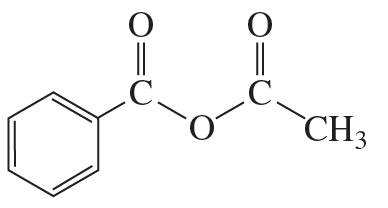
 Verified step by step guidance
 03:35
03:35