
Textbook Question
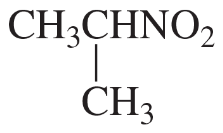
Label each set of chemically equivalent protons, using a for the set that will be at the lowest frequency in the 1H NMR spectrum, b for the next lowest, and so on. Indicate the multiplicity of each signal.
c.
1141
views

 Verified step by step guidance
 3:11
3:11
 10:06
10:06 11:44
11:44Label each set of chemically equivalent protons, using a for the set that will be at the lowest frequency in the 1H NMR spectrum, b for the next lowest, and so on. Indicate the multiplicity of each signal.
c.
How can 1H NMR distinguish between the compounds in each of the following pairs?
g.
Determine the ratios of the chemically nonequivalent protons in a compound if the steps of the integration curves measure 40.5, 27, 13, and 118 mm, from left to right across the spectrum. Draw the structure of a compound whose 1H NMR spectrum would show these integrals in the observed order.
How many signals are produced by each of the following compounds in its
b. 13C NMR spectrum?
2.
How many signals are produced by each of the following compounds in its
a. 1H NMR spectrum?
4.
5.
6.
How many signals are produced by each of the following compounds in its
b. 13C NMR spectrum?
1.