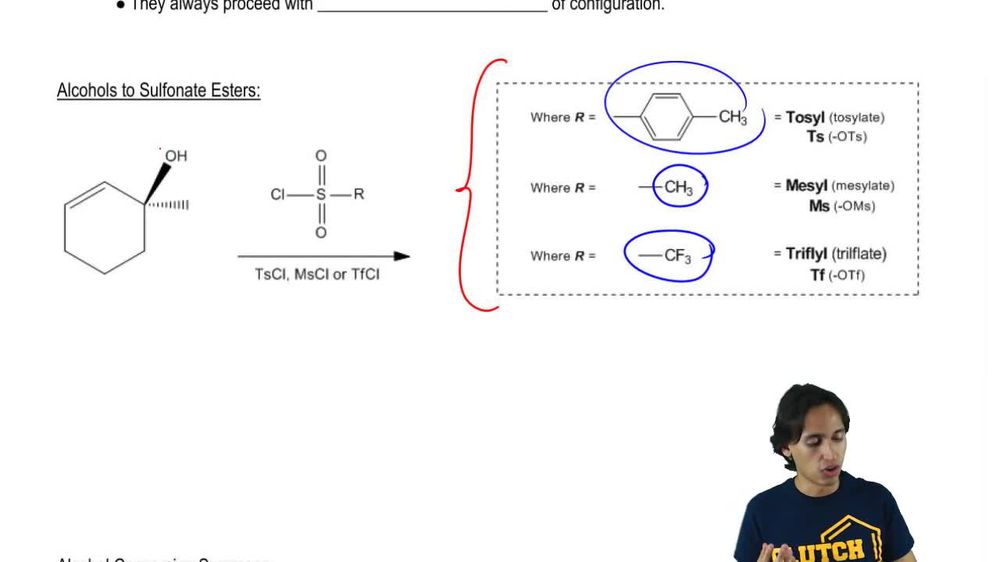
Step 1: Analyze the first transformation (A). The hydroxyl group (-OH) is converted into a tosylate group (-OTs). This typically involves the use of p-toluenesulfonyl chloride (TsCl) in the presence of a base such as pyridine. The base helps to neutralize the HCl byproduct formed during the reaction.
Step 2: Write the reagent for the first arrow as TsCl and pyridine. This combination facilitates the conversion of the alcohol into a tosylate, which is a good leaving group.
Step 3: Analyze the second transformation (B). The tosylate group (-OTs) is replaced by a methoxy group (-OCH₃). This substitution reaction suggests the use of a nucleophile, such as sodium methoxide (NaOCH₃) or methanol (CH₃OH) under basic conditions.
Step 4: Write the reagent for the second arrow as NaOCH₃ or CH₃OH. The nucleophile attacks the carbon attached to the tosylate group, displacing the tosylate and forming the methoxy group.
Step 5: Ensure the reaction conditions are appropriate for each step. For step A, the reaction should be carried out under mild conditions to avoid side reactions. For step B, the substitution reaction should occur in a polar aprotic solvent to favor the nucleophilic attack.
Verified video answer for a similar problem:
This video solution was recommended by our tutors as helpful for the problem above
Video duration:
3m
Play a video:
0 Comments
Key Concepts
Here are the essential concepts you must grasp in order to answer the question correctly.
Alcohols and Their Reactivity
Alcohols are organic compounds containing a hydroxyl (-OH) group. They can undergo various reactions, including substitution and elimination. Understanding the reactivity of alcohols is crucial for predicting the products of reactions, such as their conversion to sulfonate esters, which are more reactive towards nucleophiles.
Sulfonyl chlorides, such as tosyl chloride (TsCl), are reagents used to convert alcohols into better leaving groups. This transformation enhances the electrophilicity of the carbon atom bonded to the hydroxyl group, facilitating nucleophilic substitution reactions. Recognizing the role of sulfonyl chlorides is essential for understanding the mechanism of the reactions depicted in the question.
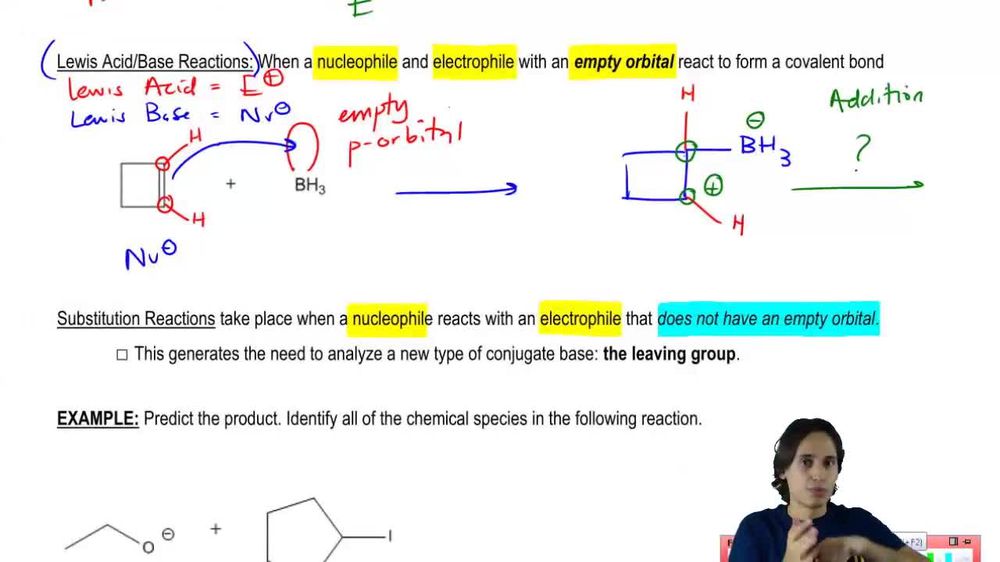
Nucleophilic substitution reactions involve the replacement of a leaving group by a nucleophile. There are two primary mechanisms: SN1, which is unimolecular and involves carbocation formation, and SN2, which is bimolecular and involves a direct attack by the nucleophile. Identifying the appropriate mechanism is key to determining the correct reagents for the reactions shown in the diagram.

 3:16 minutes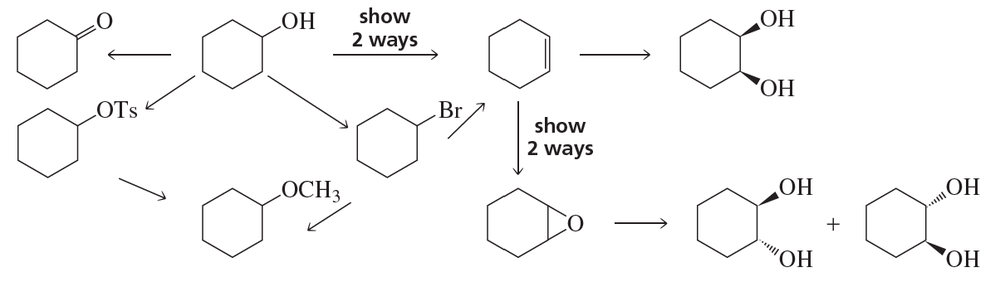
 Verified step by step guidance
 01:01
01:01