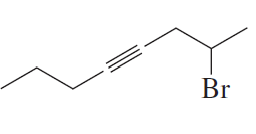
Step 1: Identify the longest continuous carbon chain in the structure. This chain will serve as the parent chain, and its length determines the base name of the compound.
Step 2: Determine the functional groups and substituents attached to the parent chain. In this case, there is a chlorine atom (Cl) and a triple bond (alkyne) present.
Step 3: Number the parent chain starting from the end closest to the functional group or substituent that has the highest priority. The triple bond (alkyne) takes precedence over the chlorine substituent in numbering.
Step 4: Assign locants (numbers) to the substituents and the triple bond based on their positions in the parent chain. Ensure the numbering minimizes the locants for the functional groups.
Step 5: Combine the locants, substituents, and parent chain name into the IUPAC name. Use prefixes for substituents (e.g., 'chloro-' for chlorine) and suffixes for the functional group (e.g., '-yne' for the triple bond).
Verified video answer for a similar problem:
This video solution was recommended by our tutors as helpful for the problem above
Video duration:
2m
Play a video:
0 Comments
Key Concepts
Here are the essential concepts you must grasp in order to answer the question correctly.
Alkenes
Alkenes are hydrocarbons that contain at least one carbon-carbon double bond (C=C). They are unsaturated compounds, meaning they have fewer hydrogen atoms than alkanes with the same number of carbon atoms. The presence of the double bond gives alkenes unique reactivity and is crucial for their nomenclature and chemical behavior.
Substituents are atoms or groups of atoms that replace hydrogen atoms in a hydrocarbon chain. In the context of naming organic compounds, substituents are identified and named based on their structure and position on the main carbon chain. The presence of substituents, such as halogens like chlorine, affects the compound's name and properties.
Nucleophiles and Electrophiles can react in Substitution Reactions.
IUPAC Nomenclature
The International Union of Pure and Applied Chemistry (IUPAC) nomenclature provides a systematic method for naming organic compounds. It involves identifying the longest carbon chain, determining the type of bonds (single, double, or triple), and naming substituents with their respective positions. This standardized approach ensures that each compound has a unique and descriptive name, facilitating clear communication in the scientific community.