Ch. 2 - General Chemistry Translated: Finding the Electrons
Mullins - Organic Chemistry: A Learner Centered Approach 1st Edition
Mullins1st EditionOrganic Chemistry: A Learner Centered ApproachISBN: 9780137566471Not the one you use?Change textbook
Chapter 1, Problem 37

Hydrogen forms bonds without hybridizing. Why?

Verified step by step guidance
1
Hydrogen has only one electron and one orbital, the 1s orbital, which is spherical in shape. This means it does not have additional orbitals to hybridize.
Hybridization occurs when atomic orbitals mix to form new hybrid orbitals, typically in atoms with multiple orbitals (like carbon, nitrogen, or oxygen). Hydrogen lacks the necessary orbitals for this process.
The single 1s orbital of hydrogen is sufficient to overlap with other orbitals (like the sp³ orbitals of carbon in methane) to form stable covalent bonds.
Since hydrogen does not have p, d, or f orbitals, it cannot undergo hybridization. Its bonding behavior is entirely based on the direct use of its 1s orbital.
This simplicity in bonding makes hydrogen unique and allows it to form single covalent bonds without the need for hybridization.

Verified video answer for a similar problem:

This video solution was recommended by our tutors as helpful for the problem above.
Video duration:
1m
Was this helpful?

Key Concepts

Here are the essential concepts you must grasp in order to answer the question correctly.

Atomic Structure of Hydrogen

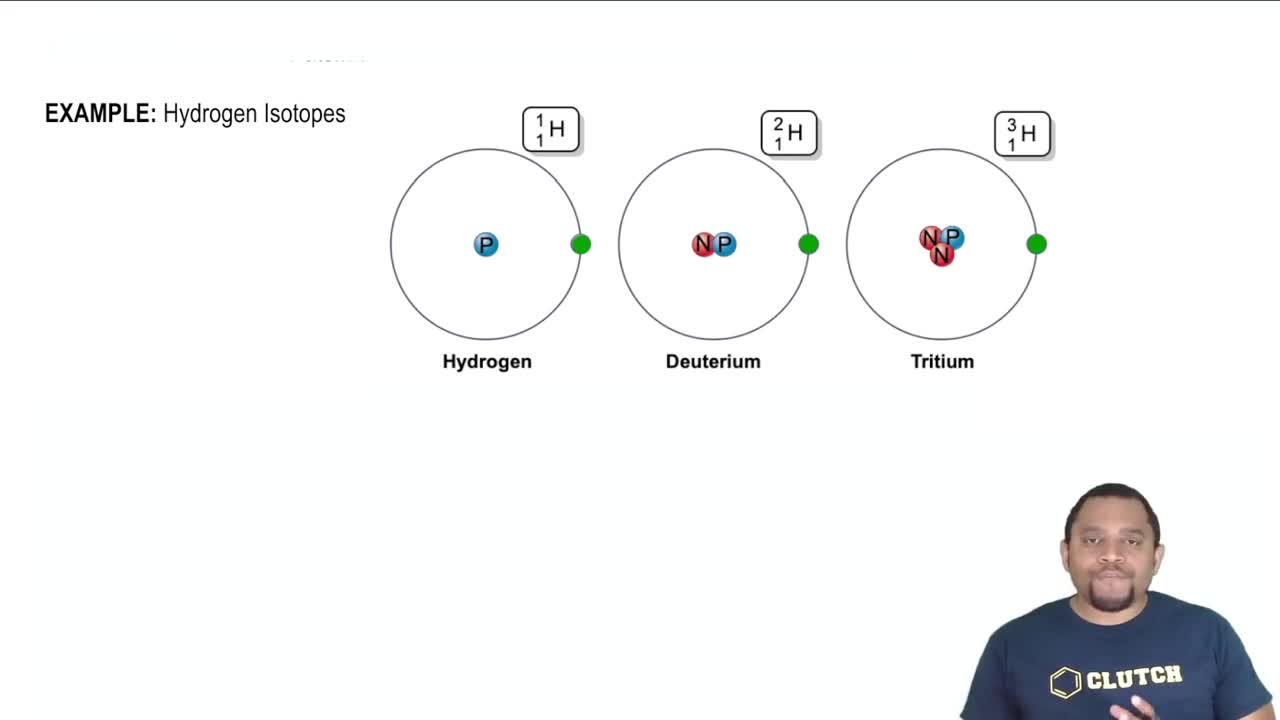
Hydrogen has a simple atomic structure, consisting of one proton and one electron. This simplicity allows hydrogen to form bonds using its single electron without the need for hybridization, which is a process that involves mixing atomic orbitals to create new hybrid orbitals for bonding.
Recommended video:
Guided course
03:06
Understanding the hydrogen isotopes.

Bonding in Chemistry

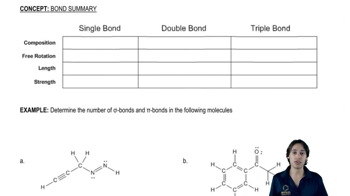
In chemistry, bonding refers to the interactions that hold atoms together in molecules. Hydrogen typically forms covalent bonds by sharing its single electron with other atoms, allowing it to achieve a stable electron configuration similar to that of helium, without the necessity of hybrid orbitals.
Recommended video:
Guided course
06:00
Single bonds, double bonds, and triple bonds.

Hybridization

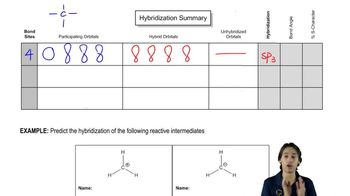
Hybridization is a concept in organic chemistry where atomic orbitals mix to form new hybrid orbitals that can accommodate bonding. However, in the case of hydrogen, its single s orbital is sufficient for bonding, making hybridization unnecessary for its interactions with other elements.
Recommended video:
Guided course
10:43
Using bond sites to predict hybridization