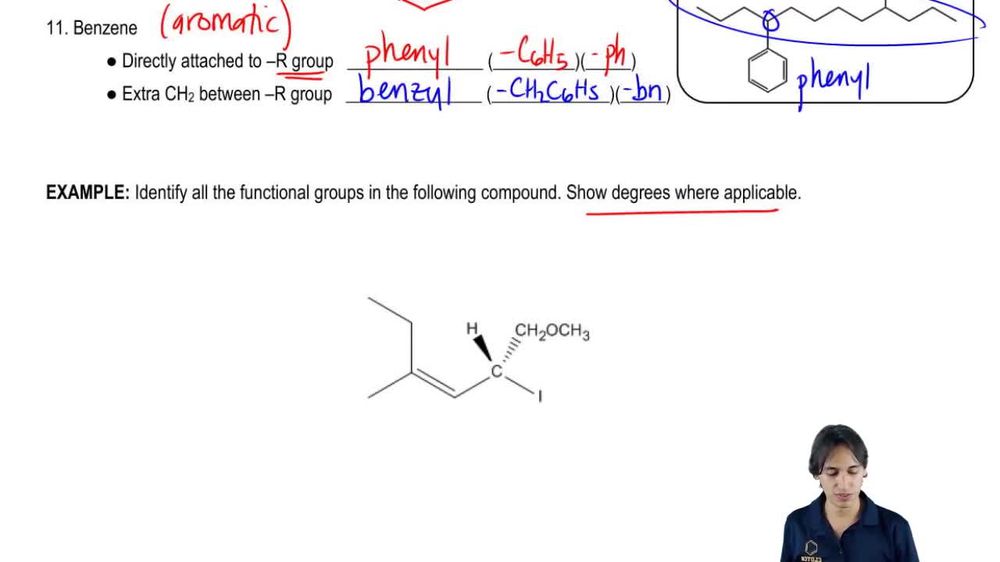
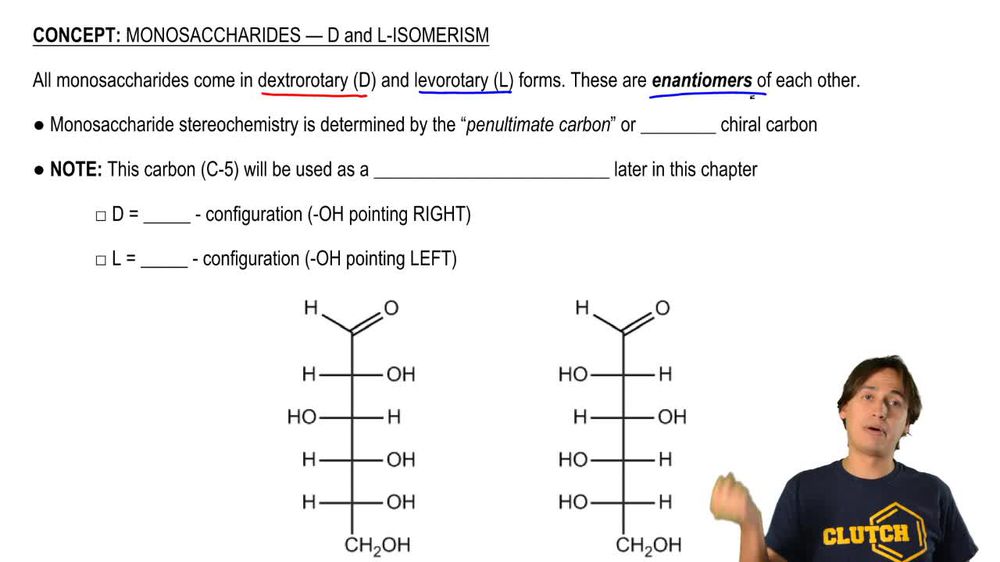
Step 1: Begin by identifying the functional groups present in each compound A–F. Look for common organic chemistry functional groups such as alcohols, ketones, aldehydes, carboxylic acids, amines, etc.
Step 2: Determine the carbon skeleton for each compound. This involves identifying the number of carbon atoms and their connectivity, including any branching or cyclic structures.
Step 3: Add the identified functional groups to the carbon skeleton. Ensure that the placement of these groups is consistent with the chemical structure and nomenclature provided.
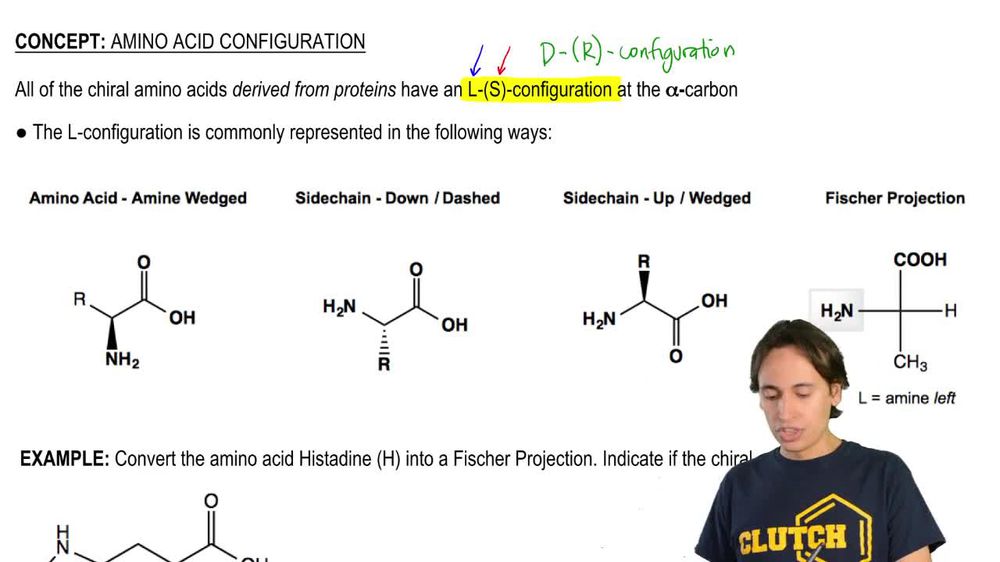
Step 4: Consider stereochemistry if applicable. Determine if there are any chiral centers or geometric isomers that need to be represented in the structure.
Step 5: Verify the valency of each atom in the structure. Ensure that all atoms have the correct number of bonds, particularly carbon, which should have four bonds, and adjust any hydrogen atoms accordingly.
Verified video answer for a similar problem:
This video solution was recommended by our tutors as helpful for the problem above
Video duration:
11m
Play a video:
0 Comments
Key Concepts
Here are the essential concepts you must grasp in order to answer the question correctly.
Structural Representation
Understanding how to represent organic compounds structurally is crucial. This includes knowing how to draw Lewis structures, skeletal formulas, and understanding the significance of functional groups. Each representation provides insight into the molecular geometry and reactivity of the compounds.
Functional groups are specific groups of atoms within molecules that determine the chemical properties and reactions of those compounds. Recognizing common functional groups, such as alcohols, ketones, and carboxylic acids, is essential for predicting the behavior of the compounds A-F in the question.
Isomerism refers to the existence of compounds with the same molecular formula but different structural arrangements or spatial orientations. Understanding the types of isomers, such as structural isomers and stereoisomers, is important for accurately drawing and identifying the compounds A-F, as they can have distinct properties and reactivities.

 11:35 minutes
 Verified step by step guidance
 05:09
05:09