Label each statement that follows as true or false, and correct the false statements so they are true: a. Most pathogens would be considered mesophilic alkaliphiles. b. Sterilization is a form of decontamination. c. Disinfection is a form of decontamination. d. High-level germicides achieve sterilization. e. Ionizing radiation is a form of chemical microbial control. f. Standard pasteurization is a way to sterilize milk.
Verified step by step guidance
1
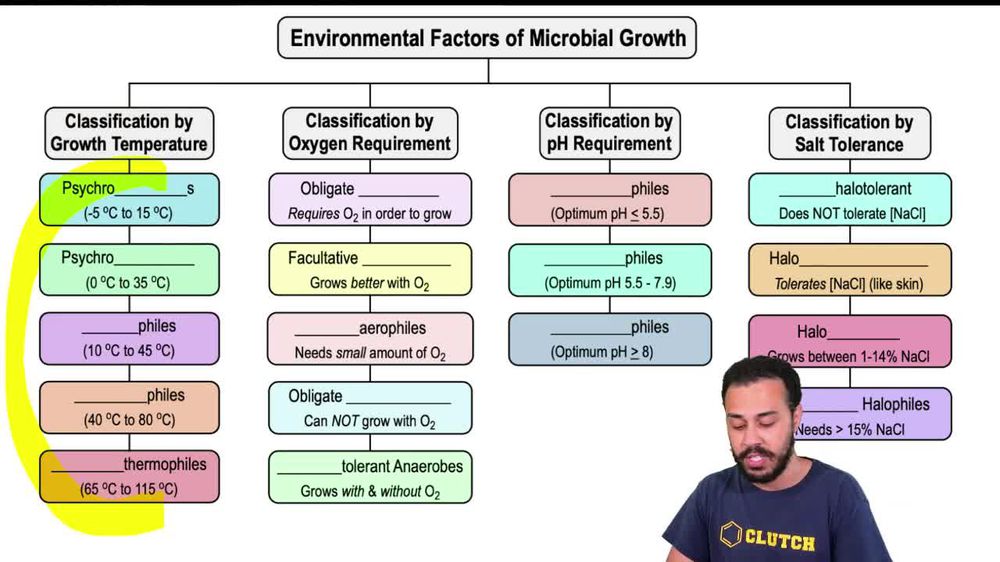
Step 1: Understand the terms involved. 'Mesophilic' refers to organisms that grow best at moderate temperatures (20-45°C). 'Alkaliphiles' are organisms that thrive in alkaline (high pH) environments. Most pathogens are mesophiles but not alkaliphiles, so analyze the statement accordingly.
Step 2: Define 'sterilization' and 'decontamination'. Sterilization is the complete elimination of all forms of microbial life, including spores. Decontamination is a broader term that includes sterilization, disinfection, and cleaning to reduce microbial load to safe levels. Use this to evaluate statements about sterilization and decontamination.
Step 3: Clarify 'disinfection' as a form of decontamination. Disinfection reduces the number of pathogenic microorganisms but does not necessarily kill all spores. Confirm if disinfection fits under decontamination.
Step 4: Examine 'high-level germicides' and their capability. High-level germicides can kill all microorganisms except high numbers of bacterial spores. Determine if they achieve sterilization or not.
Step 5: Differentiate between 'ionizing radiation' and 'chemical microbial control'. Ionizing radiation is a physical method, not chemical. Also, understand that standard pasteurization reduces microbial load but does not sterilize milk. Use these clarifications to correct the false statements.
Verified video answer for a similar problem:
This video solution was recommended by our tutors as helpful for the problem above
Video duration:
2m
Play a video:
0 Comments
Key Concepts
Here are the essential concepts you must grasp in order to answer the question correctly.
Microbial Growth Conditions: Mesophiles and Alkaliphiles
Mesophiles are microorganisms that grow best at moderate temperatures (20-45°C), while alkaliphiles thrive in alkaline environments (pH above 9). Most human pathogens are mesophiles but not alkaliphiles, as the human body maintains a near-neutral pH. Understanding these terms helps classify pathogens based on their preferred growth conditions.
Reviewing the Environmental Factors of Microbial Growth
Sterilization, Disinfection, and Decontamination
Sterilization is the complete elimination of all forms of microbial life, including spores. Disinfection reduces or eliminates pathogenic microbes but may not kill spores. Decontamination is a broader term encompassing any process that removes or reduces microbial contamination, including sterilization and disinfection.
Methods of Microbial Control: Physical vs Chemical
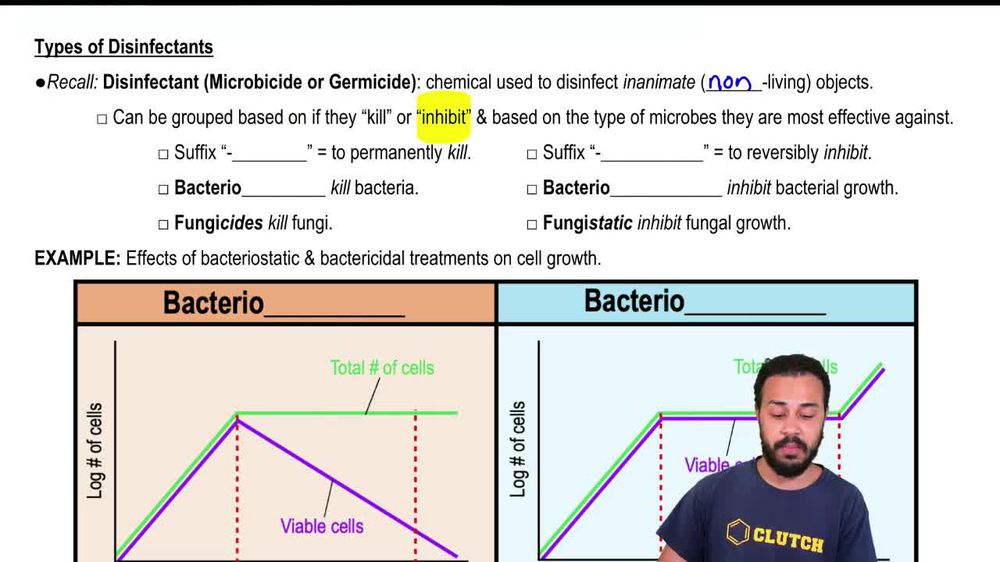
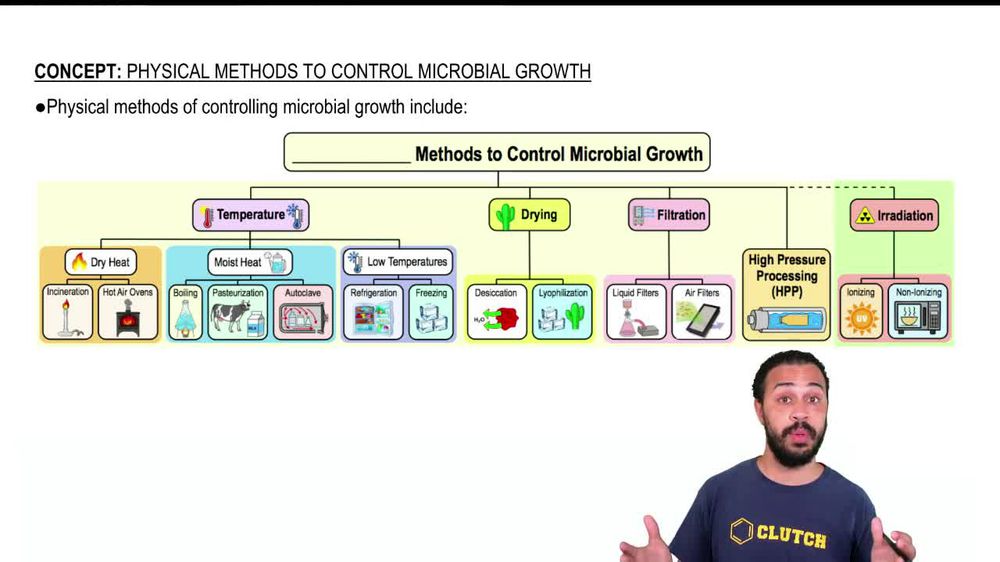
Microbial control methods include physical means like ionizing radiation (e.g., gamma rays) and heat, and chemical agents like germicides. Ionizing radiation is a physical method, not chemical. High-level germicides can achieve sterilization by killing spores, while standard pasteurization reduces microbial load but does not sterilize.

 2:24 minutes
 Verified step by step guidance
 07:21
07:21