Describe the five phases of a generalized lytic replication cycle.
Verified step by step guidance
1
Step 1: Understand that the lytic replication cycle is a process by which a bacteriophage infects a bacterial cell, replicates itself, and causes the host cell to lyse, releasing new phage particles.
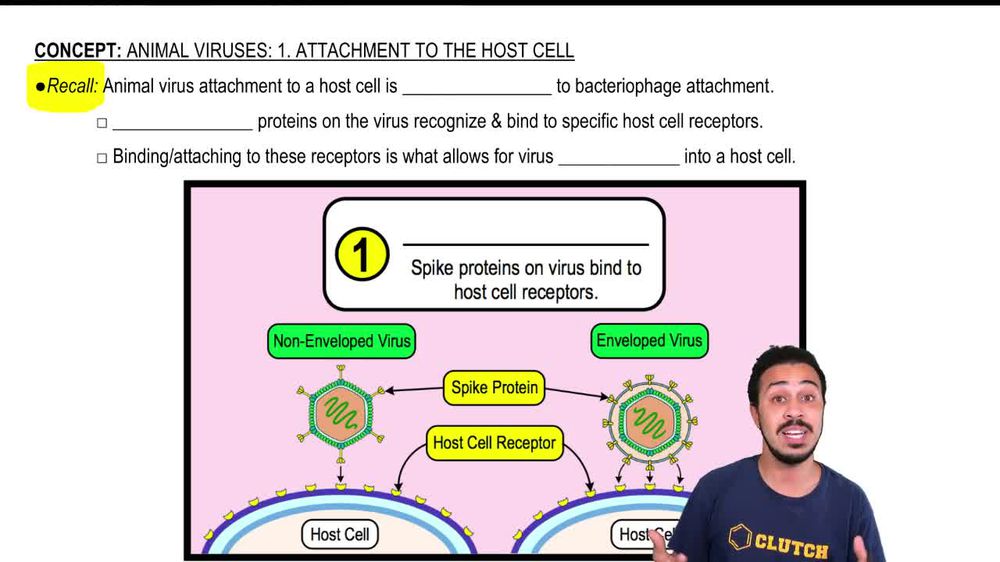
Step 2: Describe the Attachment phase, where the phage recognizes and binds specifically to receptors on the surface of the bacterial host cell.
Step 3: Explain the Penetration phase, during which the phage injects its genetic material (DNA or RNA) into the host cell, leaving the capsid outside.
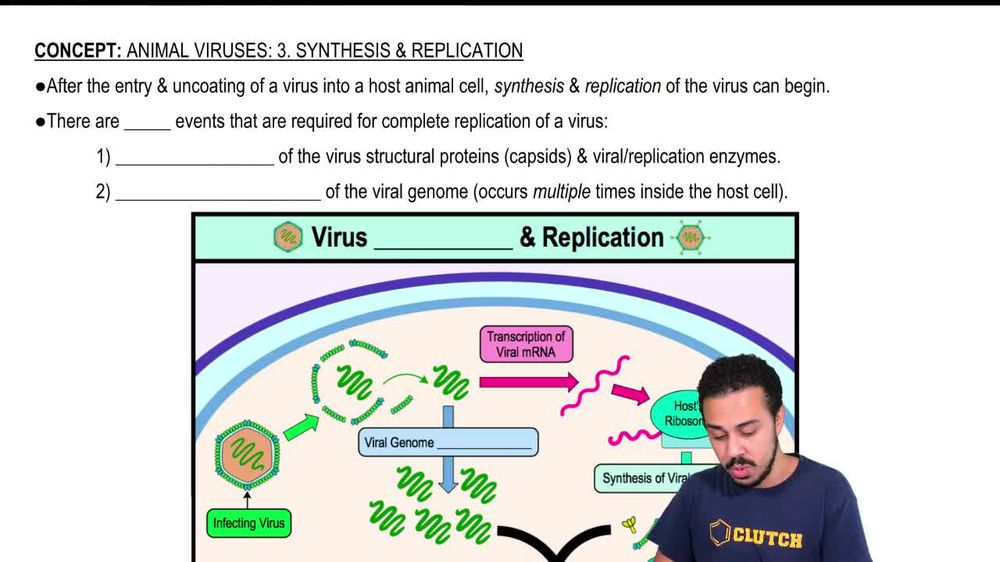
Step 4: Outline the Biosynthesis phase, where the phage genome directs the host's machinery to replicate phage nucleic acids and synthesize phage proteins.
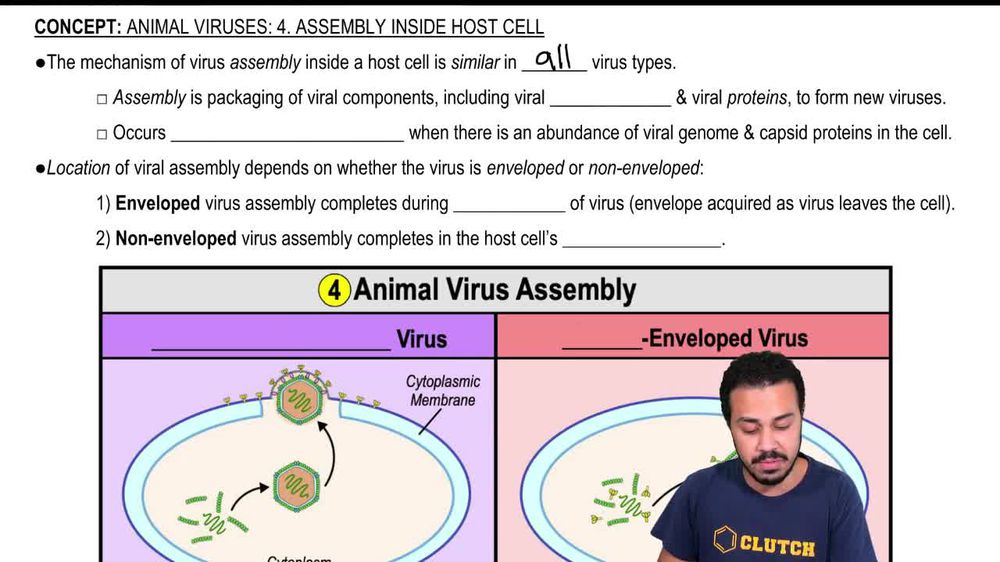
Step 5: Detail the Maturation and Release phases: Maturation involves assembly of new phage particles inside the host, and Release occurs when the host cell lyses, releasing the newly formed phages to infect other cells.
Verified video answer for a similar problem:
This video solution was recommended by our tutors as helpful for the problem above
Video duration:
3m
Play a video:
0 Comments
Key Concepts
Here are the essential concepts you must grasp in order to answer the question correctly.
Attachment and Entry
This phase involves the virus recognizing and binding to specific receptors on the host cell surface, followed by the injection or entry of viral genetic material into the host. It is the initial step that determines host specificity and initiates infection.
During this phase, the viral genome is replicated, and viral proteins are synthesized using the host's cellular machinery. This step is crucial for producing new viral components necessary for assembling progeny viruses.
New viral particles are assembled from replicated genomes and synthesized proteins. Once mature, viruses are released from the host cell, often causing cell lysis, which completes the lytic cycle and allows infection of new cells.

 3:44 minutes
 Verified step by step guidance
 03:12
03:12