Atoms of different elements differ primarily in the number of protons they contain in their nucleus. This number is known as the atomic number, and it is unique to each element.
The number of electrons in a neutral atom is equal to the number of protons. Therefore, different elements have different electron configurations, which affect their chemical properties and reactivity.
Atoms of different elements can also differ in the number of neutrons in their nucleus. This variation leads to the formation of isotopes, which are atoms of the same element with different mass numbers.
The arrangement of electrons around the nucleus, particularly the electrons in the outermost shell (valence electrons), determines how atoms interact with each other to form chemical bonds.
The differences in atomic structure, such as atomic number, electron configuration, and isotopic composition, result in the diverse chemical and physical properties observed among the elements.
0 Comments
Key Concepts
Here are the essential concepts you must grasp in order to answer the question correctly.
Atomic Structure
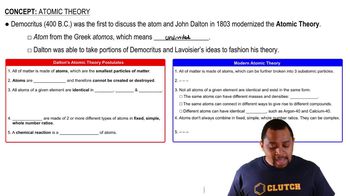
Atoms are the basic units of matter, consisting of protons, neutrons, and electrons. The number of protons in the nucleus defines the element and its atomic number, while the arrangement of electrons determines the atom's chemical properties. Different elements have varying numbers of protons, which leads to distinct characteristics and behaviors.
Each element has unique properties, such as atomic mass, electronegativity, and ionization energy, which arise from its atomic structure. These properties influence how elements interact with one another, forming compounds and participating in chemical reactions. Understanding these properties is essential for predicting the behavior of different elements.
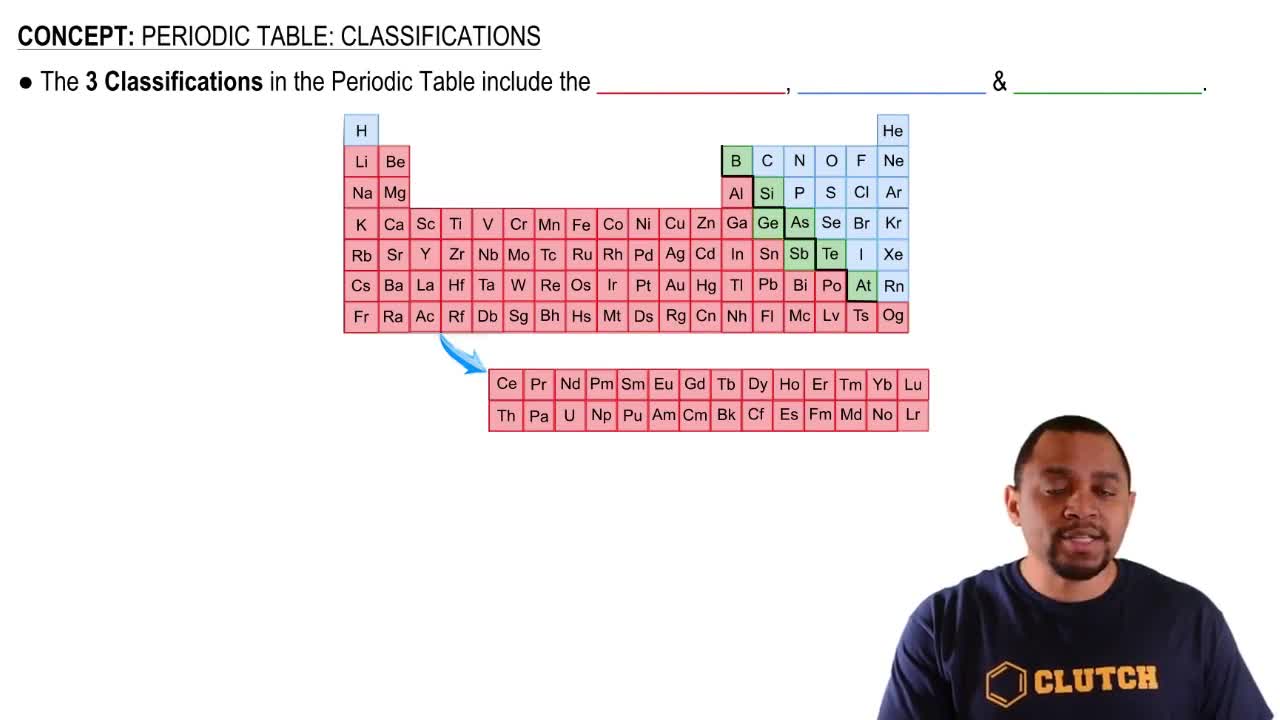
The periodic table organizes elements based on their atomic number and similar chemical properties. Elements are grouped into periods and groups, reflecting trends in their behavior and characteristics. This organization helps in understanding how different elements differ and interact, making it a fundamental tool in chemistry.