Pearson+ LogoPearson+ Logo
Ch.16 Amino Acids, Proteins, and Enzymes
Timberlake - Chemistry: An Introduction to General, Organic, and Biological Chemistry 13th Edition
Timberlake13th EditionChemistry: An Introduction to General, Organic, and Biological ChemistryISBN: 9780134421353Not the one you use?Change textbook
Chapter 16, Problem 39

What are isoenzymes?

Verified step by step guidance
1
Isoenzymes, also known as isozymes, are enzymes that catalyze the same chemical reaction but differ in their amino acid sequence and structure.
These enzymes often have different physical properties, such as optimal pH, temperature, or kinetic behavior, which allow them to function in specific tissues or under specific conditions.
Isoenzymes are encoded by different genes, and their expression can vary depending on the developmental stage, tissue type, or physiological state of the organism.
An example of isoenzymes is lactate dehydrogenase (LDH), which exists in multiple forms and plays a role in converting pyruvate to lactate during anaerobic respiration.
Understanding isoenzymes is important in biochemistry and medicine, as they can be used as biomarkers for diagnosing diseases or understanding metabolic pathways.

Verified video answer for a similar problem:

This video solution was recommended by our tutors as helpful for the problem above.
Video duration:
2m
Was this helpful?

Key Concepts

Here are the essential concepts you must grasp in order to answer the question correctly.

Isoenzymes

Isoenzymes, also known as isozymes, are different forms of an enzyme that catalyze the same chemical reaction but differ in structure, kinetic properties, or regulatory mechanisms. They arise from gene duplication or alternative splicing and can be tissue-specific, allowing for fine-tuned regulation of metabolic pathways in different cellular environments.

Enzyme Structure

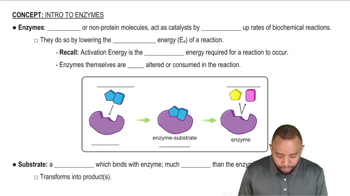
The structure of an enzyme is crucial for its function, as it determines the enzyme's active site, where substrate binding occurs. Isoenzymes may have variations in their amino acid sequences, leading to differences in their three-dimensional shapes, which can affect their activity, stability, and interaction with inhibitors or activators.
Recommended video:
Guided course
2:14
Intro to Enzymes Concept 1

Metabolic Regulation

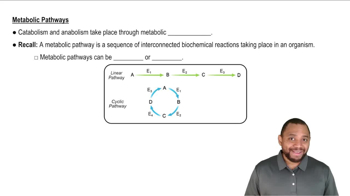
Metabolic regulation refers to the control of biochemical pathways to maintain homeostasis within an organism. Isoenzymes play a significant role in this process by allowing different tissues to respond to varying physiological conditions, ensuring that metabolic reactions are efficiently regulated according to the specific needs of the cell or organism.
Recommended video:
Guided course
0:52
Metabolic Pathways Concept 2