Textbook QuestionEach of these reactions is involved in one of the four stages of metabolism shown in Figure 21.4. Identify the stage in which each reaction occurs.<IMAGE>a. Hydrolysis of starch to produce glucose1099views
Textbook QuestionEach of these reactions is involved in one of the four stages of metabolism shown in Figure 21.4. Identify the stage in which each reaction occurs.<IMAGE>b. Oxidation of NADH coupled with synthesis of ATP1205views
Textbook QuestionEach of these reactions is involved in one of the four stages of metabolism shown in Figure 21.4. Identify the stage in which each reaction occurs.<IMAGE>c. Conversion of glucose to acetyl-CoA1279views
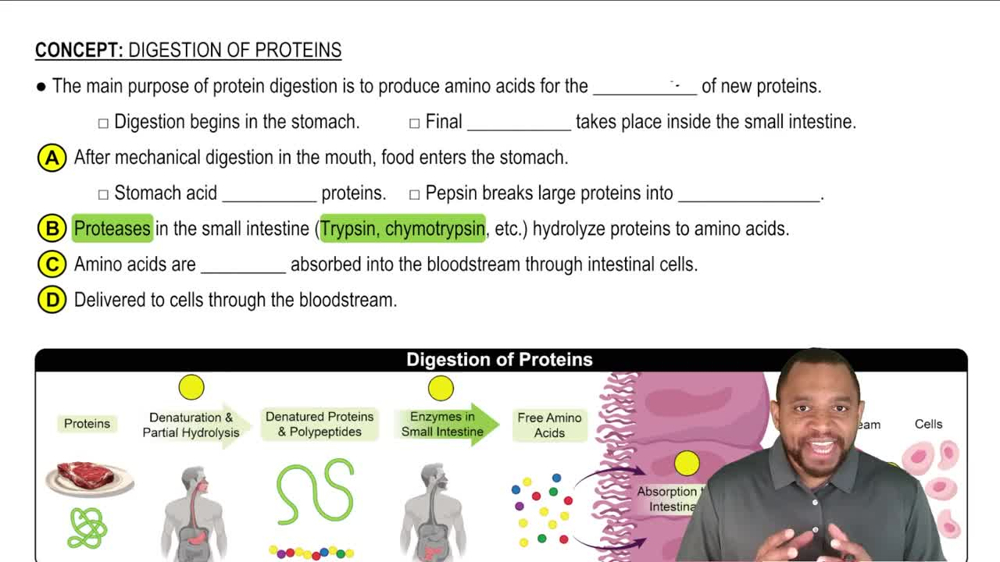
Textbook QuestionArrange the following events in the order in which they occur in a catabolic process: electron transport, digestion, oxidative phosphorylation, citric acid cycle.669views
Textbook QuestionWhat key metabolic intermediate is formed from the catabolism of all three major classes of foods: carbohydrates, lipids, and proteins?907views
Textbook QuestionWhy is ∆G a useful quantity for predicting the favorability of biochemical reactions?1405views
Textbook QuestionThe following reactions occur during the catabolism of glucose. Which are exergonic? Which is endergonic? Which proceeds farthest toward products at equilibrium?b. Phosphoenol pyruvate + H2O → Pyruvate + Phosphate(Pi)∆G = –14.8 kcal/mol (–61.9 kJ/mol)831views