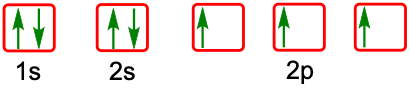
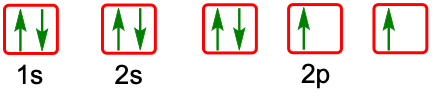
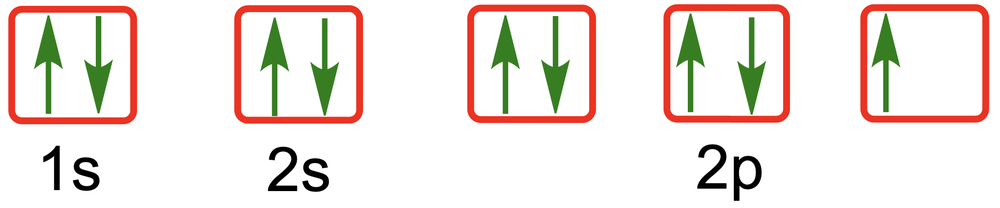
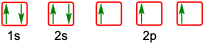
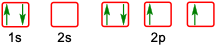
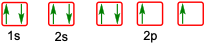
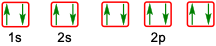
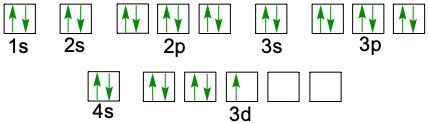
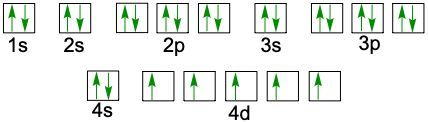
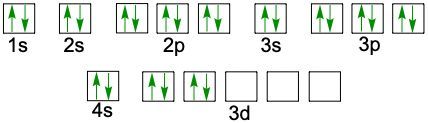
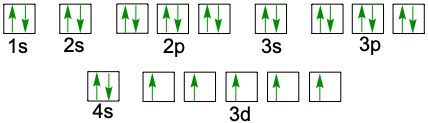
The periodic law plays a crucial role in determining the electron arrangements of elements, which can be visually represented through electron orbital diagrams. These diagrams illustrate how electrons are distributed among various orbitals, particularly focusing on the concept of degenerate orbitals—sets of orbitals that have the same energy level. According to Hund's rule, these degenerate orbitals are filled in a specific manner: they are first half-filled before any orbital is completely filled.
To understand the filling of these orbitals, we can examine the different subshells:
1. **s Sublevel**: The s subshell contains 1 orbital and can hold a maximum of 2 electrons. In this orbital, one electron spins up while the other spins down, adhering to the Pauli exclusion principle.
2. **p Sublevel**: The p subshell consists of 3 orbitals, allowing for a maximum of 6 electrons. Following Hund's rule, each of the three orbitals is first half-filled with one electron (all spinning up) before pairing occurs, resulting in the configuration of up, up, up, down, down, down.
3. **d Sublevel**: The d subshell has 5 orbitals, accommodating a total of 10 electrons. Similar to the p subshell, the d orbitals are half-filled first, with one electron in each orbital before pairing begins, leading to a filling sequence of up, up, up, up, up, down, down, down, down, down.
4. **f Sublevel**: The f subshell contains 7 orbitals and can hold a maximum of 14 electrons. Again, following Hund's rule, the orbitals are half-filled first before any pairing occurs, resulting in a filling pattern that allows for maximum stability.
In summary, the maximum electron capacities for each subshell are as follows: the s subshell can hold 2 electrons, the p subshell can hold 6, the d subshell can hold 10, and the f subshell can hold 14. Understanding these principles is essential for grasping the electron configuration of elements and their chemical behavior.