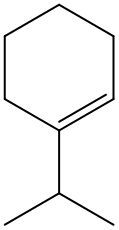
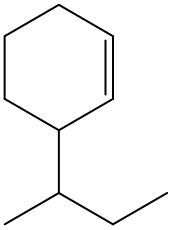
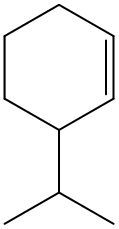
To determine the systematic name of an alkene, follow a structured approach that involves identifying the longest carbon chain, naming substituents, and considering the position of the double bond. The longest carbon chain, which serves as the parent chain, must include the double bond and have the maximum number of carbon atoms. If the chain is cyclic, the prefix "cyclo" is added to the name. In cases where there are ties in chain length, the chain with more substituents is preferred.
For example, when analyzing a specific alkene, the longest chain may be identified, and any substituents, such as a methyl group, should be noted. The numbering of the carbon chain begins from the end closest to the double bond to ensure the double bond is assigned the lowest possible number. If the double bond is part of a ring structure, a location number is not necessary.
In this case, the substituent is a methyl group located on carbon number 4. The double bond starts at carbon number 2, indicating that the parent chain is a six-carbon alkene, which is referred to as hexene. The "-ane" ending of the alkane is replaced with "-ene" to reflect the presence of the double bond. Thus, the base name becomes "2-hexene."
Furthermore, if there are two groups attached to the carbon atoms involved in the double bond, it is essential to determine their spatial arrangement. If the groups are on opposite sides of the double bond, the designation "trans" is used. In this example, since the two groups are positioned on different sides, the complete systematic name of the alkene is "trans-4-methyl-2-hexene."