

Introduction to the Skeleton definitions Flashcards
 Back
BackIntroduction to the Skeleton definitions
1/15
 4:50
4:50

Terms in this set (15)
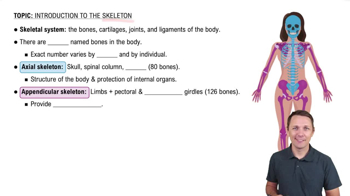
- Axial SkeletonComprises the skull, spinal column, and rib cage, providing structure and protection for internal organs.
- Appendicular SkeletonIncludes limbs and girdles, facilitating movement by attaching to the axial skeleton.
- Sesamoid BonesSmall bones that develop in tendons, often found in hands and feet, varying among individuals.
- Pectoral GirdleConsists of shoulder blades and collarbones, attaching arms to the axial skeleton.
- Pelvic GirdleComposed of hip bones, connecting legs to the axial skeleton.
- Rib CagePart of the axial skeleton, includes ribs and sternum, protecting thoracic organs.
- VertebraeBones forming the spinal column, part of the axial skeleton, providing support and protection.
- Coxal BonesHip bones forming part of the pelvic girdle, supporting body weight in sitting and standing.
- SkullBone structure in the axial skeleton, encasing and protecting the brain.
- LigamentsConnective tissues linking bones, contributing to joint stability and movement.
- CartilagesFlexible connective tissues in joints, aiding in smooth movement and cushioning.
- JointsStructures where two or more bones meet, allowing for movement and flexibility.
- SternumCentral bone in the rib cage, connecting ribs and providing chest structure.
- Anatomical ModelA representation of the human skeleton used for educational purposes.
- Human VariationDifferences in bone number and structure among individuals, influenced by genetics and development.