Skip to main content
Anatomy & Physiology
My Course
Learn
Exam Prep
AI Tutor
Study Guides
Textbook Solutions
Flashcards
Explore
Try the app
My Course
Learn
Exam Prep
AI Tutor
Study Guides
Textbook Solutions
Flashcards
Explore
Try the app
Back
An Introduction to Bone and Skeletal Tissue definitions
21 students found this helpful
You can tap to flip the card.
Bone Marrow
You can tap to flip the card.
👆
Bone Marrow
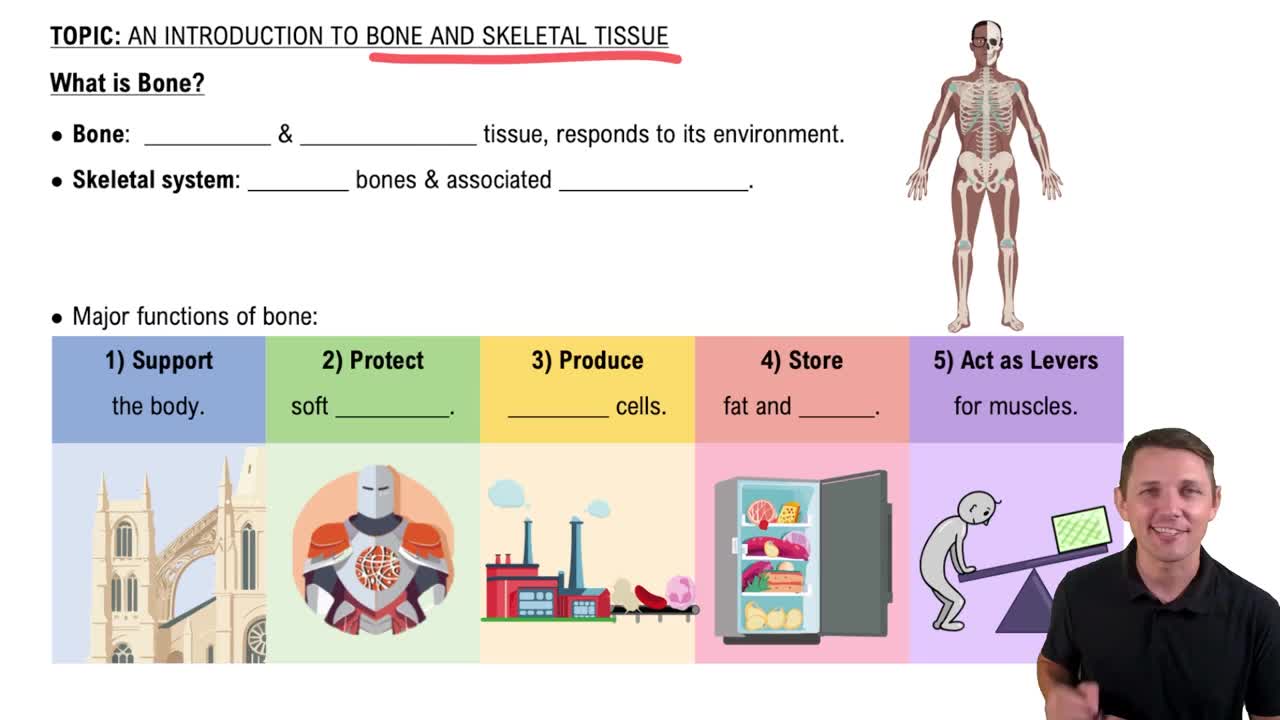
A soft tissue inside bones responsible for producing blood cells and storing fat.
Track progress
Control buttons has been changed to "navigation" mode.
1/15
Related flashcards
Related practice
Recommended videos
An Introduction to Bone and Skeletal Tissue quiz
An Introduction to Bone and Skeletal Tissue
10 Terms
An Introduction to Bone and Skeletal Tissue quiz #1
An Introduction to Bone and Skeletal Tissue
10 Terms
An Introduction to Bone and Skeletal Tissue
6. Bones & Skeletal Tissue
7 problems
Topic
Bruce
Gross Anatomy of Bone: Compact and Spongy Bone
6. Bones & Skeletal Tissue
2 problems
Topic
Jason
6. Bones & Skeletal Tissue
8 topics
14 problems
Chapter
Bruce
Guided course
3:56
What is Bone?
22537
views
675
rank
2
comments
Guided course
3:00
An Introduction to Bone and Skeletal Tissue Example 2
12357
views
258
rank
1
comments
Guided course
4:14
Types of Bones
14733
views
362
rank
1
comments
Terms in this set (15)
Hide definitions
Bone Marrow
A soft tissue inside bones responsible for producing blood cells and storing fat.
Calcium
A mineral stored in bones, crucial for maintaining bone strength and various bodily functions.
Long Bones
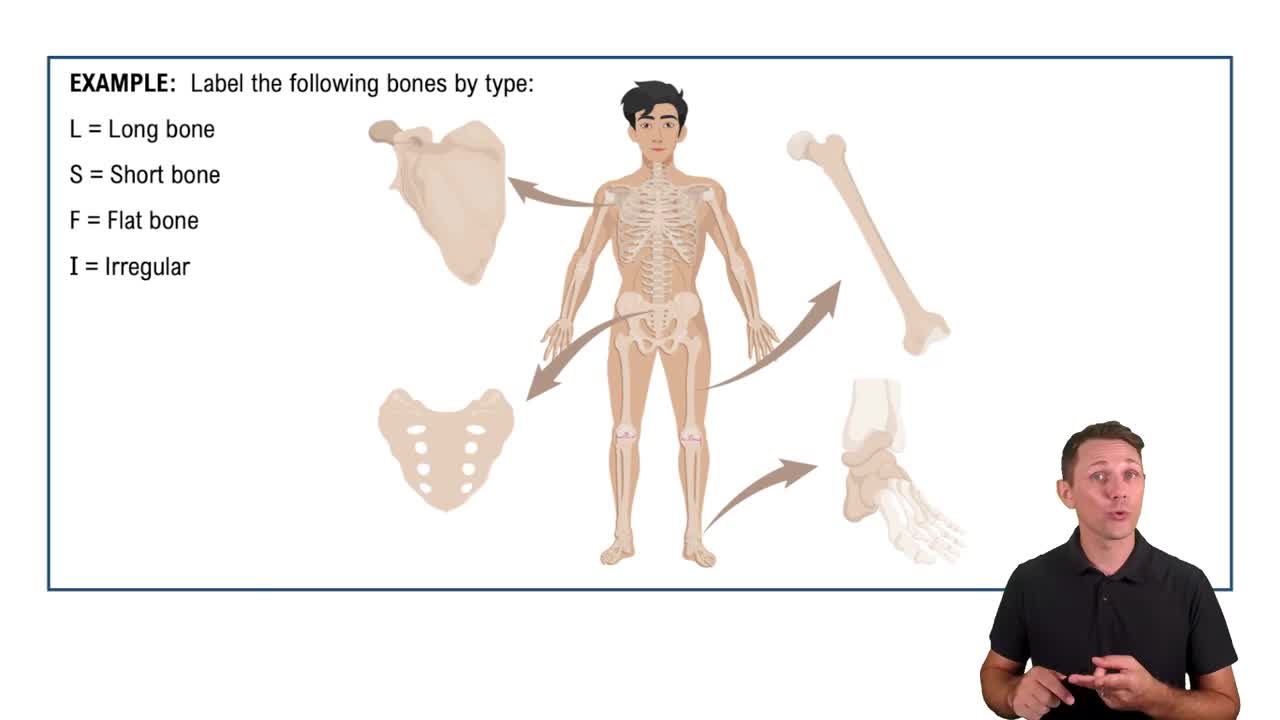
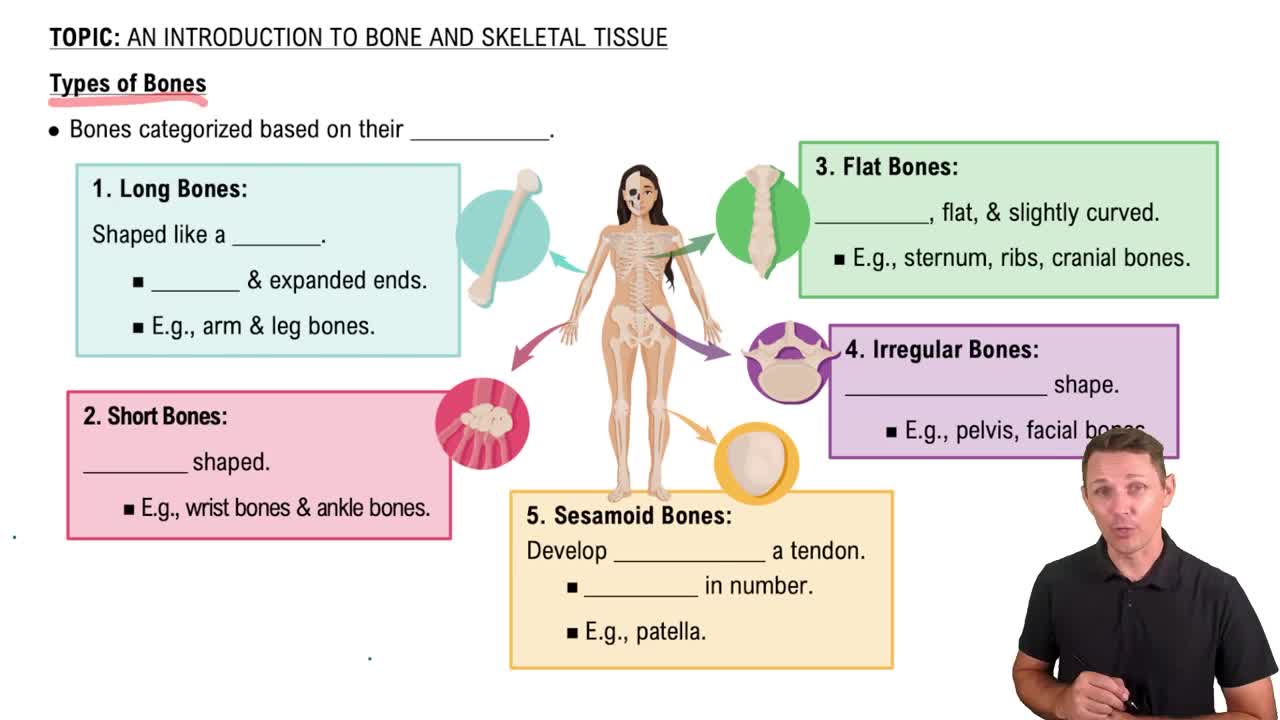
Bones characterized by a shaft and expanded ends, found in arms and legs.
Short Bones
Cube-shaped bones found in the wrists and ankles, known for their compact form.
Flat Bones
Thin, slightly curved bones like the sternum and cranial bones, providing protection.
Irregular Bones
Bones with complex shapes, such as the pelvis and vertebrae, not fitting other categories.
Sesamoid Bones
Bones that form within tendons, like the patella, varying in number among individuals.
Cartilage
A flexible connective tissue associated with bones, aiding in movement and cushioning.
Skeleton
The framework of 206 bones in the human body, providing structure and support.
Cranium
The part of the skull that encloses and protects the brain.
Patella
A sesamoid bone located in the knee, also known as the kneecap.
Humerus
A long bone in the upper arm, extending from shoulder to elbow.
Rib Cage
A structure of bones protecting the thoracic organs, including the heart and lungs.
Pelvis
An irregular bone structure supporting the spine and housing reproductive organs.
Tendons
Connective tissues that attach muscles to bones, facilitating movement.
 BackBack

 3:56
3:56