Ch. 11 Cardiovascular System
Marieb - Essentials of Human Anatomy & Physiology 13th Edition
Marieb13th EditionEssentials of Human Anatomy & PhysiologyISBN: 9780135624340Not the one you use?Change textbook
Chapter 11, Problem 31

Mr. Grimaldi was previously diagnosed as having a posterior pituitary tumor that causes hypersecretion of ADH. He comes to the clinic regularly to have his blood pressure checked. Would you expect his blood pressure to be chronically elevated or depressed? Why?

Verified step by step guidance
1
Understand that ADH (antidiuretic hormone) is responsible for regulating water balance in the body by increasing water reabsorption in the kidneys.
Recognize that hypersecretion of ADH leads to increased water reabsorption, resulting in higher blood volume.
Recall that an increase in blood volume typically leads to an increase in blood pressure, as there is more fluid in the circulatory system.
Consider that chronic elevation of blood pressure can occur due to the persistent high levels of ADH causing continuous water retention.
Conclude that Mr. Grimaldi's blood pressure would likely be chronically elevated due to the hypersecretion of ADH from the posterior pituitary tumor.

Verified video answer for a similar problem:

This video solution was recommended by our tutors as helpful for the problem above.
Video duration:
2m
Was this helpful?

Key Concepts

Here are the essential concepts you must grasp in order to answer the question correctly.

Antidiuretic Hormone (ADH)

Antidiuretic Hormone (ADH), also known as vasopressin, is produced in the hypothalamus and released by the posterior pituitary gland. It plays a crucial role in regulating water balance in the body by promoting water reabsorption in the kidneys. Elevated levels of ADH can lead to increased blood volume, which may contribute to higher blood pressure.
Recommended video:
Guided course
13:06
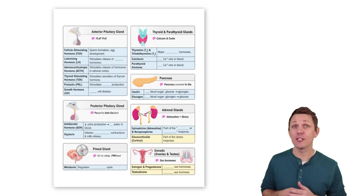
Review of Major Hormones

Hypersecretion

Hypersecretion refers to the excessive production of a hormone or substance by a gland. In Mr. Grimaldi's case, the hypersecretion of ADH due to his pituitary tumor results in an abnormal increase in water retention. This condition can lead to fluid overload, which is a significant factor in the development of hypertension (high blood pressure).

Blood Pressure Regulation

Blood pressure regulation involves a complex interplay of hormones, blood volume, and vascular resistance. When blood volume increases due to factors like excess ADH, it can lead to elevated blood pressure. Understanding this relationship is essential for predicting how Mr. Grimaldi's condition may affect his blood pressure readings over time.
Recommended video:
Guided course
6:12
Partial Pressure