Ch. 24 The Digestive System
Martini - Fundamentals of Anatomy & Physiology 11th Edition
Martini, Nath, Bartholomew11th EditionFundamentals of Anatomy & PhysiologyISBN: 9780136874089Not the one you use?Change textbook
Chapter 24, Problem 5

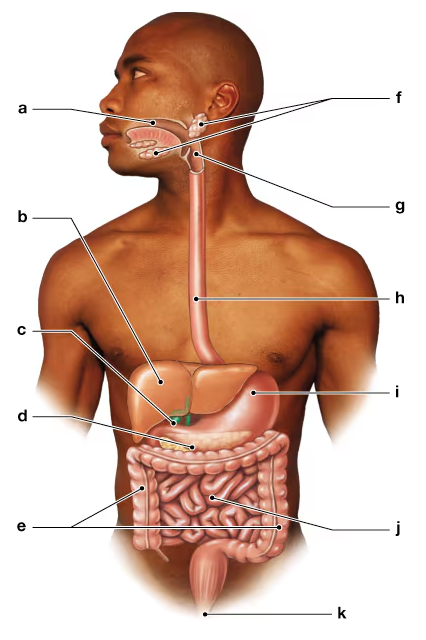
Label the digestive system structures in the following figure.
Diagram of a male torso showing labeled digestive system organs including esophagus, liver, stomach, intestines, and rectum.
a. ___
b. ___
c. ___
d. ___
e. ___
f. ___
g. ___
h. ___
i. ___
j. ___
k.___

Verified step by step guidance
1
Step 1: Identify the major regions of the digestive system in the figure, starting from the mouth and moving down to the anus. Common structures include the oral cavity, pharynx, esophagus, stomach, small intestine, large intestine, rectum, and anus.
Step 2: Look for accessory organs that aid digestion but are not part of the direct food pathway, such as the salivary glands, liver, gallbladder, and pancreas. These are usually labeled separately.
Step 3: Match each label (a through k) to the corresponding structure by comparing the location and shape in the figure to your knowledge of digestive anatomy. For example, the esophagus is a muscular tube connecting the throat to the stomach, while the stomach is a large, sac-like organ.
Step 4: Use anatomical landmarks to distinguish similar-looking parts. For instance, the small intestine has three parts (duodenum, jejunum, ileum), and the large intestine includes the cecum, colon, and rectum. Identify which part is shown based on position and connections.
Step 5: Confirm your labeling by reviewing the function and position of each structure to ensure consistency. For example, the liver is located in the upper right abdomen and connected to the gallbladder, which stores bile.

Verified video answer for a similar problem:

This video solution was recommended by our tutors as helpful for the problem above.
Was this helpful?

Key Concepts

Here are the essential concepts you must grasp in order to answer the question correctly.

Anatomy of the Digestive System

Understanding the anatomy of the digestive system involves recognizing the major organs and structures involved in digestion, such as the mouth, esophagus, stomach, intestines, liver, pancreas, and others. Each part has a specific role in processing food, absorbing nutrients, or eliminating waste.
Recommended video:
Guided course
5:08
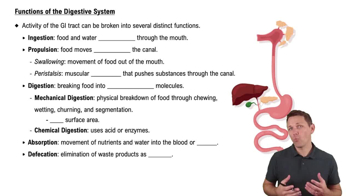
Functions of the Digestive System

Function of Digestive Organs

Each digestive organ performs distinct functions, like mechanical breakdown, chemical digestion, nutrient absorption, or waste elimination. Knowing these functions helps in correctly identifying and labeling the structures based on their role in the digestive process.
Recommended video:
Guided course
6:28
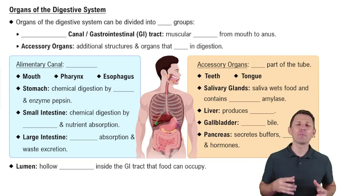
Organs of the Digestive System

Visual Identification and Labeling

Labeling requires the ability to visually identify anatomical structures from diagrams or images. This skill involves correlating the shape, position, and relative size of organs with their names, which is essential for accurate labeling in anatomy assessments.
Recommended video:
Guided course
16:19
Epithelium Identification Flow Chart