
Ch. 20 The Heart
Martini - Fundamentals of Anatomy & Physiology 11th Edition
Martini, Nath, Bartholomew11th EditionFundamentals of Anatomy & PhysiologyISBN: 9780136874089Not the one you use?Change textbook
Chapter 20, Problem 21

Cardiac output cannot increase indefinitely because:
(a) The available filling time decreases as heart rate increases
(b) The heart becomes unable to contract at faster rates
(c) Stroke volume increases too much, leading to overfilling
(d) The heart’s muscle fibers lose their ability to stretch
(e) None of these reasons

Verified step by step guidance
1
Step 1: Understand the concept of cardiac output, which is the volume of blood the heart pumps per minute. It is calculated as the product of heart rate (HR) and stroke volume (SV): \(\text{Cardiac Output} = HR \times SV\).
Step 2: Recognize that as heart rate increases, the time available for the heart chambers to fill with blood (diastole) decreases. This can limit stroke volume because less filling time means less blood enters the ventricles.
Step 3: Consider the physiological limits of the heart muscle. While the heart can contract faster, there is a limit to how quickly it can effectively contract and relax to maintain efficient pumping.
Step 4: Evaluate the options given: (a) mentions decreased filling time with increased heart rate, which directly affects stroke volume and thus cardiac output; (b) and (d) relate to contraction ability and muscle fiber stretch, which are also factors but less immediate than filling time; (c) suggests stroke volume increases too much, which is generally not the limiting factor.
Step 5: Conclude that the primary reason cardiac output cannot increase indefinitely is because the available filling time decreases as heart rate increases, limiting stroke volume and thus cardiac output.

Verified video answer for a similar problem:

This video solution was recommended by our tutors as helpful for the problem above.
Was this helpful?

Key Concepts

Here are the essential concepts you must grasp in order to answer the question correctly.

Relationship Between Heart Rate and Filling Time

As heart rate increases, the duration of diastole (filling phase) shortens, reducing the time available for the ventricles to fill with blood. This limits stroke volume and thus restricts further increases in cardiac output despite faster heartbeats.
Recommended video:
Guided course
6:13
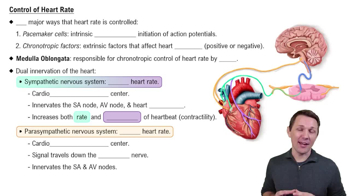
Control of Heart Rate

Frank-Starling Mechanism and Stroke Volume

The Frank-Starling law states that the heart's stroke volume increases with greater ventricular filling due to muscle fiber stretch. However, excessive stretching can impair contraction efficiency, preventing indefinite increases in cardiac output.
Recommended video:
Guided course
6:28
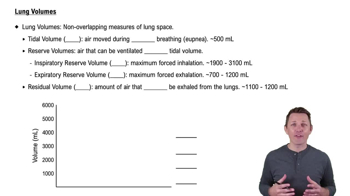
Lung Volumes

Limits of Cardiac Muscle Contractility at High Rates

At very high heart rates, the heart muscle may not contract effectively due to insufficient time for calcium cycling and energy replenishment. This reduces contractile strength and limits the heart's ability to sustain increased output.
Recommended video:
Guided course
06:00
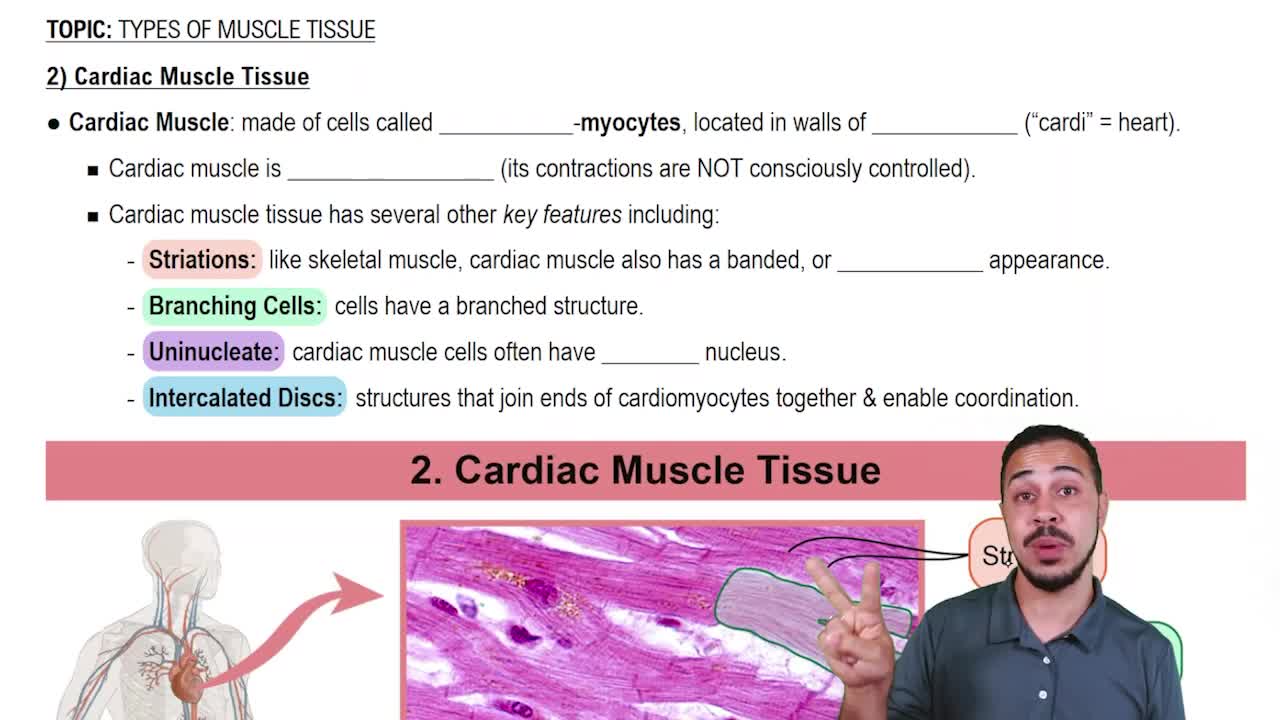
Cardiac Muscle Tissue