Ch. 7 The Nervous System
Marieb - Essentials of Human Anatomy & Physiology 13th Edition
Marieb13th EditionEssentials of Human Anatomy & PhysiologyISBN: 9780135624340Not the one you use?Change textbook
Chapter 7, Problem 13

Explain both the structural and functional classifications of the nervous system. In your explanation, include the subdivisions of each.

Verified step by step guidance
1
The nervous system is classified structurally into two main divisions: the central nervous system (CNS) and the peripheral nervous system (PNS). The CNS consists of the brain and spinal cord, which are enclosed within the skull and vertebral column, respectively. The PNS includes all the nerves outside the CNS, such as cranial nerves and spinal nerves.
The functional classification of the nervous system is based on the direction of information flow and the type of control exerted. It is divided into the sensory (afferent) division and the motor (efferent) division. The sensory division carries information from sensory receptors to the CNS, while the motor division transmits signals from the CNS to effectors (muscles and glands).
The sensory division of the nervous system can be further subdivided into somatic sensory (which detects stimuli from the skin, muscles, and joints) and visceral sensory (which detects stimuli from internal organs). These subdivisions help the body process external and internal environmental changes.
The motor division is subdivided into the somatic nervous system (SNS) and the autonomic nervous system (ANS). The SNS controls voluntary movements by activating skeletal muscles, while the ANS regulates involuntary functions such as heart rate, digestion, and respiratory rate.
The autonomic nervous system (ANS) is further divided into the sympathetic division (responsible for 'fight or flight' responses) and the parasympathetic division (responsible for 'rest and digest' activities). These subdivisions work together to maintain homeostasis in the body.

Verified video answer for a similar problem:

This video solution was recommended by our tutors as helpful for the problem above.
Video duration:
1m
Was this helpful?

Key Concepts

Here are the essential concepts you must grasp in order to answer the question correctly.

Structural Classification of the Nervous System

The structural classification of the nervous system divides it into the central nervous system (CNS) and the peripheral nervous system (PNS). The CNS comprises the brain and spinal cord, serving as the main control center for processing information. The PNS includes all the nerves that branch out from the CNS, connecting it to the rest of the body, and is further divided into sensory and motor divisions.
Recommended video:
08:25
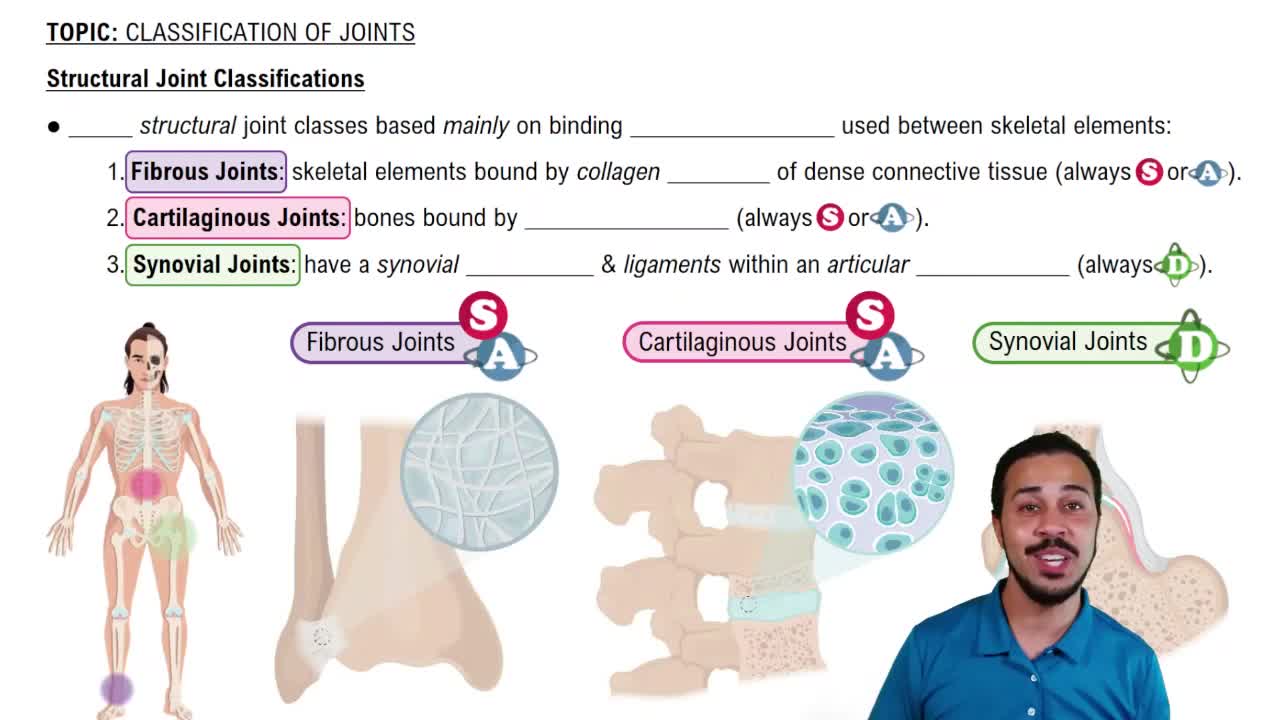
Structural Joint Classifications

Functional Classification of the Nervous System

The functional classification of the nervous system categorizes it based on its roles in processing and responding to stimuli. It is primarily divided into the somatic nervous system, which controls voluntary movements and sensory information, and the autonomic nervous system, which regulates involuntary functions such as heart rate and digestion. The autonomic system is further subdivided into the sympathetic and parasympathetic systems, which manage the body's fight-or-flight and rest-and-digest responses, respectively.
Recommended video:
08:43
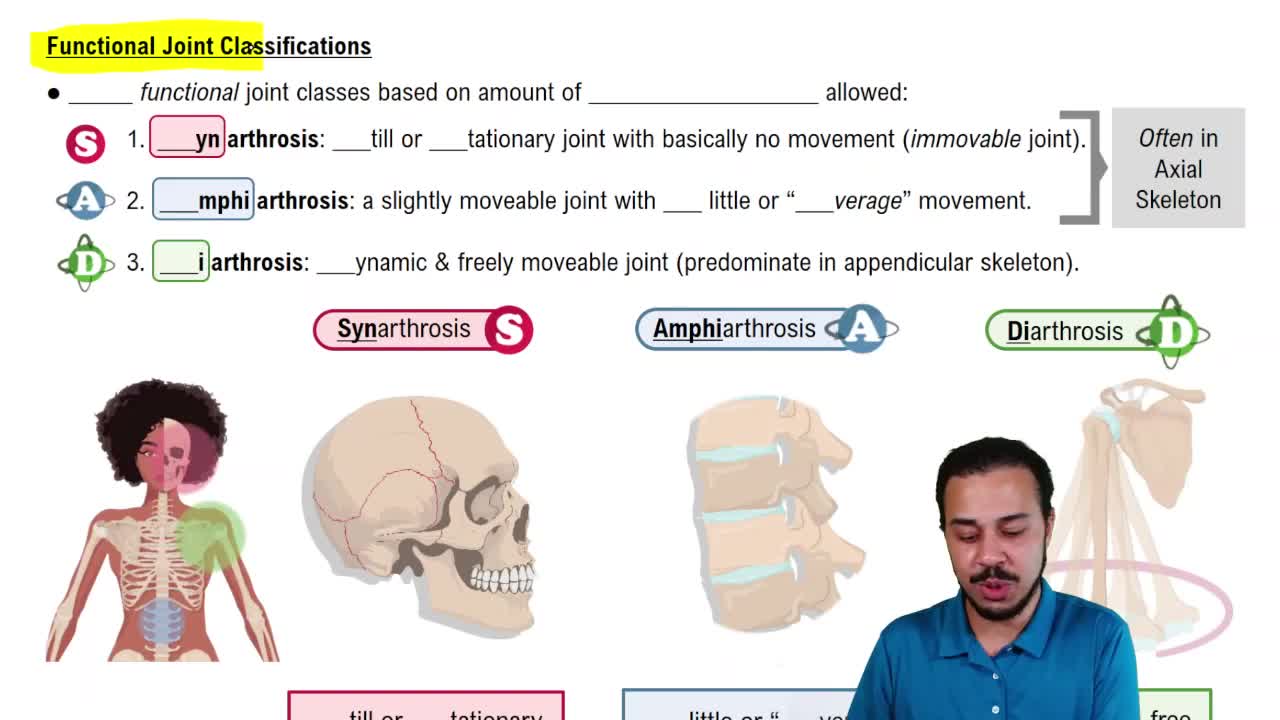
Functional Joint Classifications

Subdivisions of the Nervous System

Both the structural and functional classifications of the nervous system have important subdivisions. In the structural classification, the CNS is divided into the brain (with regions like the cerebrum, cerebellum, and brainstem) and the spinal cord. In the functional classification, the autonomic nervous system is subdivided into sympathetic and parasympathetic systems, while the somatic nervous system encompasses sensory and motor pathways, highlighting the complexity and specialization of nervous system functions.
Recommended video:
3:33
Peripheral Nervous System