Ch. 6 Bones and Bone Structure
Martini - Fundamentals of Anatomy & Physiology 11th Edition
Martini, Nath, Bartholomew11th EditionFundamentals of Anatomy & PhysiologyISBN: 9780136874089Not the one you use?Change textbook
Chapter 6, Problem 14

What is the primary difference between endochondral ossification and intramembranous ossification?

Verified step by step guidance
1
Step 1: Understand the definition of ossification, which is the process of bone formation in the body.
Step 2: Identify that endochondral ossification involves the replacement of a cartilage template with bone, typically forming long bones like the femur and humerus.
Step 3: Recognize that intramembranous ossification involves the direct formation of bone from mesenchymal (undifferentiated) connective tissue without a cartilage stage, commonly forming flat bones such as those of the skull and clavicle.
Step 4: Compare the two processes by noting that endochondral ossification uses a cartilage model as a precursor, while intramembranous ossification does not involve cartilage at any stage.
Step 5: Summarize that the primary difference lies in the presence or absence of a cartilage template during the bone formation process.

Verified video answer for a similar problem:

This video solution was recommended by our tutors as helpful for the problem above.
Video duration:
2m
Was this helpful?

Key Concepts

Here are the essential concepts you must grasp in order to answer the question correctly.

Endochondral Ossification

Endochondral ossification is the process where bone develops by replacing a cartilage template. It is essential for forming long bones like the femur and involves the gradual calcification and breakdown of cartilage, which is then replaced by bone tissue.
Recommended video:
02:23
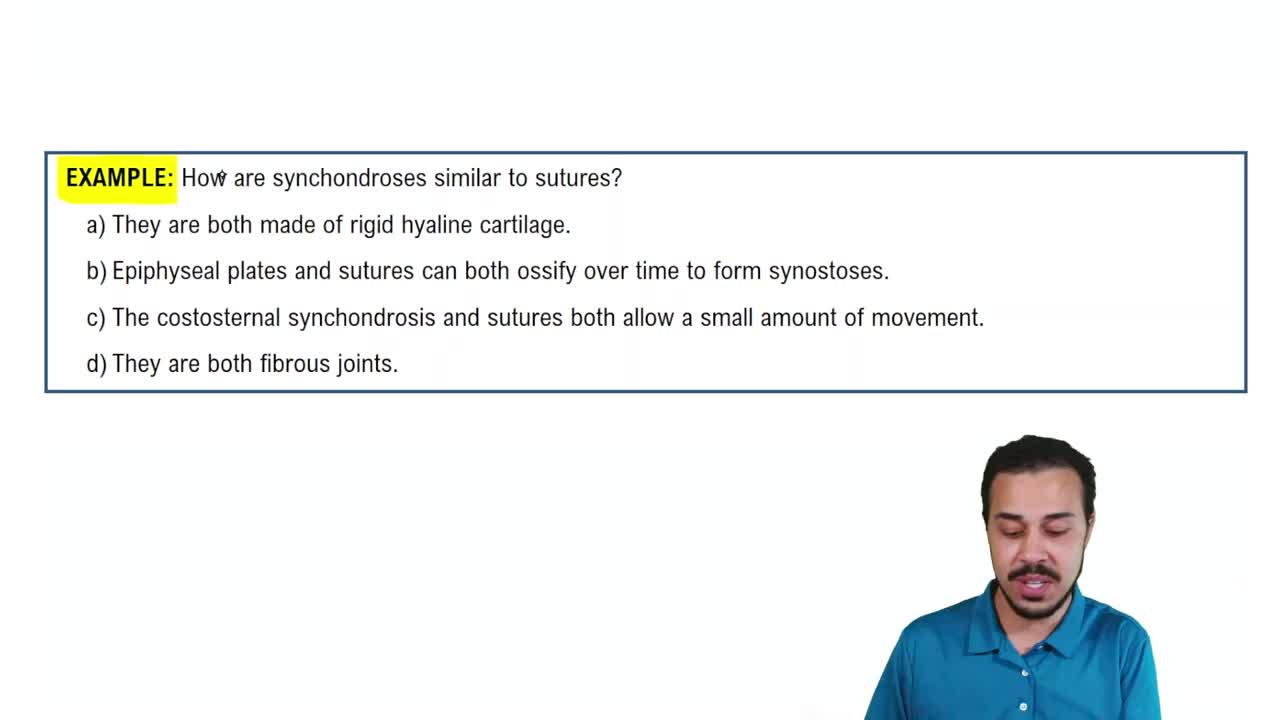
Structural Class: Cartilaginous Joints Example 1

Intramembranous Ossification

Intramembranous ossification is the direct formation of bone from mesenchymal connective tissue without a cartilage stage. This process primarily forms flat bones such as those in the skull and clavicle, where bone cells differentiate directly from mesenchymal cells.
Recommended video:
02:23
Structural Class: Cartilaginous Joints Example 1

Primary Difference Between the Two Processes

The main difference lies in the presence or absence of a cartilage model: endochondral ossification uses a cartilage template as a precursor to bone, while intramembranous ossification forms bone directly from mesenchymal tissue. This distinction affects the types of bones formed and their developmental pathways.
Recommended video:
Guided course
03:04
The Difference Between Anatomy and Physiology