Ch. 19 Blood
Martini - Fundamentals of Anatomy & Physiology 11th Edition
Martini, Nath, Bartholomew11th EditionFundamentals of Anatomy & PhysiologyISBN: 9780136874089Not the one you use?Change textbook
Chapter 19, Problem 5

Serum is:
(a) The same as blood plasma
(b) Plasma minus the formed elements
(c) Plasma minus the proteins
(d) Plasma minus fibrinogen
(e) Plasma minus the electrolytes

Verified step by step guidance
1
Step 1: Understand the components of blood. Blood consists of formed elements (cells like red blood cells, white blood cells, and platelets) suspended in plasma, which is the liquid portion containing water, electrolytes, proteins, and other substances.
Step 2: Define plasma. Plasma is the fluid part of blood that includes water, electrolytes, proteins (such as albumin, globulins, and fibrinogen), nutrients, hormones, and waste products, but it still contains clotting factors like fibrinogen.
Step 3: Define serum. Serum is the fluid that remains after blood has clotted and the clot has been removed. This means serum is plasma without the clotting proteins, primarily fibrinogen.
Step 4: Compare the options given. Since serum is plasma minus the clotting proteins, especially fibrinogen, the correct description is 'plasma minus fibrinogen'.
Step 5: Conclude that the correct answer corresponds to the option describing serum as plasma without fibrinogen, which is option (d).

Verified video answer for a similar problem:

This video solution was recommended by our tutors as helpful for the problem above.
Was this helpful?

Key Concepts

Here are the essential concepts you must grasp in order to answer the question correctly.

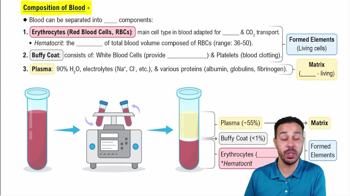
Blood Plasma

Blood plasma is the liquid component of blood that contains water, electrolytes, proteins, nutrients, hormones, and waste products. It serves as a transport medium for cells and various substances throughout the body. Plasma includes clotting factors such as fibrinogen.
Recommended video:
7:49
Composition of Blood

Serum

Serum is the fluid portion of blood obtained after clotting has occurred, meaning it is plasma without the clotting proteins like fibrinogen. It contains electrolytes, antibodies, antigens, hormones, and other proteins but lacks fibrinogen and other clotting factors.
Recommended video:
9:16
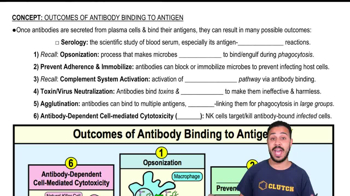
Outcomes of Antibody Binding to Antigen

Difference Between Plasma and Serum

The key difference is that plasma contains fibrinogen and other clotting factors, while serum does not because these are consumed during clot formation. Understanding this distinction helps in interpreting blood tests and clinical diagnostics.
Recommended video:
Guided course
03:04
The Difference Between Anatomy and Physiology