Ch. 6 The Muscular System
Marieb - Essentials of Human Anatomy & Physiology 13th Edition
Marieb13th EditionEssentials of Human Anatomy & PhysiologyISBN: 9780135624340Not the one you use?Change textbook
Chapter 6, Problem 19c

When Eric returned from jogging, he was breathing heavily and sweating profusely, and he complained that his legs ached and felt weak. On the basis of what you have learned about muscle energy metabolism, respond to the following questions: c. What metabolic product(s) might account for his sore muscles and his feeling of muscle weakness?

Verified step by step guidance
1
Understand that during intense physical activity, muscles rely on anaerobic metabolism when oxygen supply is insufficient for aerobic metabolism. This process produces energy quickly but leads to the accumulation of metabolic byproducts.
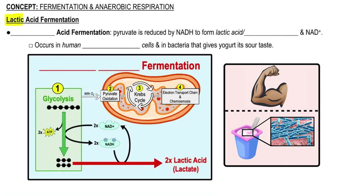
Recall that anaerobic metabolism primarily involves glycolysis, where glucose is broken down into pyruvate. In the absence of sufficient oxygen, pyruvate is converted into lactic acid (or lactate). This buildup of lactic acid can contribute to muscle soreness and fatigue.
Consider that lactic acid accumulation lowers the pH in muscle cells, leading to acidosis. This acidic environment can interfere with enzyme activity and muscle contraction, contributing to the feeling of weakness and discomfort.
Note that prolonged exercise also depletes energy stores such as ATP and glycogen in muscle cells. The lack of readily available energy can further contribute to muscle fatigue and weakness.
Finally, recognize that sweating profusely during exercise leads to the loss of electrolytes (e.g., sodium, potassium, calcium), which are essential for proper muscle function. Electrolyte imbalance can exacerbate muscle weakness and cramping.

Verified video answer for a similar problem:

This video solution was recommended by our tutors as helpful for the problem above.
Video duration:
1m
Was this helpful?

Key Concepts

Here are the essential concepts you must grasp in order to answer the question correctly.

Lactic Acid Production

During intense exercise, such as jogging, the body may rely on anaerobic metabolism for energy, leading to the production of lactic acid. This occurs when oxygen levels are insufficient for aerobic respiration, causing pyruvate to convert into lactic acid. Accumulation of lactic acid in the muscles can contribute to soreness and fatigue, as it can interfere with muscle contraction and lead to a burning sensation.
Recommended video:
03:33
Lactic Acid Fermentation

Muscle Fatigue

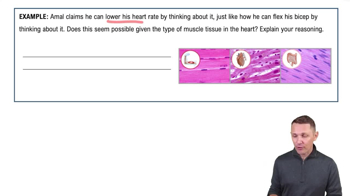
Muscle fatigue is a temporary condition resulting from prolonged physical activity, characterized by a decrease in muscle performance and strength. It can be caused by various factors, including the depletion of energy stores (like glycogen), accumulation of metabolic byproducts (such as lactic acid), and ionic imbalances within muscle cells. This fatigue can manifest as weakness and discomfort in the muscles after strenuous exercise.
Recommended video:
Guided course
2:00
Introduction to Muscles and Muscle Tissue Example 1

Energy Systems in Muscle Metabolism

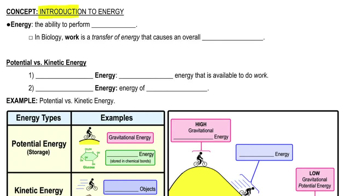
Muscle energy metabolism involves three primary energy systems: the phosphagen system, anaerobic glycolysis, and aerobic respiration. The phosphagen system provides immediate energy for short bursts of activity, while anaerobic glycolysis kicks in during high-intensity efforts, producing energy quickly but less efficiently. Aerobic respiration is utilized during prolonged, lower-intensity activities. Understanding these systems helps explain how muscles generate energy and the resulting metabolic byproducts during exercise.
Recommended video:
4:58
Introduction to Energy
Related Practice
Textbook Question

When Eric returned from jogging, he was breathing heavily and sweating profusely, and he complained that his legs ached and felt weak. On the basis of what you have learned about muscle energy metabolism, respond to the following questions:

b. What ATP-harvesting pathway have his working muscles been using that leads to such a breathing pattern?

677
views
Textbook Question

Tell where each of the three types of muscle tissue would be found in the body. What is meant by the statement, 'Smooth muscles are involuntary in action'?

810
views
Textbook Question

Michael had a nervous habit of chewing on the inner lining of his lip with his front teeth. The lip grew thicker and thicker from years of continual irritation. Michael's dentist noticed his greatly thickened lip, then told him to have it checked to see if the thickening was a tumor. A biopsy revealed hyperplasia, but no evidence of neoplasia. What do these terms mean? Did Michael have cancer of the mouth?

735
views
Textbook Question

Chemical A binds and blocks acetylcholine receptors of muscle cells. Chemical B floods the cytoplasm of muscle cells with calcium ions. Which chemical would make the best muscle relaxant, and why?

716
views
Textbook Question

When Eric returned from jogging, he was breathing heavily and sweating profusely, and he complained that his legs ached and felt weak. On the basis of what you have learned about muscle energy metabolism, respond to the following questions:

a. Why is Eric breathing heavily?

668
views