Ch. 12 Nervous Tissue
Martini - Fundamentals of Anatomy & Physiology 11th Edition
Martini, Nath, Bartholomew11th EditionFundamentals of Anatomy & PhysiologyISBN: 9780136874089Not the one you use?Change textbook
Chapter 12, Problem 22

Harry has a kidney condition that causes changes in his body's electrolyte levels (concentration of ions in the extracellular fluid). As a result, he is exhibiting tachycardia, an abnormally fast heart rate. Which ion is involved, and how does a change in its concentration cause Harry's symptoms?

Verified step by step guidance
1
Identify the key ions involved in cardiac muscle function, focusing on sodium (Na\^+), potassium (K\^+), calcium (Ca\^{2+}), and chloride (Cl\^-), as these ions influence the electrical activity of the heart.
Understand that potassium (K\^+) plays a critical role in setting the resting membrane potential of cardiac cells and in repolarization during the cardiac action potential.
Recognize that changes in extracellular potassium concentration can alter the resting membrane potential: increased K\^+ levels (hyperkalemia) can depolarize the membrane, while decreased K\^+ levels (hypokalemia) can hyperpolarize it.
Explain how altered potassium levels affect heart rate: hyperkalemia can lead to faster depolarization and potentially tachycardia, while hypokalemia can cause arrhythmias and other cardiac issues.
Summarize that in Harry's case, an abnormal potassium concentration in the extracellular fluid disrupts the normal electrical signaling in the heart, leading to tachycardia.

Verified video answer for a similar problem:

This video solution was recommended by our tutors as helpful for the problem above.
Video duration:
6m
Was this helpful?

Key Concepts

Here are the essential concepts you must grasp in order to answer the question correctly.

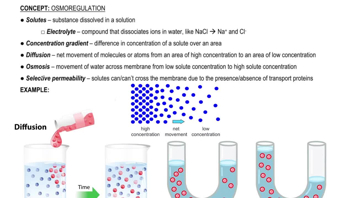
Electrolyte Balance and Extracellular Fluid

Electrolytes are ions like sodium, potassium, calcium, and chloride that maintain fluid balance and electrical activity in the body. Changes in their concentration in the extracellular fluid can disrupt normal cellular functions, especially in excitable tissues like the heart.
Recommended video:
07:59
Osmosis and Osmolarity

Role of Potassium in Cardiac Function

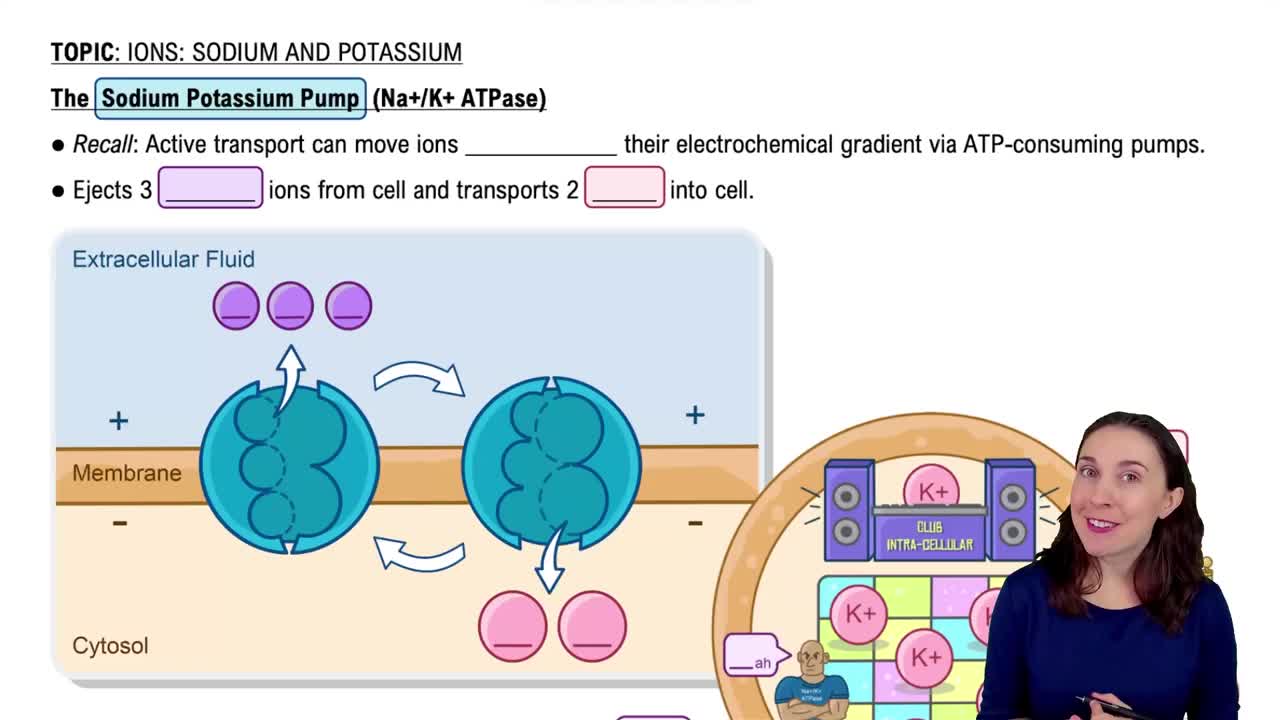
Potassium ions are critical for maintaining the resting membrane potential of cardiac cells. Abnormal potassium levels, particularly hypokalemia or hyperkalemia, can alter heart rhythm by affecting the electrical conduction system, potentially causing arrhythmias such as tachycardia.
Recommended video:
03:40
The Sodium Potassium Pump

Mechanism of Tachycardia Due to Electrolyte Imbalance

Tachycardia occurs when the heart beats faster than normal, often triggered by electrolyte disturbances that affect ion channels and action potentials in cardiac cells. For example, low potassium can increase excitability, leading to rapid heart rates as seen in some kidney disorders.
Recommended video:
07:59
Osmosis and Osmolarity