Ch. 21 Blood Vessels and Circulation
Martini - Fundamentals of Anatomy & Physiology 11th Edition
Martini, Nath, Bartholomew11th EditionFundamentals of Anatomy & PhysiologyISBN: 9780136874089Not the one you use?Change textbook
Chapter 21, Problem 26

Why is blood flow to the brain relatively continuous and constant?

Verified step by step guidance
1
Understand that the brain requires a constant supply of oxygen and nutrients to function properly, which necessitates a steady blood flow.
Recognize that the heart pumps blood in pulses, but the blood vessels in the brain help to smooth out these pulses to maintain continuous flow.
Learn about the role of the cerebral autoregulation mechanism, which adjusts the diameter of cerebral blood vessels to keep blood flow constant despite changes in blood pressure.
Consider the elasticity of large arteries, such as the carotid arteries, which act as a pressure reservoir to maintain steady blood flow during the cardiac cycle.
Summarize that the combination of vascular elasticity, autoregulation, and the critical metabolic demands of brain tissue ensures that blood flow to the brain remains relatively continuous and constant.

Verified video answer for a similar problem:

This video solution was recommended by our tutors as helpful for the problem above.
Was this helpful?

Key Concepts

Here are the essential concepts you must grasp in order to answer the question correctly.

Cerebral Autoregulation

Cerebral autoregulation is the brain's ability to maintain a stable blood flow despite changes in systemic blood pressure. This mechanism ensures that neurons receive a constant supply of oxygen and nutrients, protecting brain function during fluctuations in blood pressure.
Recommended video:
3:13
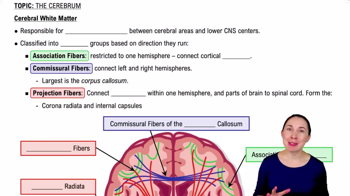
Cerebral White Matter

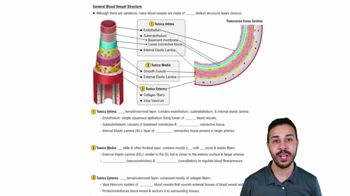
Blood-Brain Barrier and Vascular Structure

The brain's blood vessels have unique structural features, including tight junctions and a dense capillary network, which regulate blood flow and protect neural tissue. This specialized vascular system supports continuous and controlled blood delivery to meet the brain's high metabolic demands.
Recommended video:
14:36
General Blood Vessel Structure

Metabolic Demand of Brain Tissue

The brain requires a constant supply of oxygen and glucose due to its high metabolic activity and limited energy storage. Continuous blood flow is essential to sustain neuronal function and prevent damage from ischemia or hypoxia.
Recommended video:
02:17
Introduction to Metabolism