Ch. 10 Blood
Marieb - Essentials of Human Anatomy & Physiology 13th Edition
Marieb13th EditionEssentials of Human Anatomy & PhysiologyISBN: 9780135624340Not the one you use?Change textbook
Chapter 10, Problem 8

More than one choice may apply.
A condition resulting from thrombocytopenia is
a. Thrombus formation
b. Embolus formation
c. Petechiae
d. Hemophilia

Verified step by step guidance
1
Understand the term 'thrombocytopenia': Thrombocytopenia refers to a condition where there is an abnormally low number of platelets (thrombocytes) in the blood. Platelets are essential for blood clotting, so a deficiency can lead to issues with clot formation and increased bleeding risk.
Analyze each option to determine its relevance to thrombocytopenia: a) 'Thrombus formation' refers to the formation of a blood clot in a vessel, which is less likely in thrombocytopenia due to reduced platelet count. b) 'Embolus formation' refers to a clot or other material traveling through the bloodstream, which is also less likely in thrombocytopenia. c) 'Petechiae' are small red or purple spots caused by bleeding under the skin, commonly associated with thrombocytopenia due to the inability to form clots effectively. d) 'Hemophilia' is a genetic disorder affecting clotting factors, not directly related to thrombocytopenia but can have similar bleeding symptoms.
Focus on the symptoms directly caused by thrombocytopenia: Since thrombocytopenia leads to reduced clotting ability, it is more likely to cause bleeding-related symptoms such as petechiae rather than clot formation (thrombus or embolus).
Eliminate options that are not directly caused by thrombocytopenia: Thrombus and embolus formation are less likely because thrombocytopenia reduces the ability to form clots. Hemophilia is a separate condition and not caused by thrombocytopenia.
Conclude that the most relevant condition resulting from thrombocytopenia is petechiae, as it directly results from the reduced platelet count and impaired clotting ability.

Verified video answer for a similar problem:

This video solution was recommended by our tutors as helpful for the problem above.
Was this helpful?

Key Concepts

Here are the essential concepts you must grasp in order to answer the question correctly.

Thrombocytopenia

Thrombocytopenia is a medical condition characterized by an abnormally low level of platelets in the blood. Platelets are essential for blood clotting, and their deficiency can lead to increased bleeding and bruising. Understanding this condition is crucial for recognizing its potential complications, such as petechiae and other bleeding disorders.

Petechiae

Petechiae are small, pinpoint red or purple spots that appear on the skin due to bleeding under the skin. They are often a direct result of thrombocytopenia, as the lack of platelets impairs the body's ability to stop bleeding. Recognizing petechiae is important for diagnosing underlying conditions related to platelet deficiency.

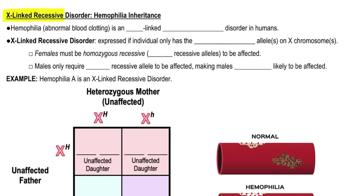
Hemophilia

Hemophilia is a genetic disorder that affects the blood's ability to clot properly, leading to excessive bleeding. While it shares some symptoms with thrombocytopenia, such as easy bruising and prolonged bleeding, it is caused by a deficiency in specific clotting factors rather than a low platelet count. Understanding the distinction between these conditions is essential for accurate diagnosis and treatment.
Recommended video:
04:37
X-Linked Recessive Disorder: Hemophilia Inheritance