Ch. 6 Bones and Bone Structure
Martini - Fundamentals of Anatomy & Physiology 11th Edition
Martini, Nath, Bartholomew11th EditionFundamentals of Anatomy & PhysiologyISBN: 9780136874089Not the one you use?Change textbook
Chapter 6, Problem 7c

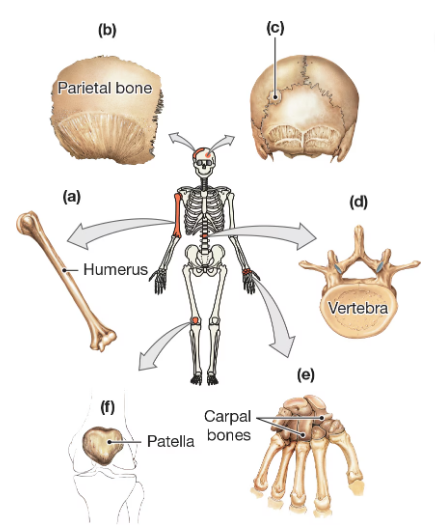
Classify the bones in the following diagram according to their shape.
c. _____
Diagram showing human bones labeled by shape: humerus, parietal bone, skull section, vertebra, carpal bones, and patella.

Verified step by step guidance
1
Step 1: Identify the bone labeled (c) in the diagram, which is a section of the skull.
Step 2: Recall the classification of bones by shape: long bones, short bones, flat bones, irregular bones, and sesamoid bones.
Step 3: Understand that flat bones are typically thin, flattened, and often curved, providing protection and broad surfaces for muscle attachment. The skull bones, including the section labeled (c), fall into this category.
Step 4: Confirm that the bone labeled (c) is a flat bone because it is part of the skull, which protects the brain and has a broad, flat shape.
Step 5: Conclude that the bone labeled (c) should be classified as a flat bone.

Verified video answer for a similar problem:

This video solution was recommended by our tutors as helpful for the problem above.
Video duration:
2m
Was this helpful?

Key Concepts

Here are the essential concepts you must grasp in order to answer the question correctly.

Bone Classification by Shape

Bones are classified into four main shapes: long, short, flat, and irregular. This classification helps in understanding their function and location in the body. For example, long bones like the humerus support weight and facilitate movement, while flat bones like the parietal bone protect internal organs.
Recommended video:
08:25
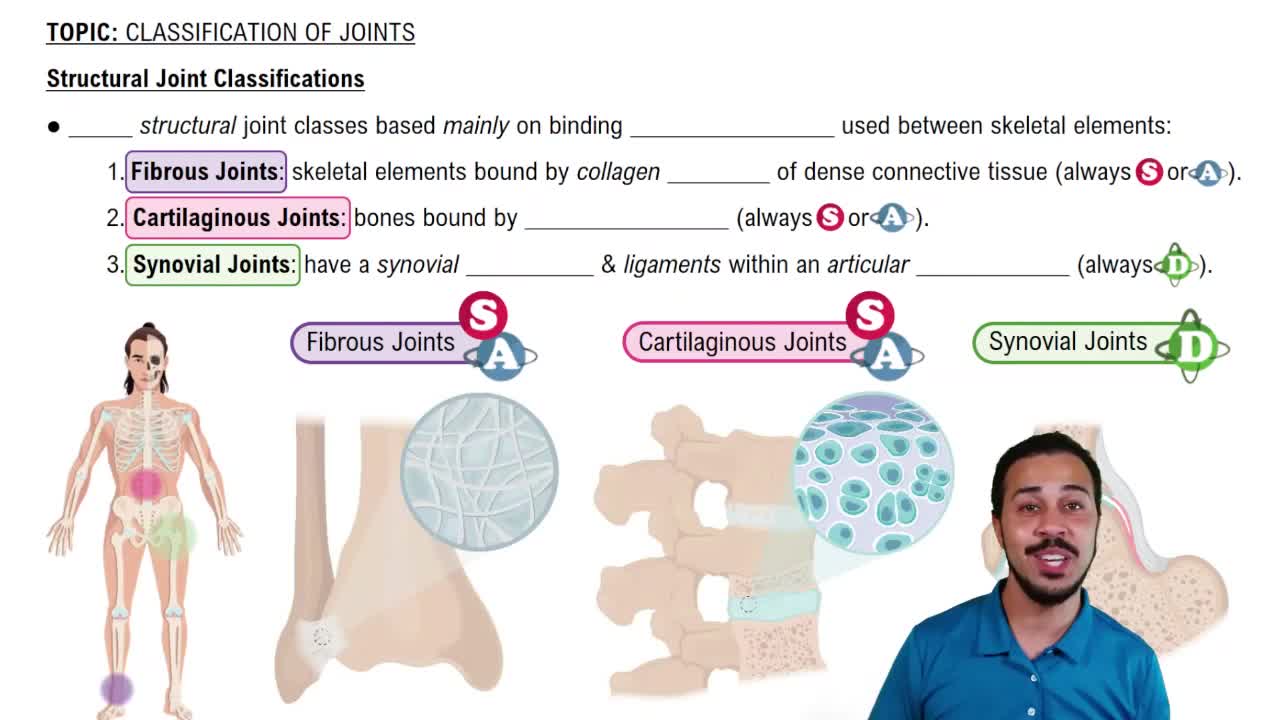
Structural Joint Classifications

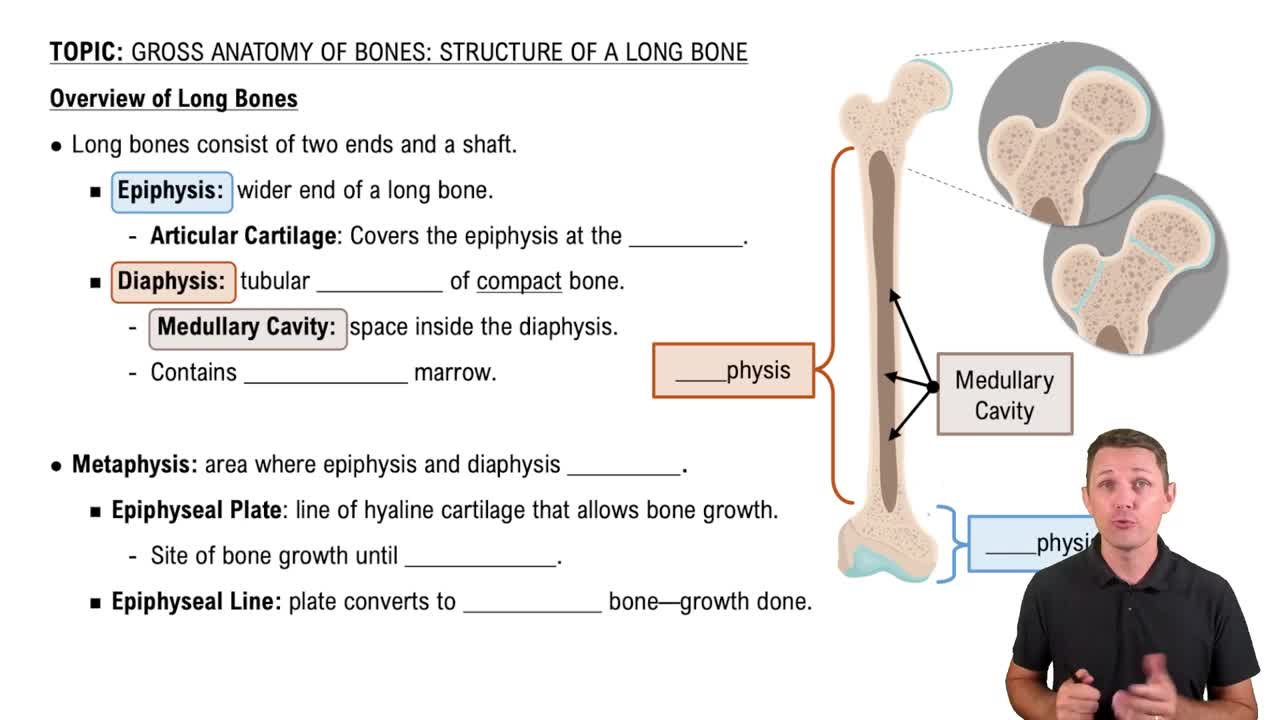
Long Bones

Long bones are characterized by a shaft and two ends, primarily composed of compact bone. They are longer than they are wide and function mainly in support and movement. The humerus, shown in the diagram as (a), is a typical example of a long bone.
Recommended video:
Guided course
6:19
Overview of Long Bones

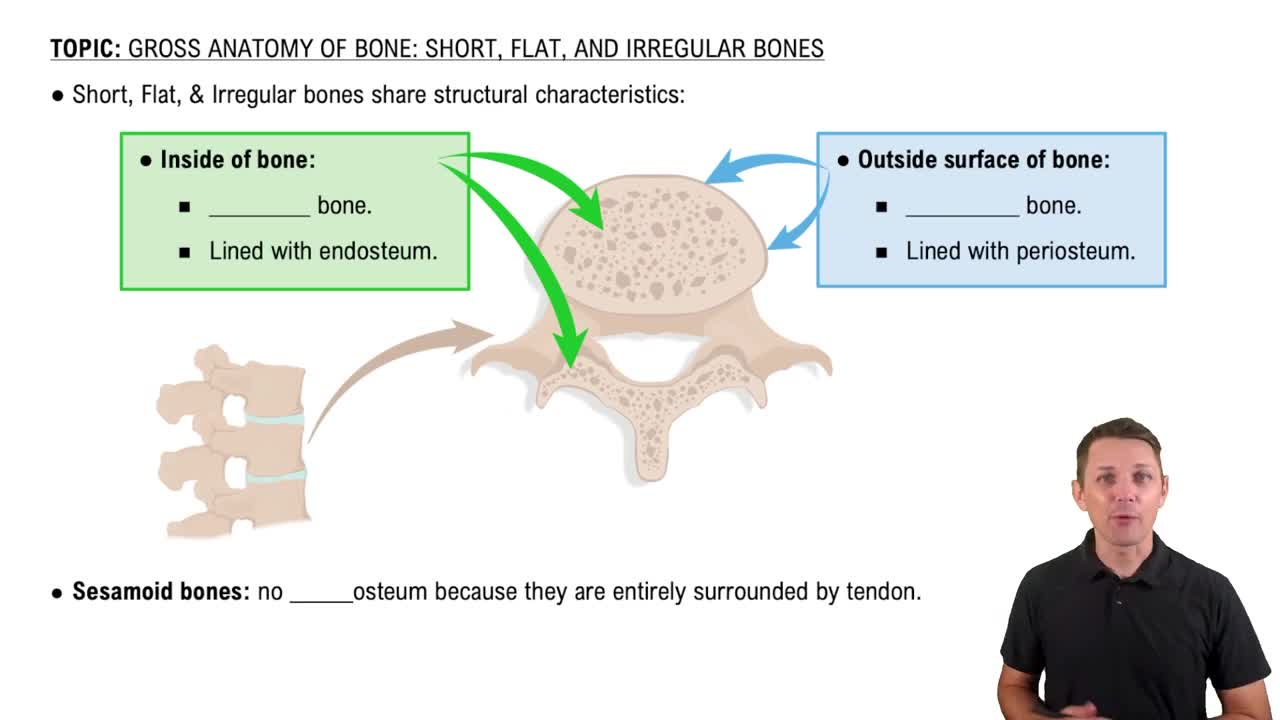
Irregular Bones

Irregular bones have complex shapes that do not fit into other categories. They often have specialized functions such as protection of nervous tissue or providing multiple anchor points for muscles. The vertebra (d) in the diagram is an example of an irregular bone.
Recommended video:
Guided course
2:58
Short, Flat, and Irregular Bones