
Textbook Question
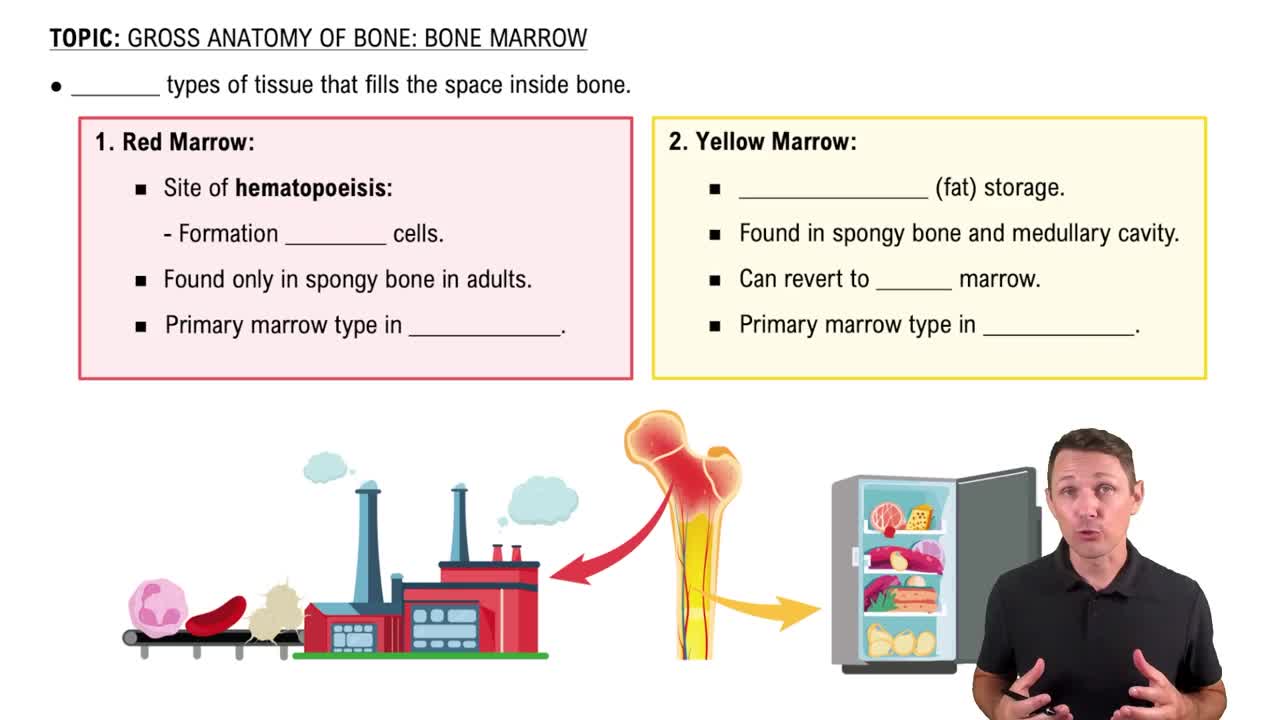
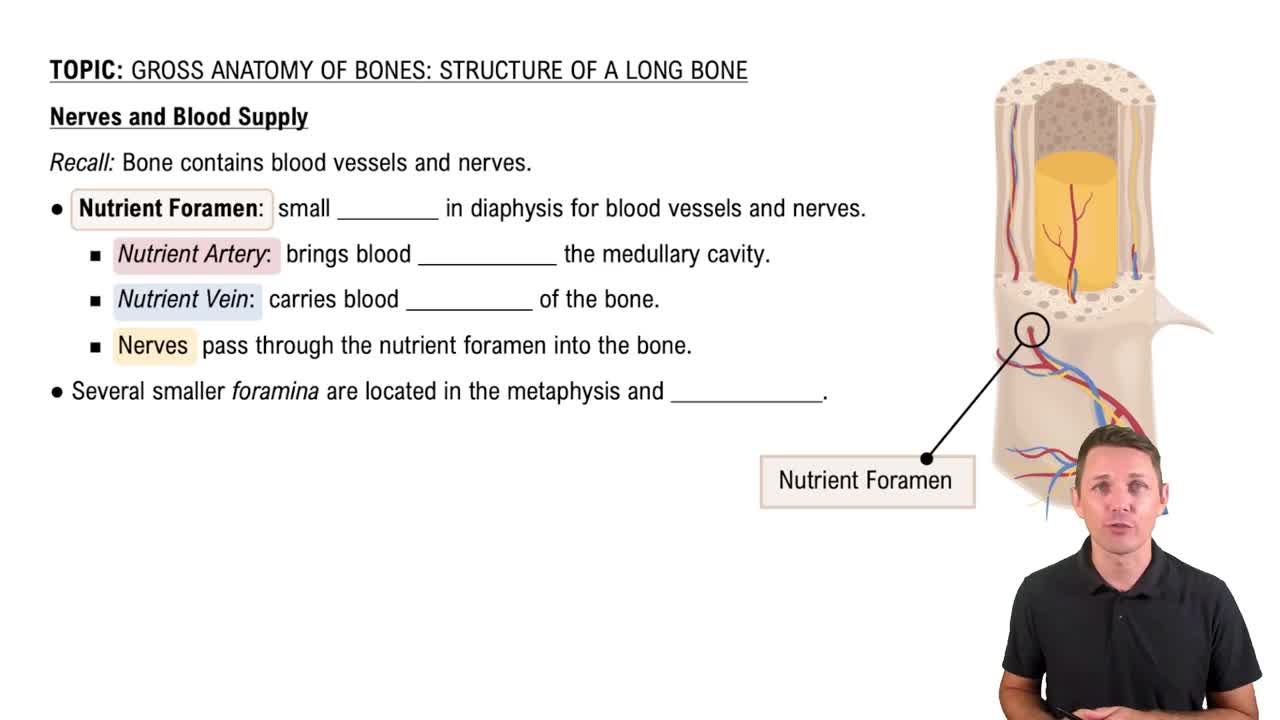
Match the bone markings listed on the right with their function listed on the left.
1. Attachment site for muscle or ligament
2. Forms a joint surface
3. Passageway for vessels or nerves
b. Condyle
559
views

 Verified step by step guidance
 3:39
3:39
 2:25
2:25 4:05
4:05Match the bone markings listed on the right with their function listed on the left.
1. Attachment site for muscle or ligament
2. Forms a joint surface
3. Passageway for vessels or nerves
b. Condyle
Match the types of joints to the descriptions that apply to them.
a. Fibrous joints
b. Cartilaginous joints
c. Synovial joints
9. Shoulder, hip, knee, and elbow joints
Match the bone markings listed on the right with their function listed on the left.
1. Attachment site for muscle or ligament
2. Forms a joint surface
3. Passageway for vessels or nerves
f. Tuberosity
Match the bone markings listed on the right with their function listed on the left.
1. Attachment site for muscle or ligament
2. Forms a joint surface
3. Passageway for vessels or nerves
e. Facet
Match the bone markings listed on the right with their function listed on the left.
1. Attachment site for muscle or ligament
2. Forms a joint surface
3. Passageway for vessels or nerves
d. Process
Match the bone markings listed on the right with their function listed on the left.
1. Attachment site for muscle or ligament
2. Forms a joint surface
3. Passageway for vessels or nerves
a. Trochanter