Ch. 22 The Lymphatic System and Immunity
Martini - Fundamentals of Anatomy & Physiology 11th Edition
Martini, Nath, Bartholomew11th EditionFundamentals of Anatomy & PhysiologyISBN: 9780136874089Not the one you use?Change textbook
Chapter 22, Problem 24

An anesthesia technician is advised that she should be vaccinated against hepatitis B, which is caused by a virus. She is given one injection and is told to come back for a second injection in a month and a third injection after 6 months. Why is this series of injections necessary?

Verified step by step guidance
1
Understand that the hepatitis B vaccine works by stimulating the body's immune system to produce antibodies against the virus, providing immunity.
Recognize that a single injection may not produce a strong or lasting immune response, so multiple doses are given to build and reinforce immunity over time.
The first injection introduces the antigen to the immune system, initiating the primary immune response and the production of memory cells.
The second injection, given after one month, acts as a booster to enhance the immune response, increasing antibody levels and strengthening immune memory.
The third injection, given after six months, further boosts immunity to ensure long-term protection by solidifying the immune system's memory against hepatitis B.

Verified video answer for a similar problem:

This video solution was recommended by our tutors as helpful for the problem above.
Was this helpful?

Key Concepts

Here are the essential concepts you must grasp in order to answer the question correctly.

Hepatitis B Virus and Disease

Hepatitis B is a viral infection that affects the liver and can cause both acute and chronic disease. It is transmitted through blood and bodily fluids, making healthcare workers like anesthesia technicians at risk. Understanding the virus helps explain the need for preventive measures such as vaccination.
Recommended video:
4:37
B Cell Receptors

Vaccine Immunization Schedule

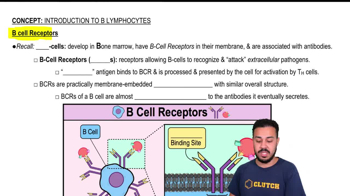
The hepatitis B vaccine is given in a series of injections to build and strengthen the immune response over time. The initial dose primes the immune system, while subsequent doses boost immunity, ensuring long-lasting protection. This schedule is critical for effective and durable immunity.
Recommended video:
3:19
Immune Tolerance

Immune Memory and Booster Shots

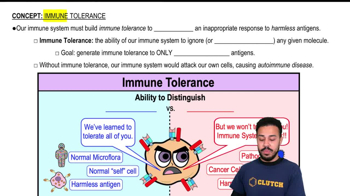
Booster shots stimulate immune memory cells to produce a stronger and faster response upon exposure to the virus. The spaced timing of injections allows the immune system to develop memory B cells and antibodies, which are essential for long-term protection against hepatitis B infection.
Recommended video:
3:19
Immune Tolerance
Related Practice
Textbook Question

How does the formation of an antigen–antibody complex cause the elimination of an antigen?

1259
views

Textbook Question

How does a cytotoxic T cell destroy another cell displaying antigens bound to class I MHC proteins?

1259
views
Textbook Question

An investigator at a crime scene discovers some body fluid on the victim's clothing. The investigator carefully takes a sample and sends it to the crime lab for analysis. On the basis of the analysis of antibodies, could the crime lab determine whether the sample is blood plasma or semen? Explain.

1136
views
Textbook Question

Give one example of each type of immunity: innate immunity, naturally acquired active immunity, artificially acquired active immunity, artificially acquired passive immunity, and naturally acquired passive immunity.

1478
views
Textbook Question

Ted finds out that he has been exposed to measles. He is concerned that he might have contracted the disease, so he goes to see his physician. The physician takes a blood sample and sends it to a lab for antibody levels and titers. The results show an elevated level and activity of IgM antibodies to rubella (measles) virus but very few IgG antibodies to the virus. Has Ted contracted the disease?

1199
views
Textbook Question

While walking along the street, you and your friend see an elderly woman whose left arm appears to be swollen to several times its normal size. Your friend wonders aloud what might be its cause. You say that it may be likely that the woman had a radical mastectomy (the removal of a breast because of cancer). Explain the rationale behind your answer.

49
views