Ch. 10 Muscle Tissue
Martini - Fundamentals of Anatomy & Physiology 11th Edition
Martini, Nath, Bartholomew11th EditionFundamentals of Anatomy & PhysiologyISBN: 9780136874089Not the one you use?Change textbook
Chapter 10, Problem 1

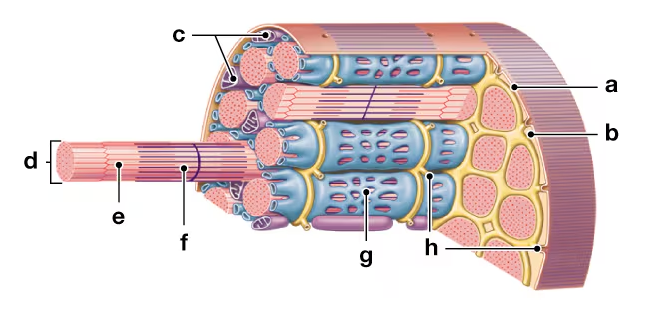
Identify the structures in the following figure.
Cross-sectional and longitudinal view of skeletal muscle showing labeled layers and internal structures.
a. ___
b. ___
c. ___
d. ___
e. ___
f. ___
g. ___
h. ___

Verified step by step guidance
1
Step 1: Carefully observe the figure provided and note the labels or markers indicating each structure (a through h). Since the image is not visible here, recall common anatomical structures typically labeled in such diagrams, such as bones, muscles, organs, or vessels depending on the context.
Step 2: For each label (a, b, c, etc.), identify the anatomical region or system depicted (e.g., skeletal system, muscular system, nervous system). This helps narrow down the possible structures for each label.
Step 3: Use your knowledge of anatomy to match each label with the correct structure. For example, if the figure is of the human skull, labels might correspond to bones like the frontal bone, parietal bone, or mandible. If it is a muscle diagram, labels might correspond to muscles like the biceps brachii or deltoid.
Step 4: Write down the name of each structure corresponding to the labels a through h, ensuring correct spelling and anatomical terminology. If unsure, refer to your textbook or anatomical atlas for confirmation.
Step 5: Review your answers to ensure they logically fit the figure and the anatomical context. Double-check that each label corresponds to a unique structure and that no labels are left unidentified.

Verified video answer for a similar problem:

This video solution was recommended by our tutors as helpful for the problem above.
Video duration:
4m
Was this helpful?

Key Concepts

Here are the essential concepts you must grasp in order to answer the question correctly.

Anatomical Structure Identification

This involves recognizing and naming specific parts of the human body or biological specimens based on their shape, location, and relationships to other structures. Accurate identification requires familiarity with standard anatomical terminology and spatial orientation.
Recommended video:
Guided course
02:40
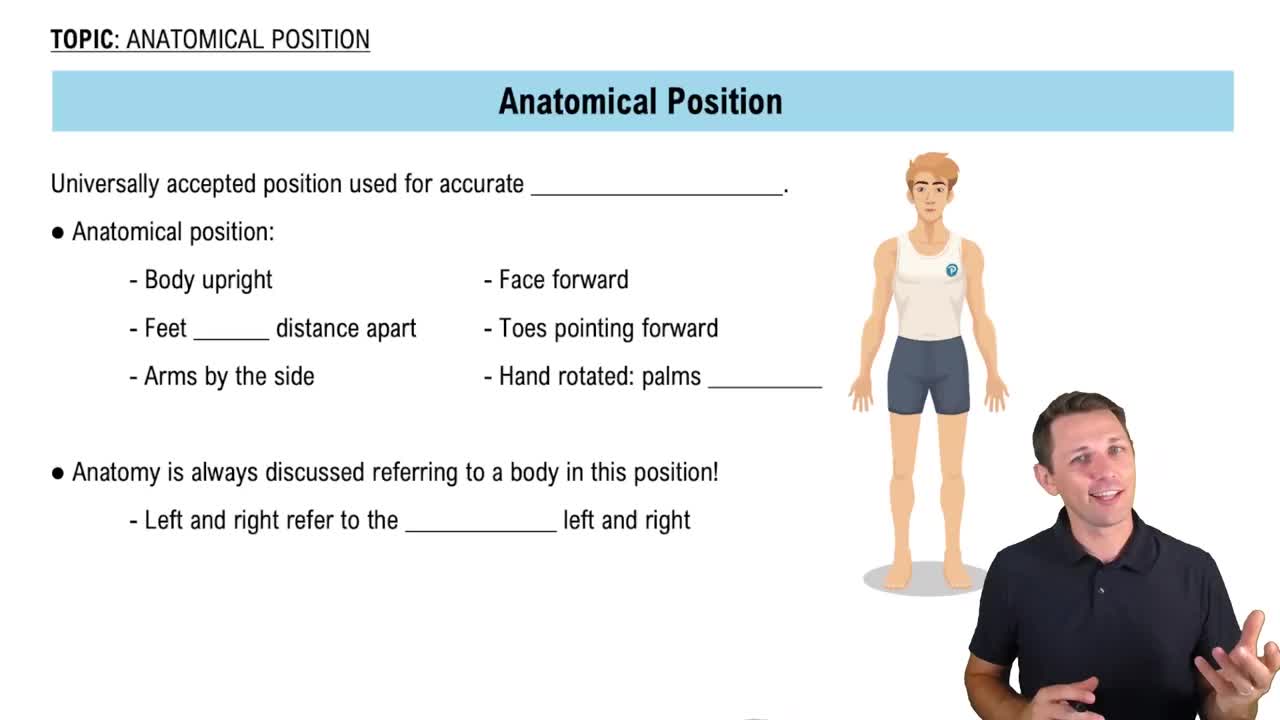
Anatomical Position

Use of Anatomical Terminology

Anatomical terminology provides a standardized language to describe body parts and their positions. Understanding terms like anterior, posterior, medial, lateral, proximal, and distal helps in accurately locating and naming structures in diagrams or images.
Recommended video:
Guided course
03:47
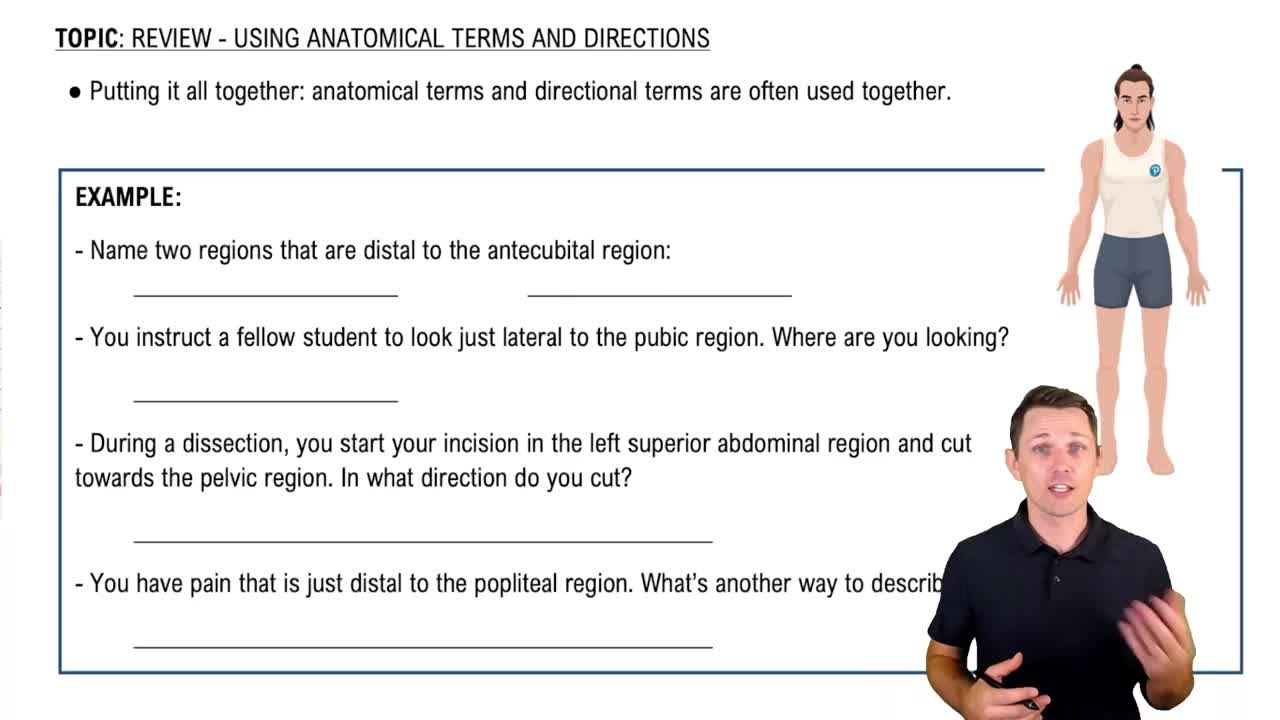
Anatomical Terms Review

Visual Interpretation of Anatomical Diagrams

Interpreting anatomical figures requires the ability to analyze visual cues such as shape, size, and relative position. This skill helps in distinguishing similar structures and understanding their functional context within the body.
Recommended video:
Guided course
04:01
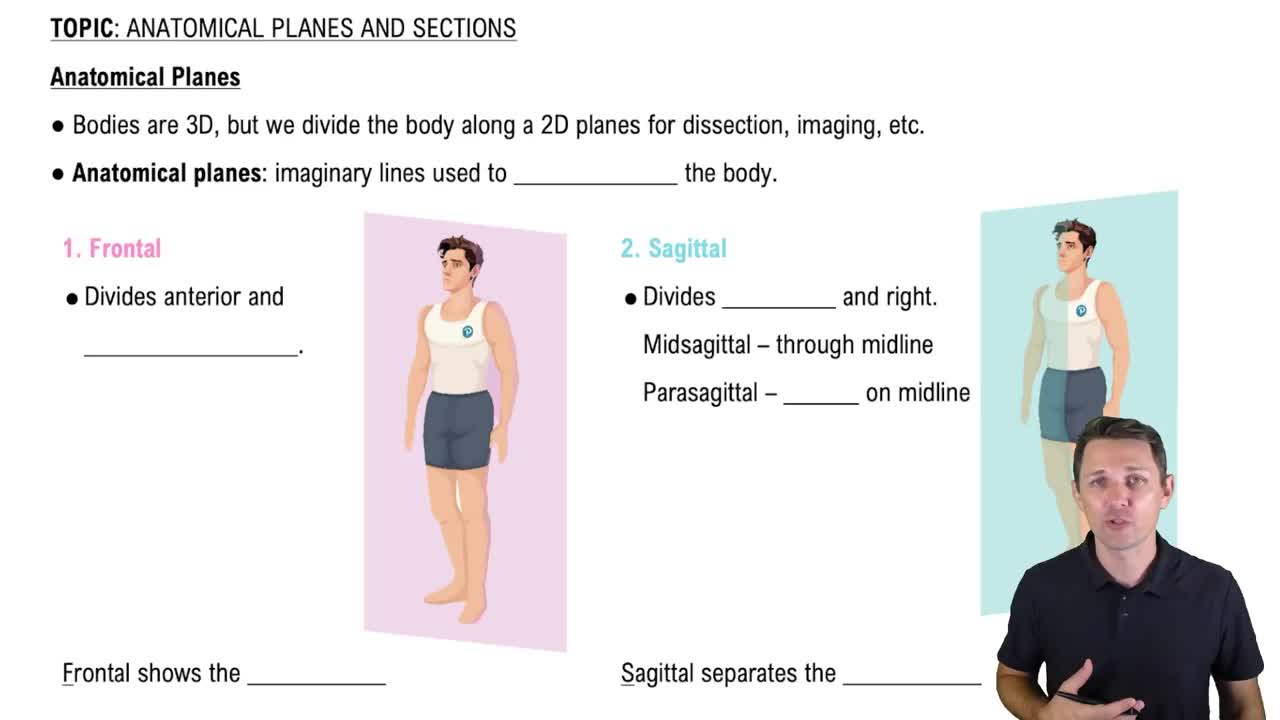
Anatomical Planes